
THE STORY
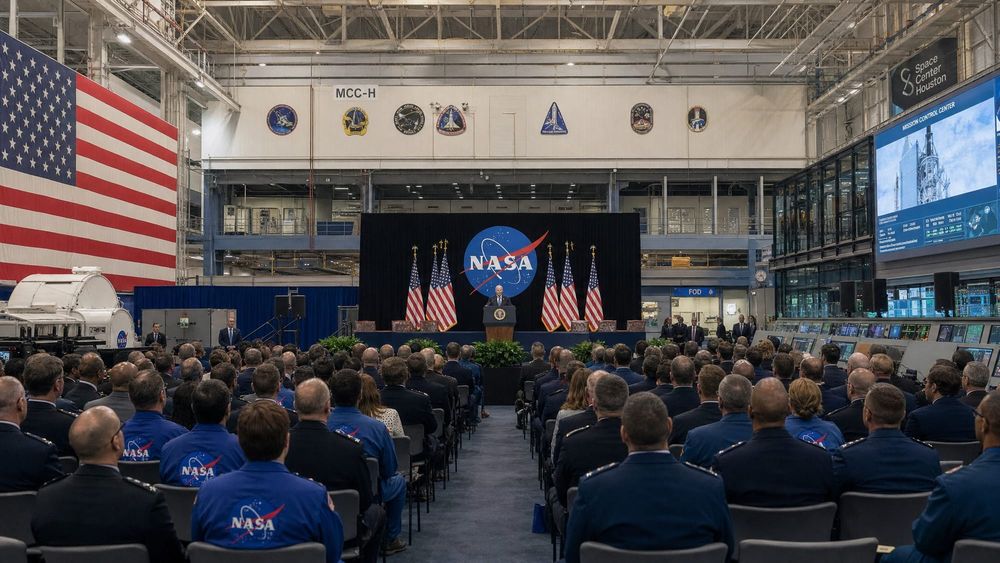
President Donald Trump signed an executive order on Friday, August 28, directing the establishment of the United States Space Academy — a new institution modeled on West Point, Annapolis, and the Air Force Academy, dedicated to training the next generation of space professionals. The signing took place at NASA's Johnson Space Center in Houston during a ceremony that also saw the Artemis II crew receive the Congressional Space Medal of Honor, linking the academy's creation to the broader momentum of the nation's return to deep-space exploration.
The executive order frames space as "a critical domain for American national security, economic growth, scientific discovery, and technological innovation," and positions the academy as the institutional answer to a growing workforce gap. The U.S. Space Force, established in 2019, remains the youngest military branch and has struggled to build a dedicated talent pipeline distinct from the Air Force. Meanwhile, NASA Administrator Jared Isaacman has emphasized the need for a dramatically expanded civil space workforce to support Artemis lunar operations, commercial space station transitions, and eventual Mars exploration. The Space Academy is designed to produce graduates with specialized training in orbital mechanics, space systems engineering, satellite operations, space law, and the scientific disciplines underpinning human spaceflight.
Details on the academy's location, funding mechanism, and initial class size remain to be determined — the executive order directs the Department of Defense, in coordination with NASA and the Department of Education, to develop a detailed implementation plan. Historical precedent suggests the academy could take years to establish: the Air Force Academy was authorized in 1954 but did not graduate its first class until 1959. However, the political environment is unusually favorable. Bipartisan enthusiasm for space — boosted by Artemis II's successful lunar flyby earlier this year and the growing commercial space economy — makes the academy one of the few Trump-era initiatives likely to survive a change in administration.
The academy announcement also carries strategic implications. China has been investing heavily in space education and workforce development, with dedicated aerospace universities producing thousands of graduates annually. The U.S. currently relies on a patchwork of university programs, military training pipelines, and on-the-job learning at NASA and commercial space companies. A dedicated Space Academy would create a standardized, prestigious pathway into the space workforce — analogous to how West Point and Annapolis have shaped military leadership for over two centuries. Trump called it "a big deal" and said the academy would be "beautiful," but the harder question is whether Congress will appropriate the billions needed to build and sustain a fifth service academy.
THE DOUGH
A dedicated Space Academy would create long-term demand for educational infrastructure, simulation systems, and specialized training equipment — benefiting defense education contractors and space technology providers. More broadly, it signals sustained government commitment to the space workforce, which supports hiring and retention across the commercial space industry. Companies like SpaceX, Blue Origin, Lockheed Martin, and Northrop Grumman that depend on a pipeline of skilled space professionals would benefit from a larger, better-trained talent pool emerging from a centralized institution.
We are not financial analysts or investment advisors. Nothing in this newsletter constitutes investment advice. All economic analysis is speculative and for informational purposes only. Do your own research.
THE POSSIBILITIES
The real power of a Space Academy isn't the first graduating class — it's the network effect over decades. West Point alumni hold outsized influence in military strategy; a Space Academy could produce the commanders, engineers, and policymakers who shape space governance for the next fifty years. If the academy incorporates commercial space training alongside military curriculum, it could become the single most important talent node in the space economy, producing leaders who move fluidly between government, military, and private-sector roles.
THE HURDLES
An executive order directs study and planning, not construction. Congress must authorize and fund a new service academy, a process that historically takes years and faces competition from entrenched service-branch budgets. The Department of Defense has not yet identified a site, developed curriculum standards, or established accreditation pathways — all of which are prerequisites before the first cadet ever reports. Political will could evaporate if economic conditions or election results shift priorities away from space.
WHAT TO WATCH
- Congressional authorization and appropriation language for the Space Academy in FY2027 defense spending bills
- Site selection process and competition among states to host the academy
- Whether the academy is structured under Space Force, NASA, or a joint civilian-military model
- DoD implementation plan timeline and initial class-size targets
Void Economy is researched, written, and illustrated with AI, reviewed and edited by a real, live, flesh-n-blood human.