
THE STORY
The European Space Agency signed the first contracts under its European Launcher Challenge this week, committing more than €500 million to three launch companies: Spain's PLD Space, Germany's Isar Aerospace, and Germany's Rocket Factory Augsburg (RFA). The awards mark ESA's most aggressive push to develop independent European launch capability since the Ariane program, and they come at a moment when the continent's access to space has never been more precarious — caught between SpaceX's dominance, Russia's post-invasion launch blackout, and the slow ramp-up of the Ariane 6 heavy launcher.
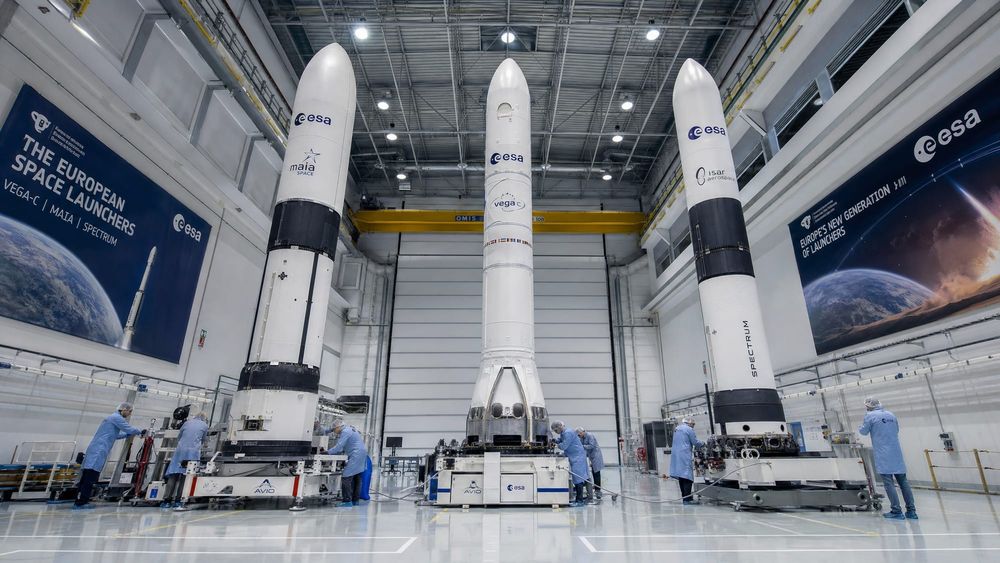
PLD Space received the largest individual award at €158.9 million, earmarked for scaling its MIURA 5 small launch vehicle and developing reusability technology. MIURA 5 is designed to place up to 500 kilograms into sun-synchronous orbit and is PLD Space's first orbital-class rocket, following successful suborbital flights of the smaller MIURA 1. The company, based in Elche, Spain, has been testing rocket engine components at its own facilities and at ESA test stands. Isar Aerospace, headquartered near Munich, is developing the Spectrum rocket — a two-stage vehicle capable of lofting approximately 1,000 kilograms to low Earth orbit, powered by the company's proprietary Aquila engines that burn a combination of liquid oxygen and kerosene. Rocket Factory Augsburg is building the RFA ONE, a small launcher using staged-combustion engines and targeting a similar payload class. Both German companies have been racing toward first orbital launch attempts.
The Launcher Challenge contracts are structured as milestone-based payments tied to development progress, first flights, and demonstration of reusability. ESA Director General Josef Aschbacher has framed the initiative as essential to Europe's strategic autonomy — the ability to launch satellites without depending on American, Chinese, or Indian rockets. That autonomy has been tested repeatedly: Arianespace's Ariane 5 was retired before Ariane 6 was ready, leaving Europe without a heavy launcher for over a year. Even now, Ariane 6 is flying — it successfully launched the MTG-I2 weather satellite on August 27 — but its cadence remains limited, and European institutional and commercial customers have been forced to book rides on Falcon 9.
The broader context is a global launch vehicle shortage that multiple industry leaders have flagged this week. Firefly Aerospace CEO Jason Kim told attendees at the SmallSat conference that the backlog of satellites awaiting launch is growing faster than the industry's launch supply, and Payload Space reported that "unless something changes in the launch market — and soon — the space industry might be running 100 mph into a brick wall." ESA's bet on three competitors simultaneously — rather than a single national champion — mirrors the Pentagon's approach of fostering competitive pressure and redundancy across multiple vendors.
THE DOUGH
The €500 million-plus in ESA contracts provides development runway for PLD Space, Isar Aerospace, and RFA at a critical stage — all three are pre-revenue launch companies burning cash on hardware development. Success for any of them would create a new European commercial launch provider, attracting institutional customers (ESA, EU, national space agencies) and potentially competing for a slice of the global smallsat launch market projected to exceed $30 billion by 2030. European defense and satellite companies that have been forced to rely on SpaceX — including Airbus Defence and Space, Thales Alenia Space, and OHB — would gain domestic launch alternatives, reducing supply-chain risk and regulatory complications.
We are not financial analysts or investment advisors. Nothing in this newsletter constitutes investment advice. All economic analysis is speculative and for informational purposes only. Do your own research.
THE POSSIBILITIES
If even one of these three companies achieves reusability at scale, Europe could leapfrog from its current position of launch dependency to a competitive commercial player within five years. The more intriguing possibility is that the Launcher Challenge creates a European "SpaceX effect" — driving down costs enough to stimulate demand for European-made smallsat constellations in defense surveillance, Earth observation, and IoT connectivity that currently don't exist because launch costs make them uneconomical.
THE HURDLES
None of the three companies has yet achieved orbit. The history of small launch vehicle development is littered with companies that burned through funding before reaching operational status. Europe's regulatory environment, while improving, still lacks the streamlined licensing processes that have enabled SpaceX's rapid test-flight cadence in the U.S. And even if all three succeed, their combined payload capacity would represent a tiny fraction of what SpaceX offers with Falcon 9 alone — let alone Starship.
WHAT TO WATCH
- PLD Space MIURA 5 first orbital launch attempt timeline
- Isar Aerospace Spectrum and RFA ONE maiden flight schedules
- Whether ESA adds additional companies to the Launcher Challenge in future rounds
- Ariane 6 launch cadence through 2027 — if it ramps faster, the urgency for small launchers diminishes
- European defense and institutional launch contracts shifting from SpaceX to domestic providers
Void Economy is researched, written, and illustrated with AI, reviewed and edited by a real, live, flesh-n-blood human.