
THE STORY
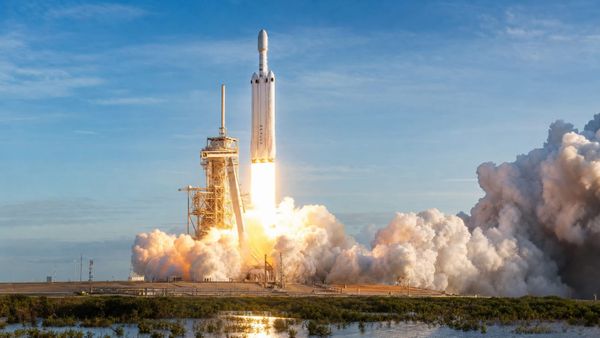
The White House signed a new National Space Transportation Policy on August 20, replacing the 2013 edition and setting an extraordinary ambition: the United States should be capable of supporting 1,000 annual orbital launches and reentries by the end of the decade. The policy document, which had been under development for months, represents the most aggressive U.S. government statement on launch cadence ever issued — and it arrives at a moment when the gap between ambition and infrastructure has never been wider.
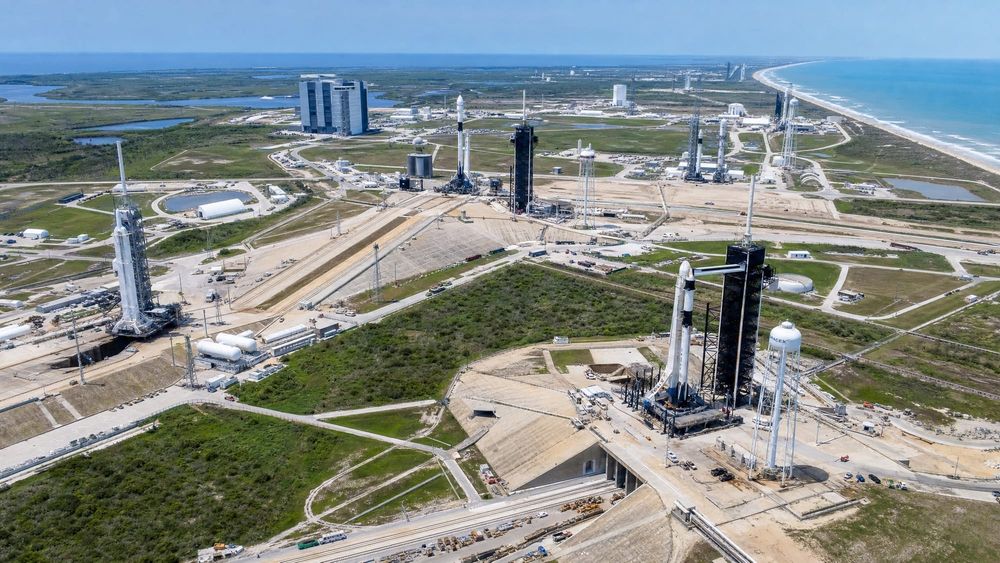
For context, the entire world conducted roughly 250 orbital launches in 2025, with SpaceX accounting for about half. The U.S. alone managed approximately 130 orbital flights. Reaching 1,000 annual launches from U.S. soil by 2030 would require a nearly eightfold increase in just four years — a rate of growth that would demand not just more rockets but a fundamental expansion of launch ranges, air and maritime exclusion-zone management, FAA licensing capacity, propellant production, and ground support infrastructure. The policy explicitly acknowledges these challenges and directs federal agencies to identify and remove regulatory bottlenecks, streamline environmental reviews, and invest in range modernization.
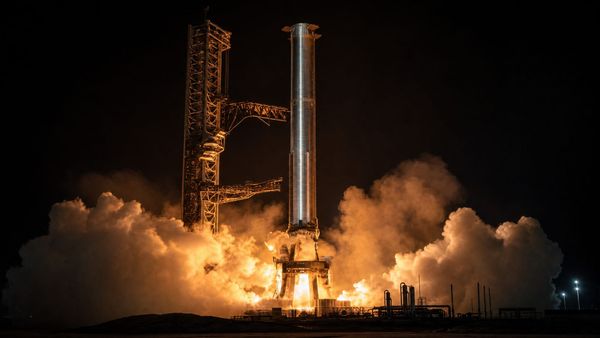
The 1,000-launch target is not arbitrary. SpaceX's announced plans for Starbase Louisiana alone contemplate "thousands of Starship launches annually," and the company's transition of Starlink missions from Falcon 9 to Starship would dramatically increase the mass launched per mission even as individual flight counts rise. Add in planned launches from Blue Origin's New Glenn, ULA's Vulcan, Rocket Lab's Neutron and Electron, and a growing roster of small launch providers, and the theoretical vehicle supply begins to approach the policy target — if the ground infrastructure and regulatory framework can keep pace.
The policy also reflects national security imperatives. The Space Development Agency is deploying a proliferated constellation that requires dozens of launches per year. The Space Force's responsive launch program envisions the ability to put a satellite into orbit within 24 hours of a national security event. And the Golden Dome space-based missile defense architecture, if funded at projected levels, would require hundreds of additional satellite launches over the next decade. The 1,000-launch target essentially says: the U.S. government believes space launch will become as routine as commercial aviation — and it's willing to restructure federal policy to make that happen.
THE DOUGH
A national policy targeting 1,000 annual launches creates a demand signal that justifies billions in private investment across the launch supply chain — from propellant production and pad construction to range safety systems and satellite integration facilities. Spaceport operators (Cape Canaveral, Vandenberg, Kodiak, and now potentially Louisiana) would see expanded government funding for modernization. Launch vehicle manufacturers, satellite builders, and ground segment providers all benefit from a policy environment explicitly designed to accelerate launch cadence. Defense contractors positioned in responsive space launch — including L3Harris, Northrop Grumman, and Rocket Lab — gain a clearer investment thesis.
We are not financial analysts or investment advisors. Nothing in this newsletter constitutes investment advice. All economic analysis is speculative and for informational purposes only. Do your own research.
THE POSSIBILITIES
If the U.S. actually reaches 1,000 launches per year, the cost-per-kilogram economics of space access collapse to the point where entirely new industries become viable — orbital construction, space-based manufacturing, commercial lunar logistics, and potentially space tourism at airline-like scales. The compounding effect of cheap, frequent access could make the 2030s for space what the 1990s were for the internet: the decade when infrastructure matured enough for an ecosystem of unforeseen applications to explode.
THE HURDLES
The FAA's Office of Commercial Space Transportation currently processes launch licenses on timelines measured in months to years — not the days or weeks that a 1,000-launch-per-year cadence would require. Range capacity at existing spaceports is limited by physical constraints: airspace closures, maritime exclusion zones, and sonic boom propagation affect neighboring communities and commercial aviation. The policy sets a target but does not appropriate the funding needed to achieve it — that requires Congressional action.
WHAT TO WATCH
- FAA regulatory reform proposals for streamlined launch and reentry licensing
- Congressional appropriations for range modernization at Cape Canaveral and Vandenberg
- Whether the DOD issues new responsive-launch contracts tied to the 1,000-launch target
- SpaceX, Blue Origin, and Rocket Lab public statements on how the policy affects their planning
Void Economy is researched, written, and illustrated with AI, reviewed and edited by a real, live, flesh-n-blood human.