
THE STORY
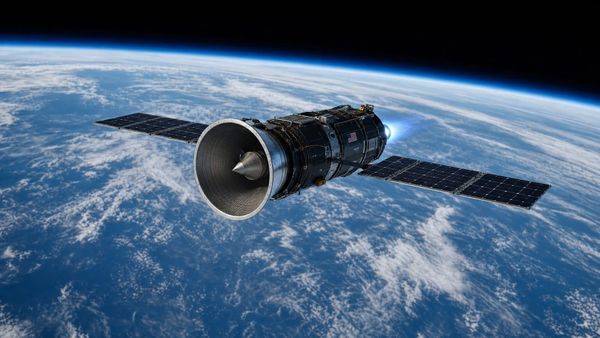
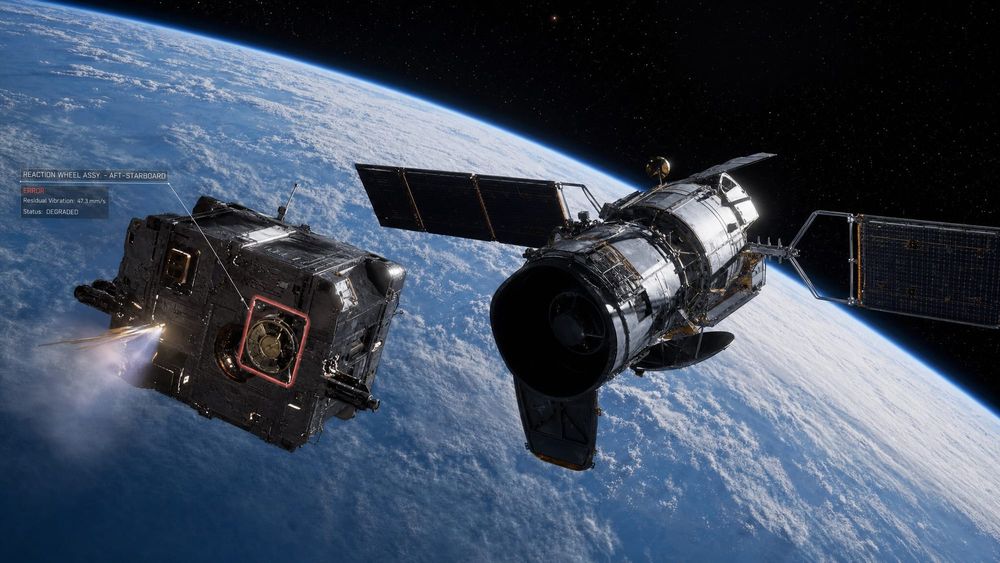
A spacecraft launched by Katalyst Space to reboost NASA's aging Swift Observatory — one of the agency's most productive X-ray and gamma-ray telescopes — is experiencing critical attitude control problems that could jeopardize the entire rescue mission. According to NASA and multiple reports, two of the Link spacecraft's three reaction wheels are currently inoperable, and there are additional problems with one of its thruster systems. The spacecraft, which launched nearly a month ago in a high-risk bid to grab Swift and push it to a higher orbit before atmospheric drag pulls it to a fiery reentry, is now tumbling and unable to maintain the precise orientation needed for rendezvous and capture.
The irony is almost too much. Swift, formally the Neil Gehrels Swift Observatory, has been one of NASA's most scientifically productive missions since its 2004 launch, detecting thousands of gamma-ray bursts, discovering the "wandering" black hole shredding a star reported this week, and serving as a rapid-response observatory for transient astronomical events. But its orbit has been decaying, and without a reboost, the telescope faces uncontrolled reentry within the next year or two. NASA contracted Katalyst Space to perform the rescue — a commercially procured servicing mission that represented a new model for extending the lives of aging space assets. Now the rescuer itself is in distress.
Engineers at Katalyst and NASA are not giving up. According to Ars Technica, the team believes "a capture of Swift, an attempted capture of Swift, is very much in the cards," suggesting they have contingency plans that may involve using the remaining functional reaction wheel and thrusters in creative combinations to stabilize the vehicle. The stakes are enormous — not just for Swift's science return, but for the broader in-space servicing industry. If Katalyst can recover from this anomaly and complete the reboost, it would demonstrate resilience and problem-solving that would build confidence in commercial servicing missions. If it fails, it could set back the nascent industry by years.
THE DOUGH
The in-space servicing, assembly, and manufacturing (ISAM) market is projected to grow to tens of billions of dollars by the early 2030s, with companies like Northrop Grumman (Mission Extension Vehicle), Astroscale, and Orbit Fab building the infrastructure for satellite life extension, refueling, and debris removal. A successful Swift reboost would validate the commercial model and accelerate government procurement of similar services. A failure would raise questions about the readiness of small, commercially built servicing vehicles for critical missions.
We are not financial analysts or investment advisors. Nothing in this newsletter constitutes investment advice. All economic analysis is speculative and for informational purposes only. Do your own research.
THE POSSIBILITIES
The most underappreciated aspect of this mission is the precedent it sets for NASA's procurement model. If a small commercial company can rescue a billion-dollar space telescope for a fraction of what a traditional NASA servicing mission would cost, it fundamentally changes how the agency manages its aging fleet — potentially extending the lives of dozens of operational satellites.
THE HURDLES
Two failed reaction wheels out of three is a severe anomaly. While creative engineering solutions exist — using thrusters for attitude control, for example — they consume propellant that was allocated for the reboost maneuver itself. Every kilogram of fuel burned stabilizing the spacecraft is a kilogram that can't be used to raise Swift's orbit.
WHAT TO WATCH
- Katalyst's recovery plan and whether the Link spacecraft can be stabilized
- Any attempt to capture Swift and the outcome of the rendezvous
- NASA's contingency plans if the reboost mission fails entirely
- Impact on future commercial servicing contracts for government satellites