
THE STORY
SpaceX released its first-ever quarterly financial report on August 4, and the numbers confirmed what many suspected: this isn't just a rocket company anymore. Revenue hit $7.8 billion for Q2 2026, nearly doubling year-over-year and handily beating the $6.81 billion Wall Street consensus. Three distinct businesses drove the result — launch services, Starlink broadband, and a fast-growing AI compute division that generated $2.6 billion in revenue (up 3x from the prior year) while posting an operating loss of $1.26 billion. Starlink continued its role as the revenue engine, but the real fireworks came during the earnings call, where CEO Elon Musk and COO Gwynne Shotwell laid out ambitions that left analysts scrambling to recategorize the company.
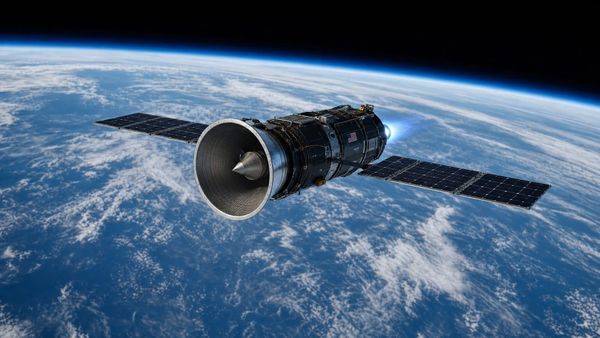
The biggest bombshell: SpaceX plans to build "Starlink Mobile," a full terrestrial-and-satellite wireless network designed to compete head-to-head with AT&T, T-Mobile, and Verizon. Shotwell noted those three carriers collectively generate roughly $600 billion in annual revenue and said SpaceX expects to "acquire quite a few" of their customers by deploying small ground-based base stations alongside its satellite constellation — offering seamless coverage without massive cell tower infrastructure. Musk also announced an exclusive hardware partnership with Nvidia, confirming SpaceX will build its AI infrastructure using Nvidia's Vera Rubin chips, and previewed plans for orbital AI data centers that would ride to space aboard Starship, exploiting free vacuum cooling and abundant solar power.
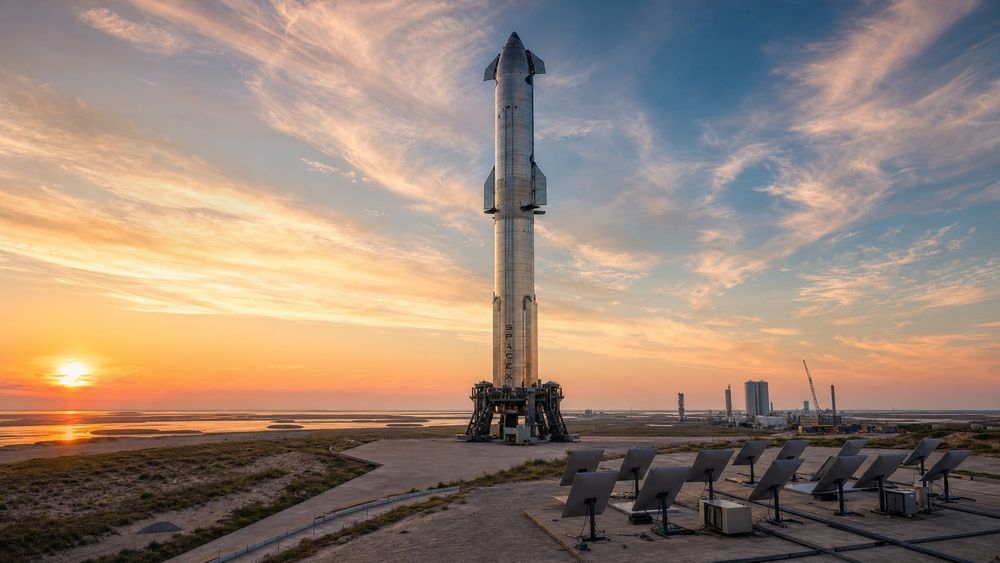
On the rocket front, Musk declared the Starship heat shield problem "solved" — a milestone that had eluded the program for years, causing repeated reentry failures. He said Flight 14 could happen as soon as late August, with SpaceX planning to catch the Super Heavy booster on the launch mount and attempt the first orbital deployment of Starlink satellites from Starship. Ship 41 is already in preparation at Starbase while the company continues towing Ship 40 from its Indian Ocean splashdown, though Musk acknowledged that recovery effort is "not looking good." He also reiterated that SpaceX would deploy robots on the Moon to construct factories, calling it something that "is going to happen." Morgan Stanley estimates SpaceX's capital expenditures will reach $64 billion this year — reflecting the staggering scale of simultaneous investment across AI, Starship, and Starlink expansion. SpaceX also disclosed it has purchased $329 million in Tesla Megapacks this year and reported a $540 million decline in its bitcoin holdings. Shares fell after the report as investors weighed the massive capex against near-term profitability, though retail investors continued aggressively buying the dip ahead of the first lockup expiration on August 7.
THE DOUGH
SpaceX's three-legged revenue model — launch, broadband, and AI compute — reshapes how the company should be valued. Starlink Mobile alone targets a $600 billion U.S. wireless market; telecom incumbents AT&T, Verizon, and T-Mobile all fell after the earnings call. The Nvidia partnership benefits both companies, with Nvidia gaining a massive hardware customer and SpaceX securing cutting-edge silicon for its growing data center business. Alphabet, which disclosed SpaceX as its largest holding at $71 billion, provides additional signal on institutional conviction. Suppliers including Tesla (Megapacks) and satellite component makers benefit from the spending spree, while SpaceX's publicly traded stock (SPCX) gives retail investors direct exposure to this rapidly evolving conglomerate.
We are not financial analysts or investment advisors. Nothing in this newsletter constitutes investment advice. All economic analysis is speculative and for informational purposes only. Do your own research.
THE POSSIBILITIES
The most underappreciated angle is orbital compute. If SpaceX can demonstrate that AI inference workloads run economically in space — where cooling costs approach zero and solar power is constant — every hyperscaler currently spending billions on land, cooling infrastructure, and power grid connections would need to recalculate. The data center of the future may not be in Texas. It may be in low Earth orbit.
THE HURDLES
A $64 billion annual capex plan makes SpaceX one of the highest-spending companies on Earth, and profitability remains distant. Starlink Mobile's terrestrial buildout faces regulatory and spectrum hurdles, and Starship — the key to every ambitious plan from orbital data centers to lunar factories — has never completed a full orbital mission with payload deployment. The entire strategy rests on a vehicle still in the test-flight phase.
WHAT TO WATCH
- Flight 14 timeline and whether SpaceX achieves the first orbital Starlink deployment via Starship
- Starlink Mobile FCC filings for terrestrial base station deployment authorization
- AT&T, T-Mobile, and Verizon competitive responses and spectrum defense strategies
- Nvidia Vera Rubin chip delivery timeline and orbital data center prototype progress
- SpaceX Q3 results for signs of AI compute profitability trajectory and Starlink subscriber growth
Void Economy is researched, written, and illustrated with AI, reviewed and edited by a real, live, flesh-n-blood human.