
THE STORY
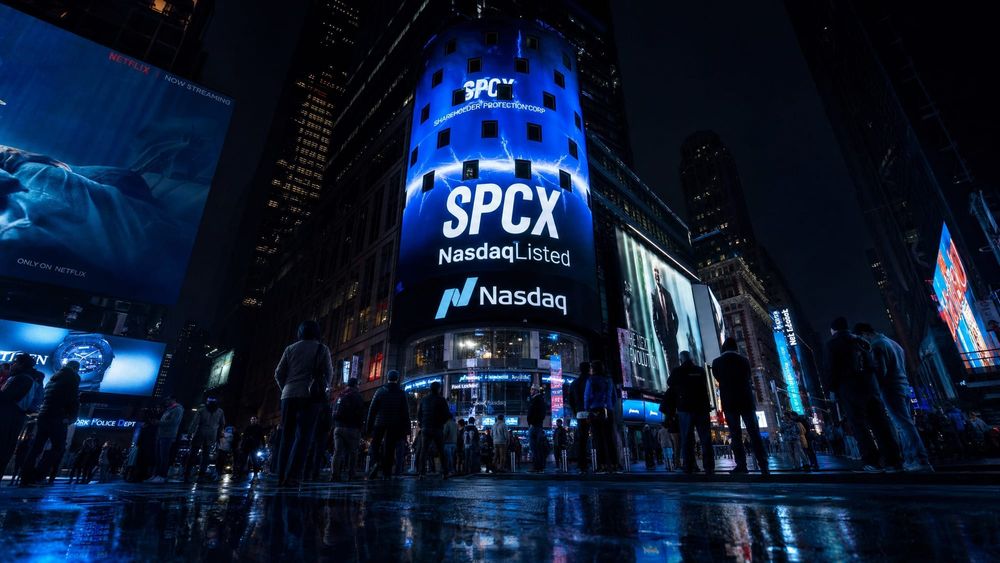
SpaceX began trading on the Nasdaq on June 12 under the ticker SPCX, raising $75 billion in the largest initial public offering in the history of capital markets. Shares opened at $150 — 11 percent above the $135 offering price — and finished the day up 19 percent, valuing the company at roughly $2.1 trillion and making Elon Musk the world's first trillionaire on paper. Retail investors poured in approximately $118 million on the first trading day, while institutional demand was reported at four times oversubscribed. BlackRock alone placed an order exceeding $5 billion.
But the bigger story isn't SpaceX's stock price — it's what public capital at this scale does to the broader space industry. In the days surrounding the IPO, a cascade of capital-market activity rippled through the sector. Rocket Lab was named to the Nasdaq 100. Quantum Space announced a SPAC deal valued at $1.2 billion to build military spacecraft. ICEYE raised €450 million at a €10 billion valuation. Isar Aerospace closed a €270 million Series D. As the Wall Street Journal reported, investors who were once skeptical of space are now "piling into all things space" — two-ton satellites, laser communications, in-space mobility vehicles — emboldened by SpaceX's demonstration that the space economy can command trillion-dollar multiples.
Venture capitalists predicted that the IPO would "lift the entire industry," and early signs suggest they're right. SpaceX's S-1 revealed over $11 billion in Starlink revenue, $26 trillion in what the company calls its enterprise AI opportunity, and plans for orbital data centers that could generate $300 billion in annual revenue by the late 2020s, according to ARK Invest. The filing made the financial case for space infrastructure as clearly as any document in the industry's history. Other space companies initially fell as investors sold positions to raise cash for SPCX, but the attention and legitimacy the IPO brings is expected to create a sustained flow of public and private capital into the sector.
SpaceX's debut also rewrites the playbook for space companies seeking public capital. The company's fixed-price offering, staggered lockup structure, and massive retail allocation broke Wall Street conventions. University endowments, sovereign wealth funds, and pension plans — including Ontario Teachers', which turned a $300 million investment into an estimated $11.6 billion windfall — are now modeling space as a core portfolio allocation, not a speculative sideshow. For the first time, the space economy has a publicly traded anchor that forces institutional investors to form a view on launch economics, satellite broadband, and orbital infrastructure. That alone may matter more than any single rocket launch.
THE DOUGH
The IPO's ripple effects are already visible: SpaceX's public listing creates a benchmark valuation that lifts comparable companies. Rocket Lab's Nasdaq 100 inclusion gives passive funds automatic exposure to a second space launch company. Venture investors in later-stage space companies like Relativity, Firefly, and Impulse Space can now point to SpaceX multiples when seeking follow-on funding. The broader ecosystem — ground equipment, satellite components, space logistics — benefits from a rising tide of institutional attention and capital deployment.
We are not financial analysts or investment advisors. Nothing in this newsletter constitutes investment advice. All economic analysis is speculative and for informational purposes only. Do your own research.
THE POSSIBILITIES
The most underappreciated consequence of the SpaceX IPO is what it does to talent. With thousands of SpaceX employees now holding liquid, publicly traded shares, the space industry's labor market is about to be flooded with newly wealthy engineers who have the means and expertise to fund or found the next generation of space startups — a SpaceX diaspora effect that could spawn an entire ecosystem.
THE HURDLES
Public market scrutiny is a double-edged sword. SpaceX's nearly $5 billion loss in 2025, its entangled corporate structure with xAI and Tesla, and Musk's controversial governance provisions — including a dual-class share structure that gives him near-absolute control — are now subject to quarterly analyst calls, activist investors, and short sellers. The company must deliver on orbital data center timelines and Starlink growth to justify a $2 trillion valuation.
WHAT TO WATCH
- SpaceX's first quarterly earnings report as a public company — revenue trajectory and profitability path
- Whether rival space stocks recover from the initial sell-off and trade higher on the "rising tide" thesis
- Anthropic and OpenAI IPO timelines — potential capital competition for AI-adjacent space companies
- SpaceX options trading, which begins Tuesday, and how volatility shapes investor positioning
- Whether additional space companies accelerate IPO or SPAC plans to ride the wave