
THE STORY
Engineers at NASA's Wallops Flight Facility have completed the encapsulation of Katalyst Space's LINK robotic servicing spacecraft, clearing the final major ground milestone before it launches on a mission to rendezvous with NASA's Neil Gehrels Swift Observatory and boost the aging telescope to a higher orbit. It is one of the most ambitious commercial satellite servicing missions ever attempted — and if it works, it could fundamentally reshape how the world thinks about orbital assets.
Swift, launched in 2004, has been one of NASA's most prolific observatories, detecting over 1,600 gamma-ray bursts and revolutionizing multi-messenger astronomy. But two decades of atmospheric drag have been slowly pulling the telescope downward, and without intervention, its orbit will decay to the point where science operations become impossible. Rather than letting a still-functional, billion-dollar instrument die a slow death, NASA contracted Katalyst Space to attempt something that has never been done at this scale by a commercial operator: fly an autonomous spacecraft to Swift, grapple it, and fire thrusters to push it into a higher, more stable orbit.
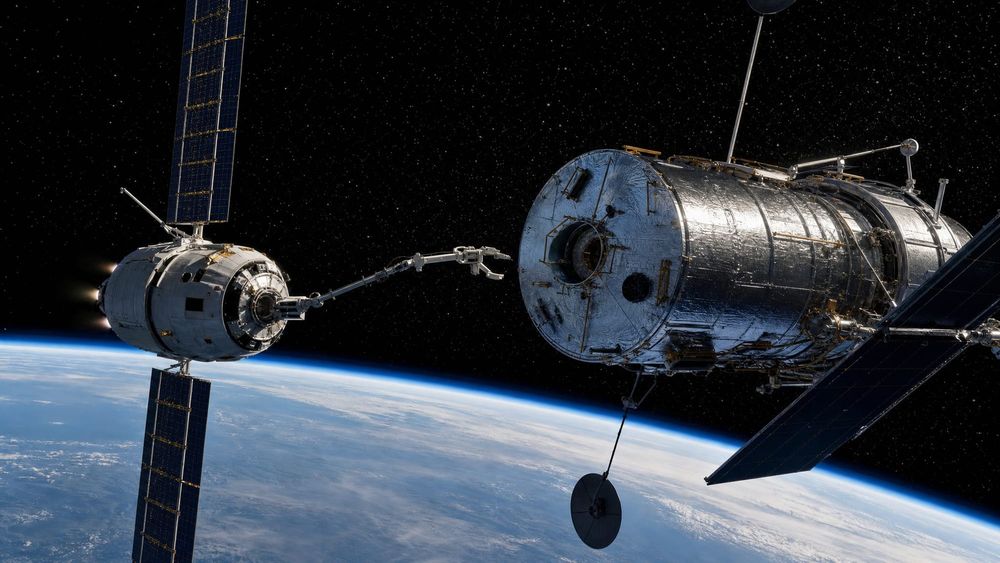
The LINK spacecraft will be launched from Wallops aboard an air-launched rocket, then navigate autonomously to Swift's position in low Earth orbit. The rendezvous and proximity operations required are extraordinarily precise — LINK must approach a spacecraft that was never designed to be serviced, match its orientation, and physically dock with it without causing damage to Swift's sensitive instruments. The operation draws on lessons from DARPA's earlier servicing demonstrations and Northrop Grumman's Mission Extension Vehicle program, but LINK represents a new generation of smaller, more affordable servicing vehicles designed specifically for the commercial market.
If Katalyst succeeds, the implications extend far beyond one telescope. Hundreds of satellites in low Earth orbit face similar orbital decay timelines, and many still have years of useful life in their instruments and sensors. A proven, cost-effective boost service could create an entirely new market segment: orbital life extension as a commodity. For NASA, the mission also advances the agency's broader strategy of transitioning routine space operations to commercial providers, freeing the agency to focus on exploration while industry handles the logistics. The Swift boost could become the proof point that turns satellite servicing from a niche capability into standard space infrastructure.
THE DOUGH
The satellite servicing market is projected to grow rapidly as orbital congestion increases and operators look to extend the lives of expensive assets rather than replace them. Katalyst Space competes alongside Northrop Grumman's SpaceLogistics, Astroscale, and Orbit Fab in what could become a multi-billion-dollar services sector. NASA's willingness to buy commercial servicing signals sustained government demand, while commercial satellite operators — particularly in GEO — represent an even larger addressable market for life-extension and repositioning services.
We are not financial analysts or investment advisors. Nothing in this newsletter constitutes investment advice. All economic analysis is speculative and for informational purposes only. Do your own research.
THE POSSIBILITIES
If robotic servicing becomes routine, it inverts the economics of satellite design. Operators could build cheaper spacecraft with shorter design lives, knowing they can extend operations commercially — turning satellites from depreciating assets into renewable infrastructure. This is the space equivalent of the shift from disposable to maintainable industrial equipment.
THE HURDLES
Swift was never designed to be serviced, and grappling a spinning, uncooperative spacecraft in orbit remains one of the hardest problems in space robotics. Any contact error could damage Swift's instruments or send both vehicles tumbling. The commercial servicing market also needs insurance frameworks and liability standards that don't yet exist.
WHAT TO WATCH
- LINK launch date and initial orbital operations after deployment
- Rendezvous and proximity operations — the most technically demanding phase
- Swift's post-boost orbital parameters and resumed science operations
- Whether NASA contracts additional commercial servicing missions following this precedent
- Astroscale, Orbit Fab, and other servicing competitors' response to a successful demonstration