
THE STORY
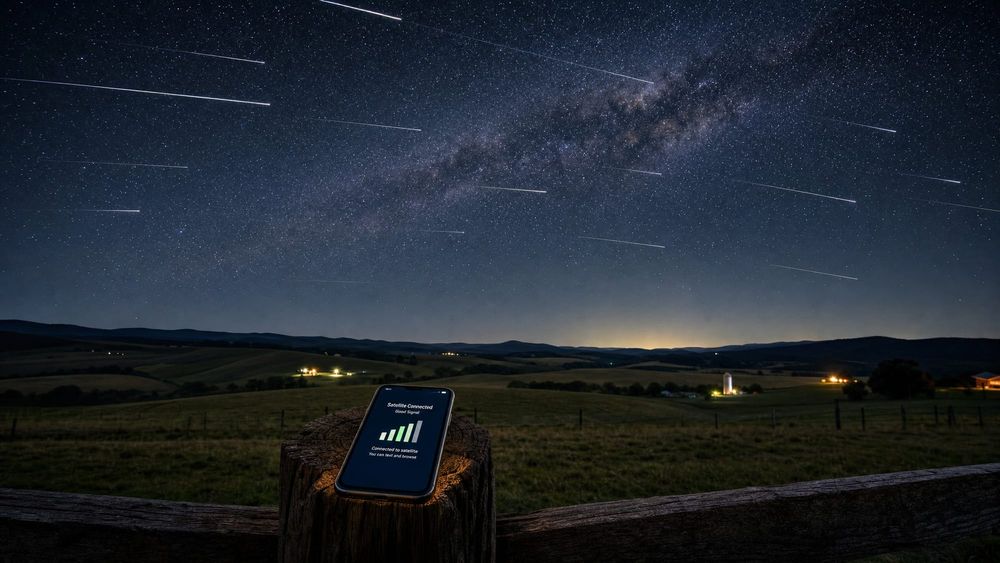
On August 9, 2026, the Federal Communications Commission voted to launch a formal regulatory proceeding exploring new pathways for unlicensed wireless devices to communicate directly with orbiting satellites using 200 MHz of spectrum. The Notice of Proposed Rulemaking targets the creation of rules that would allow smartphones, tablets, and IoT devices to establish direct uplinks to non-geostationary satellite constellations without requiring dedicated satellite hardware or licensed spectrum agreements — a fundamental shift in how satellite connectivity reaches end users and a potential accelerant for the entire direct-to-device (D2D) industry.
The proceeding builds on the FCC's April 2026 decision to modernize spectrum-sharing rules between geostationary and non-geostationary systems, which was projected to deliver a "seven-fold" capacity increase for satellite broadband. This new action goes further by specifically targeting the D2D market segment, where SpaceX (Starlink Direct-to-Cell), AST SpaceMobile (which just launched its 11th through 13th BlueBird satellites and commenced commercial D2D service in Japan with Rakuten this week), and Amazon's Project Kuiper are racing to provide satellite connectivity to unmodified consumer handsets. The 200 MHz allocation under consideration would be carved from existing bands, potentially including portions of the S-band and L-band that are currently underutilized or shared between terrestrial and satellite services.
For the D2D industry, this is a regulatory green light of enormous significance. Current services operate under a patchwork of experimental licenses, temporary waivers, and bilateral agreements with terrestrial carriers — a fragmented landscape that increases deployment costs and slows market entry. A dedicated unlicensed framework would dramatically simplify the regulatory path, reduce compliance costs, and accelerate the timeline for nationwide and eventually global satellite-direct phone service. SpaceX's recent earnings call made clear that Starlink Mobile is a central revenue strategy, with the company planning to challenge the incumbent wireless carriers directly. The FCC's NPRM also signals intent to position the United States as the first major market with clear D2D regulatory rules, potentially creating a template other countries adopt through the International Telecommunication Union. Public comments will be accepted before a final order, likely in early 2027.
THE DOUGH
This proceeding directly benefits SpaceX, AST SpaceMobile, and Amazon's Kuiper — all of which are building or operating D2D satellite constellations. Chipset designers like Qualcomm and MediaTek, which produce satellite-capable smartphone modems, would see expanded demand as the regulatory path clears. Traditional wireless carriers face intensified competitive pressure if the rules make it easier for satellite operators to bypass terrestrial network gatekeepers. Ground equipment manufacturers, antenna companies, and terminal makers across the satellite ecosystem also benefit from a clearer, more accessible regulatory framework that lowers barriers to entry.
We are not financial analysts or investment advisors. Nothing in this newsletter constitutes investment advice. All economic analysis is speculative and for informational purposes only. Do your own research.
THE POSSIBILITIES
If unlicensed D2D access becomes the default rather than the exception, satellite operators could bypass traditional telecom gatekeepers entirely — selling connectivity directly to device manufacturers or even consumers. This would fundamentally restructure the mobile industry's value chain, removing carriers as the sole intermediaries between users and connectivity.
THE HURDLES
Incumbent terrestrial carriers and GEO satellite operators will fight this rulemaking aggressively, arguing that unlicensed satellite access could cause harmful interference to existing services. International spectrum coordination through the ITU remains a constraint — the FCC can set domestic rules, but cross-border interference near national borders could limit practical deployment. The technical challenge of making reliable D2D links with standard smartphone antennas at satellite distances also remains formidable.
WHAT TO WATCH
- Public comment deadline and the volume and tenor of industry filings
- SpaceX and AST SpaceMobile formal filings supporting the proceeding
- Legal challenges from terrestrial carriers or GEO operators
- ITU coordination timeline for international D2D spectrum harmonization
- Qualcomm and MediaTek satellite modem chipset roadmap announcements
Void Economy is researched, written, and illustrated with AI, reviewed and edited by a real, live, flesh-n-blood human.