
THE STORY
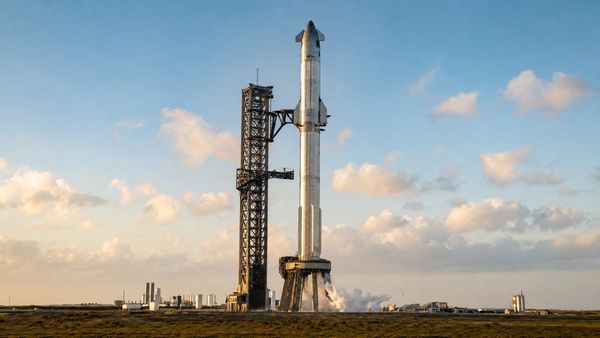
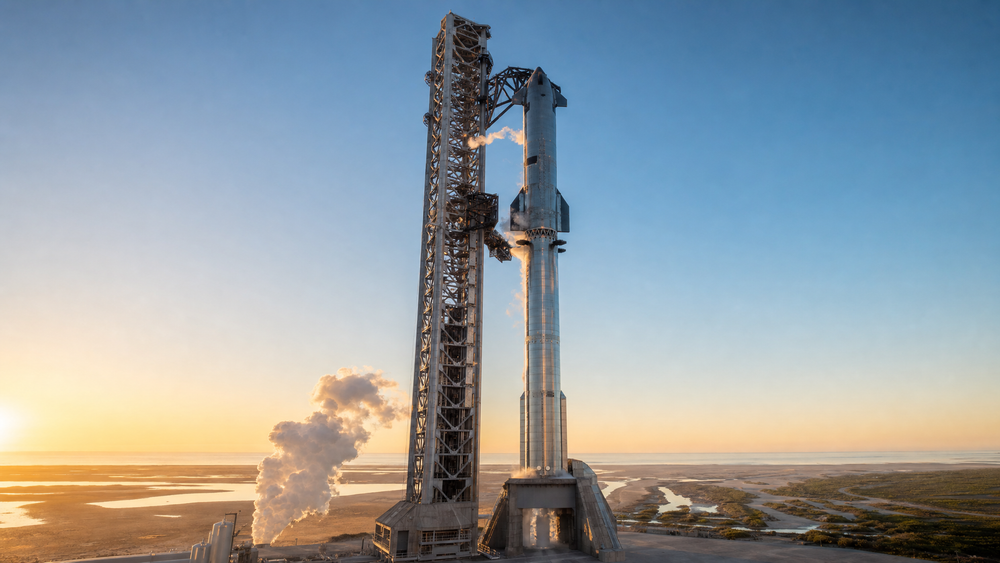
SpaceX is targeting May 19 for Flight 12, the debut launch of Starship Version 3 — a ground-up redesign of the most powerful rocket ever built. The vehicle will also christen Launch Pad 2, SpaceX's entirely new launch infrastructure at Starbase, Texas. V3 incorporates dozens of changes across the Super Heavy booster, Starship upper stage, and Raptor 3 engines, essentially making it a different vehicle from the V2 stack that flew previous missions. SpaceX completed the first-ever fueling test of the V3 stack on May 12, clearing a critical milestone. In a first for any Starship mission, external cameras will allow the ship to visually inspect itself in space — a capability critical for crewed lunar missions.
V3 is the variant SpaceX needs to make everything else work: the Human Landing System for Artemis, orbital refueling depots, and ultimately Mars transit. Getting it off the pad — and demonstrating Pad 2 operability — gives SpaceX dual-launch capability at Starbase for the first time, dramatically increasing the cadence needed for its most ambitious programs.
THE DOUGH
Flight 12's success or failure will directly influence SpaceX's impending IPO, which is expected to price around June 12 at a valuation approaching $2 trillion. A clean V3 debut would validate the company's next-generation architecture and strengthen investor confidence in its HLS contracts, Starlink deployment roadmap, and Mars ambitions. Suppliers across the aerospace chain — from Raptor engine component makers to ground systems providers — are watching closely, as V3 represents a major production shift that will ripple through contracting for years. The dual-pad capability alone could allow SpaceX to accelerate Starship launches to a pace that reshapes the entire commercial launch market's economics.
We are not financial analysts or investment advisors. Nothing in this newsletter constitutes investment advice. All economic analysis is speculative and for informational purposes only. Do your own research.
THE POSSIBILITIES
The external self-inspection cameras are the quietly revolutionary detail. If Starship can photograph and assess its own thermal protection system in orbit, it removes the need for elaborate ground-based or drone inspections between flights — a prerequisite for the rapid reusability that makes $10/kg-to-orbit pricing theoretically possible. This single capability could collapse turnaround times from weeks to days.
THE HURDLES
V3 has never flown. The vehicle is substantially different from its predecessors, meaning lessons from Flights 1–11 only partially apply. A Pad 2 failure could damage the new infrastructure and set the program back months. FAA licensing cadence remains a wildcard, and any anomaly would ripple directly into Artemis III timelines.
WHAT TO WATCH
- Flight 12 launch outcome and booster recovery attempt on May 19
- Ship self-inspection camera performance during orbital coast
- Pad 2 structural integrity post-launch — any damage assessment
- FAA license turnaround time for subsequent V3 flights
- SpaceX commentary on V3 reusability timeline at pre-IPO roadshow