

THE STORY
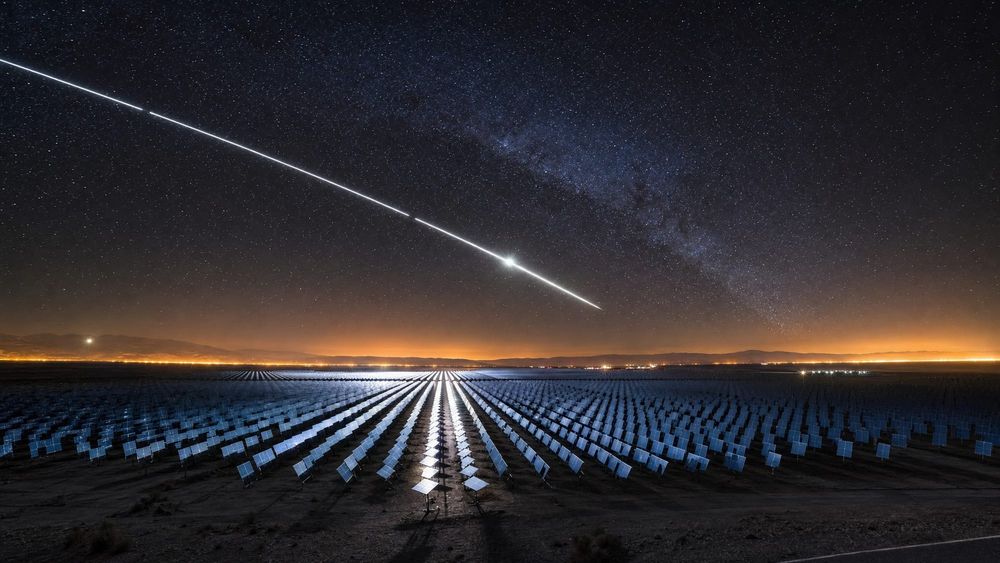
The U.S. Federal Communications Commission has authorized California-based startup Reflect Orbital to build and operate a single prototype satellite in low Earth orbit that will do something no spacecraft has done before: deliberately redirect sunlight down to specific locations on Earth at night. The satellite, named Eärendil-1, is a deployable mirror designed to concentrate reflected solar energy onto ground targets — potentially solar farms — extending their productive hours past sunset. Reflect Orbital plans to launch the prototype later this year, with ambitions to eventually deploy tens of thousands of such mirrors over the next decade.
The concept is elegantly simple in theory and ferociously difficult in practice. A reflective surface in LEO, illuminated by sunlight while the ground below sits in Earth's shadow, redirects photons downward. If the reflected beam can be aimed precisely enough and with sufficient intensity, it could supplement ground-based solar arrays during twilight and nighttime hours — addressing one of solar energy's fundamental limitations. Reflect Orbital's approach targets a ground spot large enough to illuminate an entire solar farm rather than focusing energy to a dangerous point, reducing the intensity to levels comparable to bright moonlight or early dawn sunlight. The company argues this could meaningfully increase the capacity factor of existing solar installations without any modifications to the ground equipment.
The FCC approval addressed only the satellite's radio communications systems, noting that concerns from the European Southern Observatory and other astronomical organizations about reflected light contamination fall outside the Commission's regulatory scope. That caveat is significant: the astronomy community has been increasingly vocal about the impact of bright satellites on ground-based observations, and deliberately reflective spacecraft represent a new category of concern. Reflect Orbital's longer-term vision of tens of thousands of mirrors would create a constellation of artificial light sources visible from the ground — a prospect that has astronomers and dark-sky advocates deeply worried, even as climate and energy advocates see potential in supplementing renewable power generation. The prototype mission will provide the first real data on beam targeting accuracy, effective ground illumination levels, and optical interference characteristics.
THE DOUGH
Space-based solar energy augmentation represents a potentially enormous market if the economics work. Global solar capacity exceeded 2 terawatts in 2025, and even a small increase in capacity factor across installed infrastructure could be worth billions annually. Reflect Orbital competes conceptually with the Defense Innovation Unit's separate solicitation for space-based power beaming, though the approaches differ — Reflect redirects sunlight while DIU is exploring microwave or laser power transmission. Energy utilities with large solar portfolios, including NextEra Energy and Duke Energy, would be natural customers if the technology proves viable.
We are not financial analysts or investment advisors. Nothing in this newsletter constitutes investment advice. All economic analysis is speculative and for informational purposes only. Do your own research.
THE POSSIBILITIES
The sleeper implication is military, not civilian. A constellation that can direct sunlight to any point on Earth's night side could illuminate battlefields, extend drone operations, or power forward-deployed solar arrays in austere environments. The DIU's simultaneous solicitation for orbital power delivery suggests the Pentagon is already thinking along these lines.
THE HURDLES
Atmospheric scattering, cloud cover, and the sheer physics of beam divergence over hundreds of kilometers may render the ground illumination too diffuse to meaningfully boost solar farm output. The astronomical community's opposition could also generate regulatory resistance at the international level through bodies like the UN Committee on the Peaceful Uses of Outer Space.
WHAT TO WATCH
- Eärendil-1 launch date and first on-orbit beam targeting demonstration results
- Measured ground illumination intensity versus Reflect Orbital's projections
- Astronomical community responses and any ITU or UN regulatory actions
- DIU space-based power delivery solicitation responses and contract awards
- Whether energy utilities or defense agencies emerge as early customers


