
THE STORY
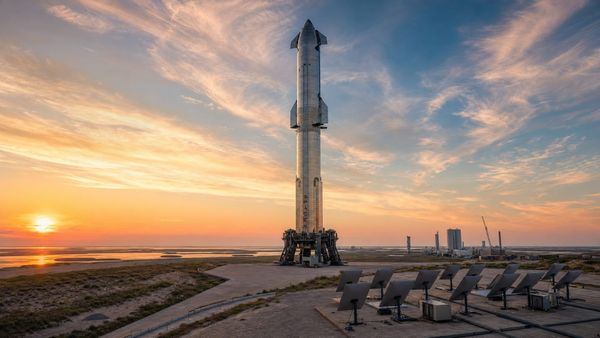
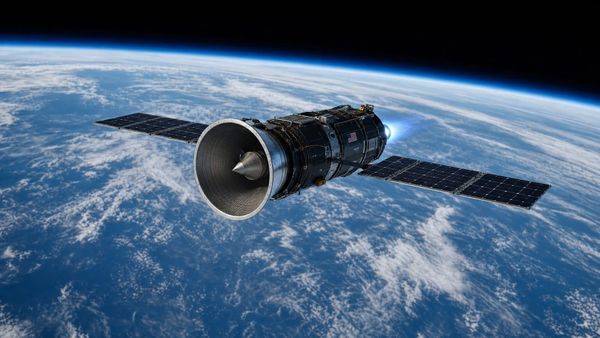
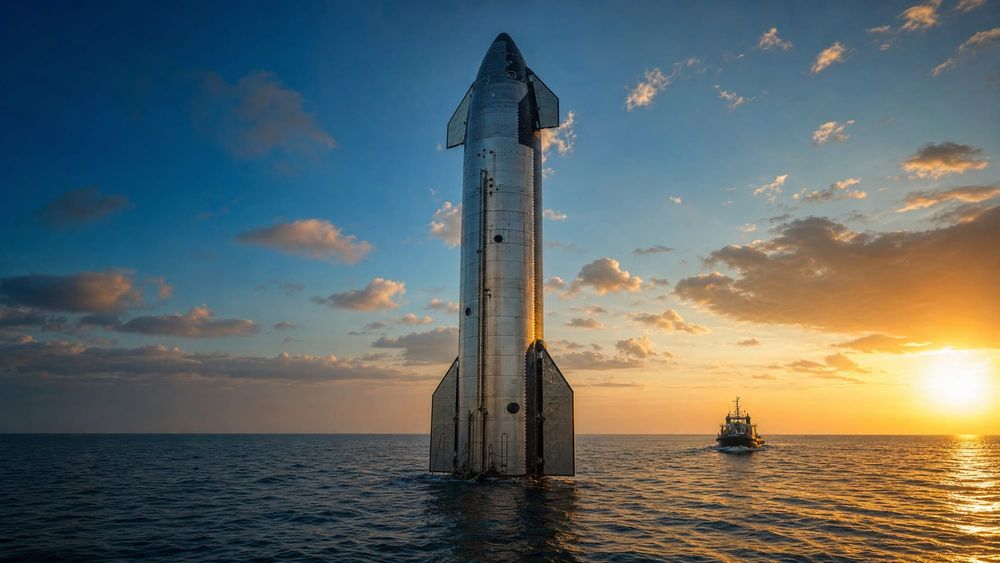
SpaceX's Starship Flight 13, launched on July 24, delivered what may be the program's most visually stunning and technically significant test to date. Ship 40 survived atmospheric reentry intact — not just functionally, but structurally — and executed a controlled soft landing in the Indian Ocean, where it remained floating for at least five days. SpaceX captured the entire sequence using drones and a specially positioned "buoy cam," releasing footage of the 164-foot-tall stainless steel vehicle gently touching down on the water's surface. But the most jaw-dropping imagery came from an unexpected source: next-generation Starlink V3 broadband satellites that Ship 40 had deployed during the flight's orbital coast phase. The satellites turned their cameras back toward the vehicle and filmed Starship gliding through space — the payload photographing its own ride.
Every mission objective was met. Booster 18 executed its return and was recovered, and Ship 40 completed its planned trajectory before committing to the water landing that SpaceX has been refining as a stepping stone toward the ultimate goal: catching the returning ship with the launch tower's mechanical arms, just as the company now routinely catches Super Heavy boosters. CEO Elon Musk later revealed that SpaceX had performed a previously undisclosed test during the flight, though specifics remain scarce. NASASpaceFlight.com reported that Ship 40's flawless performance "promotes next mission catch potential," suggesting SpaceX may attempt the first ship catch as early as Flight 14 or 15.
The thermal protection system — Starship's Achilles' heel through much of its test program — appears to have performed well enough for the ship to survive reentry and remain watertight. That said, outside experts quoted by Bloomberg and Ars Technica cautioned that the current heat shield technology, which relies on hexagonal ceramic tiles, may represent a "dead end" for the rapid reusability Musk envisions. Former NASA researchers noted the agency has not made substantial investments in thermal protection research for decades, and that achieving airliner-like turnaround times will require fundamentally different materials or approaches. Meanwhile, NASA and SpaceX completed new wind tunnel tests on the Super Heavy Version 3 booster at NASA's Ames Research Center, studying the extreme aerodynamic forces during reentry — a collaboration critical for the Artemis III Human Landing System variant.
Starship Flight 13 also coincided with a turbulent period for SpaceX stock, which fell 20% below its IPO price, erasing more than $1.2 trillion in value from its peak. The company's first-ever public earnings report is due August 4, and short interest has soared ahead of a major share unlock. Yet the technical performance of the vehicle itself has never been stronger — a divergence between market sentiment and engineering progress that rarely persists for long.
THE DOUGH
SpaceX's demonstrated Starship reusability directly underpins the cost-per-kilogram economics that NASA's Artemis program, the Department of Defense, and commercial satellite operators are counting on. Successful ship recovery advances timelines for the HLS lunar lander, orbital refueling depots, and bulk Starlink V3 deployment — each representing multi-billion-dollar revenue streams. The company's first earnings call on August 4 will be the first window into how these capabilities translate to financial performance as a public company, with implications for secondary-market investors and ETFs like ARKX and Procure Space ETF (UFO).
We are not financial analysts or investment advisors. Nothing in this newsletter constitutes investment advice. All economic analysis is speculative and for informational purposes only. Do your own research.
THE POSSIBILITIES
The real breakthrough isn't the water landing — it's the fact that the ship remained intact and watertight for five days afterward. If SpaceX can recover a ship from the ocean, inspect it, refurbish it, and fly it again, they have a backup reuse pathway even before tower catches are perfected. That insurance policy could dramatically accelerate flight cadence.
THE HURDLES
Heat shield durability remains the long pole in the tent. Experts warn that the current tile-based thermal protection system degrades with each flight and cannot support the rapid-turnaround operations SpaceX needs for its business model. Without a breakthrough in TPS materials — or a fundamentally different approach — Starship reuse will remain measured in weeks, not hours.
WHAT TO WATCH
- SpaceX's first public earnings report on August 4 and commentary on Starship flight cadence plans
- Post-flight inspection of Ship 40's heat shield tiles after ocean recovery
- Whether Flight 14 or 15 attempts the first ship catch with the launch tower
- FAA license timing for subsequent flights and the regulatory cadence question
- NASA's assessment of Super Heavy V3 wind tunnel results for Artemis III HLS