
THE STORY
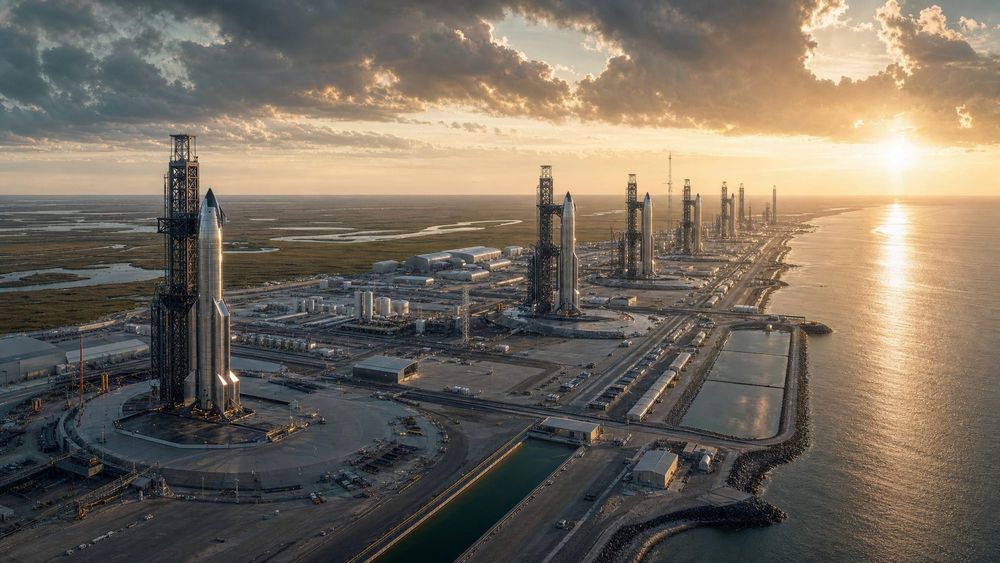
SpaceX president Gwynne Shotwell stood alongside Louisiana Governor Jeff Landry on Tuesday, August 25, to announce "Starbase, Louisiana" — a new launch complex near Vermilion Parish on the state's Gulf Coast that the company describes as the largest private spaceport in the world. SpaceX plans to invest up to $100 billion in the facility, build ten launch pads, and eventually support thousands of Starship launches per year. Construction is slated to begin in 2027, with the first Starship flight from Louisiana potentially as soon as 2029.
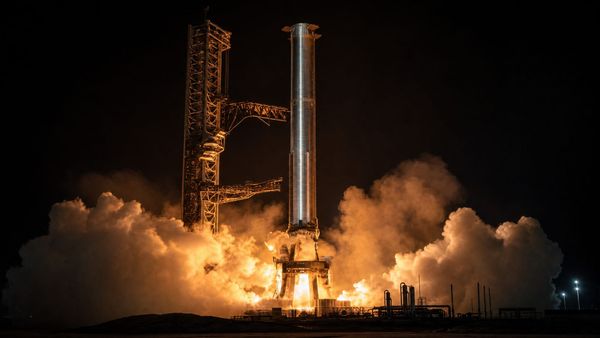
The scale is staggering even by SpaceX standards. The existing Starbase in Boca Chica, Texas, currently has two pads — one operational, one nearing completion — and has flown Starship thirteen times. Louisiana would dwarf that footprint with a complex purpose-built for high-cadence operations from the outset. The Gulf Coast location offers favorable launch azimuths for both equatorial and polar orbits, and the flat, sparsely populated coastal terrain provides natural buffer zones. SpaceX has framed the site as critical infrastructure for its long-term ambitions: deploying next-generation Starlink satellites, supporting Artemis lunar lander missions, launching orbital refueling depots, and — eventually — sending crewed missions to Mars. A facility capable of thousands of annual launches would represent an order-of-magnitude increase over the roughly 150 orbital launches the entire world conducted in 2025.
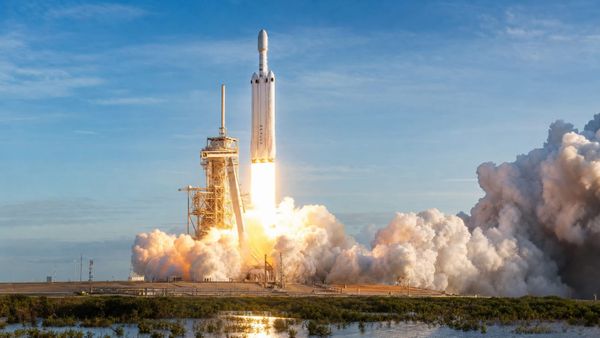
The announcement coincides with SpaceX signaling that Falcon 9's days are numbered. Elon Musk said this week that SpaceX will retire the workhorse rocket once Starship can fly reliably every week, and the company confirmed that all future Starlink missions from Florida will shift to Starship. That transition creates a gap: Starbase Texas will need to handle the overflow while Louisiana ramps up, and SpaceX will need FAA launch licenses for both sites to operate concurrently at the cadence it envisions. Louisiana's political environment — Governor Landry has been aggressively courting aerospace and energy investment — appears designed to smooth the regulatory path.
The $100 billion figure, if realized, would make Starbase Louisiana one of the largest single-site infrastructure investments in American history, rivaling the Interstate Highway System on a per-facility basis. SpaceX has not disclosed detailed financing, but the company's impending IPO and its dominant position in the global launch market provide a plausible capital base. The spaceport would create thousands of construction and operations jobs in a region historically dependent on oil and gas, potentially transforming the Louisiana Gulf Coast into an aerospace corridor.
THE DOUGH
A $100 billion construction project over a decade-plus timeline would generate massive demand for steel, concrete, heavy industrial equipment, and specialized aerospace infrastructure — all funneling through Louisiana's economy. Local service providers, construction firms, and housing markets near Vermilion Parish could see transformative investment. SpaceX's supply chain, which already spans thousands of vendors, would expand significantly, and the high-cadence launch operations would require a permanent workforce in propellant production, pad refurbishment, and mission operations. For investors watching the upcoming SpaceX IPO, Starbase Louisiana represents both the company's long-term revenue growth thesis and its largest single capital commitment outside of Starship development itself.
We are not financial analysts or investment advisors. Nothing in this newsletter constitutes investment advice. All economic analysis is speculative and for informational purposes only. Do your own research.
THE POSSIBILITIES
If SpaceX achieves even a fraction of its stated launch cadence, Starbase Louisiana would become the busiest launch site on Earth — and potentially the logistics hub for an entire orbital economy. Thousands of annual Starship flights could make space access so routine that orbital manufacturing, space tourism, and even commercial lunar cargo become cost-competitive with terrestrial alternatives. The more radical possibility: a facility this large could serve as the departure point for Mars-bound convoys, where multiple Starships launch in quick succession during planetary transfer windows.
THE HURDLES
Environmental permitting for a coastal wetland spaceport capable of thousands of annual launches will face intense scrutiny — the Boca Chica experience has shown that FAA environmental reviews can delay timelines by years. SpaceX's $100 billion investment figure far exceeds anything the company has publicly committed to before, and financing at that scale will require either massive debt issuance, sustained Starlink revenue growth, or significant government incentives. Starship itself has not yet completed a fully successful orbital mission, meaning the entire Louisiana complex is predicated on a vehicle architecture that remains in active flight testing.
WHAT TO WATCH
- FAA environmental review and launch license application timeline for the Louisiana site
- Louisiana state and federal incentive packages — tax breaks, infrastructure spending, and regulatory carve-outs
- SpaceX's IPO prospectus for details on capital allocation between Starbase Texas, Louisiana, and Starlink
- Whether SpaceX secures Department of Defense launch contracts specifying Louisiana as a launch site
- Construction milestones and workforce hiring announcements beginning in 2027
Void Economy is researched, written, and illustrated with AI, reviewed and edited by a real, live, flesh-n-blood human.