
THE STORY
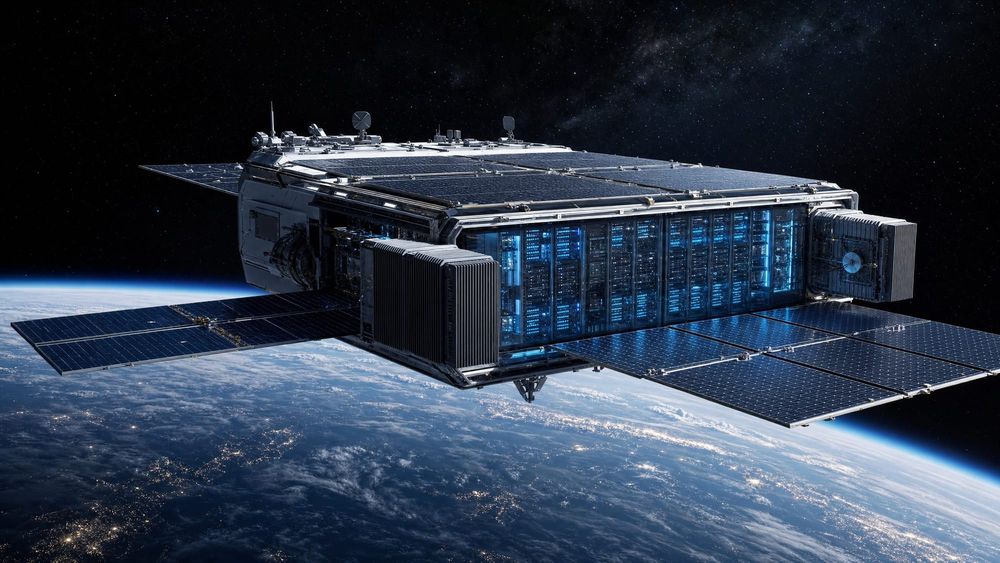
Ahead of its Nasdaq debut, SpaceX revealed the design of its first orbital data center satellite, with CEO Elon Musk describing it as "much simpler than a Starlink satellite." The disclosure, which accompanied the company's S-1 filing, transforms what had been a speculative talking point into a concrete engineering program — and one that ARK Invest estimates could generate $300 billion in annual revenue by the late 2020s if SpaceX can deploy tens of gigawatts of orbital compute capacity at current rental rates.
The concept addresses a fundamental constraint facing the AI industry: terrestrial data centers consume enormous amounts of electricity, water, and land, and face growing community opposition. SpaceX argues that orbital data centers can leverage continuous solar power, passive radiative cooling in the vacuum of space, and Starship's unprecedented mass-to-orbit capability to deploy computing infrastructure without the permitting battles and infrastructure bottlenecks plaguing ground-based facilities. Musk stated the company aims to launch orbital computing tests by the end of next year.
Astronomers, however, have raised alarms. As SpaceX gears up to launch orbital data center spacecraft as early as next year, scientists warn those satellites could cause serious interference with ground-based observations — adding to existing concerns about Starlink's impact on optical and radio astronomy. The tension between orbital computing ambitions and scientific access to dark skies is likely to intensify as the program scales. SpaceX previously rented out its entire Colossus 1 terrestrial data center in Memphis to Anthropic after encountering technical challenges using it internally, suggesting the company is still refining its approach to AI infrastructure.
THE DOUGH
If even a fraction of ARK's $300 billion revenue projection materializes, orbital data centers would become SpaceX's largest business line — dwarfing both launch services and Starlink broadband. Companies across the AI compute supply chain, including Nvidia, Broadcom, and cooling-system manufacturers, would gain a new customer segment. The concept also creates opportunities for competitors: Symphony Space has unveiled its own orbital data center design, and a Los Angeles startup called Orbital raised $5 million to build a constellation of over 100,000 smaller orbital compute nodes.
We are not financial analysts or investment advisors. Nothing in this newsletter constitutes investment advice. All economic analysis is speculative and for informational purposes only. Do your own research.
THE POSSIBILITIES
Orbital data centers could resolve the AI industry's looming power crisis without requiring the decade-long timelines of new nuclear plants or grid upgrades — effectively bypassing terrestrial infrastructure constraints entirely and unlocking AI scaling that would be physically impossible on the ground.
THE HURDLES
Thermal management, latency, radiation hardening, and the sheer cost of launching heavy computing equipment to orbit are unsolved at scale. No commercial orbital computing demonstration has been conducted, and the concept's economics depend heavily on Starship achieving dramatically lower launch costs than any rocket has ever delivered.
WHAT TO WATCH
- SpaceX's first orbital computing test launch timeline
- Regulatory response from the FCC and international bodies on orbital data center spectrum use
- Competing orbital data center architectures from Symphony Space, Orbital, and others
- Astronomy community lobbying for interference protections