
THE STORY
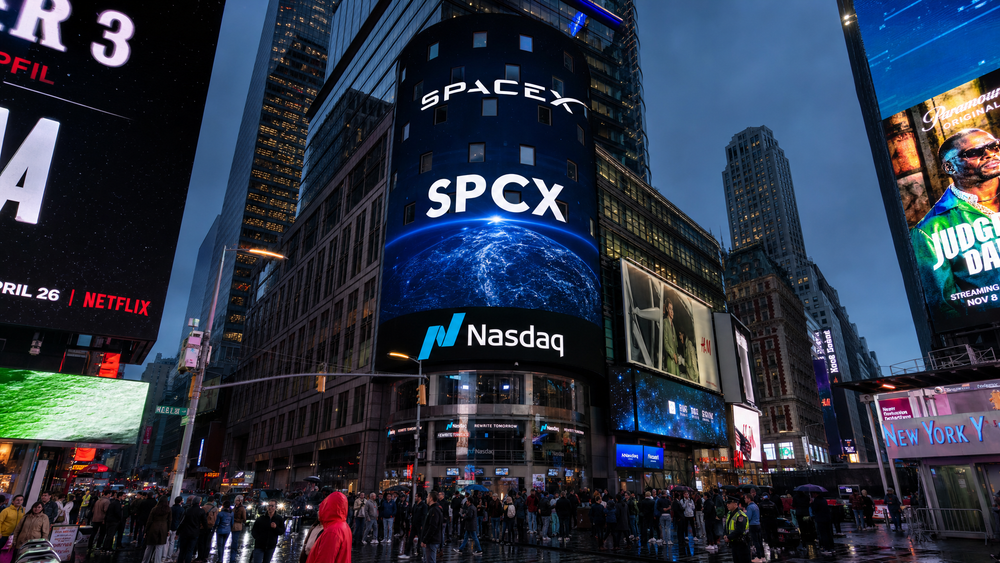
SpaceX has accelerated its IPO timeline and is now targeting June 12 for its Nasdaq debut, with an expected roadshow beginning in early June. Shareholders have approved a 5-for-1 stock split to reduce the per-share price for public investors. BlackRock is reportedly weighing a multibillion-dollar investment in the offering, and Brookfield has placed a $2 billion pre-IPO bet. Multiple sources project a valuation in the $1.75–2 trillion range, which would make it the largest technology IPO in history. Elon Musk has confirmed he will not sell any of his shares and has moved to structurally shield his leadership at the company, tying his compensation to the long-term goal of establishing a self-sustaining colony on Mars.
The IPO gives public investors their first direct access to SpaceX's combined launch, Starlink, and human spaceflight businesses — three revenue engines that collectively dominate the commercial space industry.
THE DOUGH
SpaceX's IPO will instantly become the largest pure-play space company in public markets by an enormous margin. BryceTech data confirming SpaceX's 50% share of global orbital launches underscores its dominance. For investors, the stock split and Nasdaq listing dramatically lower the barrier to entry. Starlink, already SpaceX's primary revenue driver, stands to benefit further from the FCC's recent spectrum-sharing rule changes. The IPO will also create a public benchmark for space company valuations, potentially lifting (or pressuring) peers like Rocket Lab, AST SpaceMobile, and Intuitive Machines as the market recalibrates what space companies are worth relative to the sector leader.
We are not financial analysts or investment advisors. Nothing in this newsletter constitutes investment advice. All economic analysis is speculative and for informational purposes only. Do your own research.
THE POSSIBILITIES
The real question isn't the IPO price — it's whether public-market pressure changes SpaceX's risk tolerance. SpaceX's willingness to blow up rockets, iterate rapidly, and accept short-term losses for long-term capability is central to its success. Public shareholders tend to punish volatility. Musk's structural protections against being fired suggest he's already preparing for that tension.
THE HURDLES
SpaceX reportedly posted a nearly $5 billion loss in 2025, largely attributed to xAI investments, which could complicate the IPO narrative. Any Starship anomaly between now and June 12 would rattle investor sentiment. And the company's entanglement with Musk's other ventures — Tesla, xAI, X — creates governance complexity that public-market analysts will scrutinize aggressively.
WHAT TO WATCH
- SpaceX S-1 filing, expected to become public next week
- IPO pricing and first-day trading performance on June 12
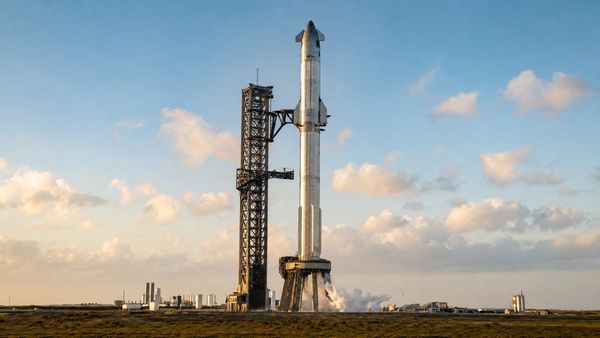
- Starship V3 Flight 12 outcome and its impact on pre-IPO sentiment
- Starlink subscriber and revenue figures disclosed in IPO filings
- Whether the IPO triggers a broader wave of space company listings (Anthropic, OpenAI aside)