
THE STORY
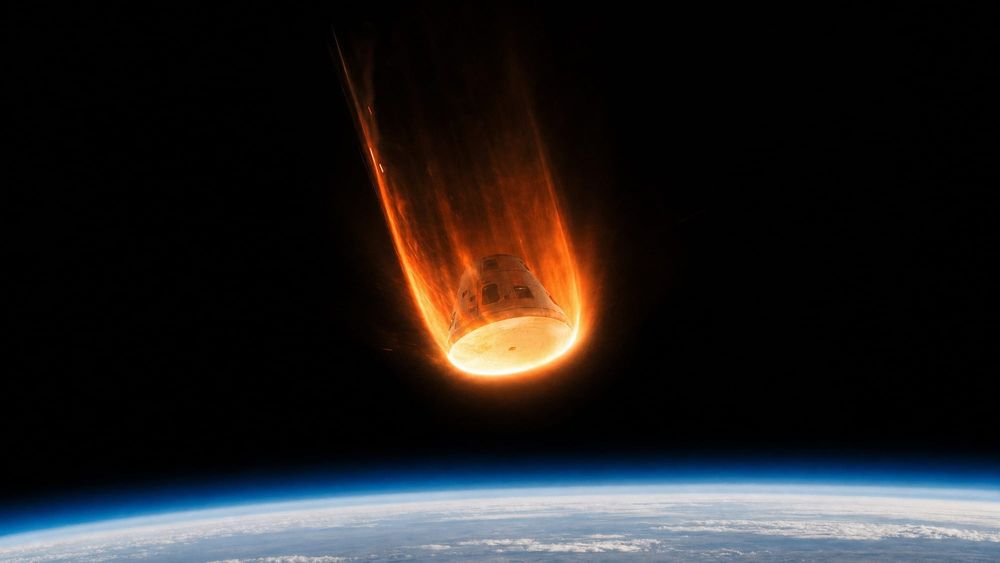
SpaceX conducted the maiden test flight of Starfall, a new capsule designed to tackle two of the hardest remaining problems in the commercial space economy: getting manufactured goods back from microgravity, and delivering cargo point-to-point anywhere on Earth via suborbital trajectories. The demonstration, reported by SatNews, marks the debut of an entirely new vehicle class in SpaceX's lineup — separate from Dragon, which serves crew and cargo missions to the International Space Station, and distinct from Starship, which is optimized for heavy lift. Starfall is purpose-built to be small, fast, and cheap enough to serve the emerging in-space manufacturing industry that has struggled for decades with a fundamental bottleneck: you can make extraordinary things in microgravity, but getting them home has been prohibitively expensive and infrequent.
The timing of Starfall's debut is not coincidental. SpaceX's record-breaking IPO in June created a massive liquidity event that is now accelerating investment across the broader space manufacturing ecosystem. Companies building orbital factories — from pharmaceutical crystallization to advanced fiber optics to semiconductor fabrication — have been waiting for a reliable, affordable return vehicle. Dragon capsules cost tens of millions per flight and are optimized for ISS operations, not commercial manufacturing logistics. Starfall is designed to fill that gap: a dedicated downmass vehicle that could make multiple return flights per month at costs low enough to close the business case for orbital manufacturing at scale.
The point-to-point cargo delivery angle is equally significant, though further from commercial reality. The U.S. Air Force has been studying rocket-based cargo delivery for years, with contracts already awarded to SpaceX, Blue Origin, and Rocket Lab to explore the concept. A small, reusable capsule capable of delivering urgent payloads — think critical military supplies, medical equipment, or disaster relief materials — to any point on Earth within 60 minutes would be a transformative logistics capability. Starfall's maiden flight demonstrates that SpaceX is serious about making this concept operational, not just theoretical.
THE DOUGH
Starfall directly enables the business models of in-space manufacturing startups like Varda Space Industries, Space Forge, and Redwire, which need affordable, frequent downmass to make their economics work. The vehicle also positions SpaceX as the logistics backbone for orbital factories — a recurring revenue stream independent of launch services. Defense applications through the Air Force's Rocket Cargo program represent additional government demand. The broader in-space manufacturing market, while nascent, is projected by multiple analysts to reach tens of billions by the early 2030s if the return-vehicle bottleneck is solved.
We are not financial analysts or investment advisors. Nothing in this newsletter constitutes investment advice. All economic analysis is speculative and for informational purposes only. Do your own research.
THE POSSIBILITIES
If Starfall can deliver return flights at even one-tenth the cost of Dragon, it changes what's economically viable to manufacture in orbit. Products that have been demonstrated in microgravity but never scaled — ZBLAN optical fiber, protein crystals for drug design, exotic semiconductor alloys — could finally become commercial businesses rather than science experiments.
THE HURDLES
A maiden test flight is just the beginning. SpaceX needs to demonstrate reusability, rapid turnaround, and consistent reentry precision before Starfall can serve commercial customers with sensitive payloads. Regulatory frameworks for point-to-point suborbital cargo delivery remain undeveloped, and the FAA is already struggling with launch licensing backlogs for conventional missions.
WHAT TO WATCH
- SpaceX commentary on Starfall during its August 4 earnings call
- Follow-up test flights and any demonstrations carrying actual customer payloads
- In-space manufacturing startups announcing Starfall as their return vehicle of choice
- Air Force Rocket Cargo program progress and whether Starfall is selected for military logistics demos