
THE STORY
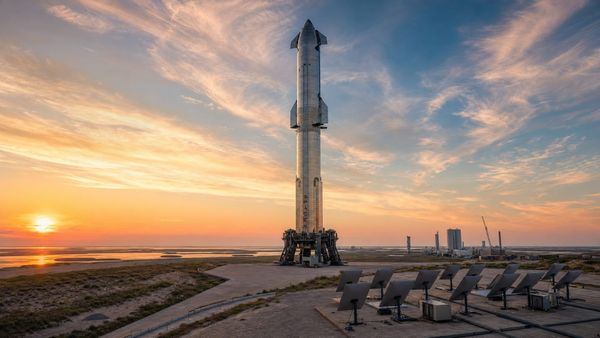
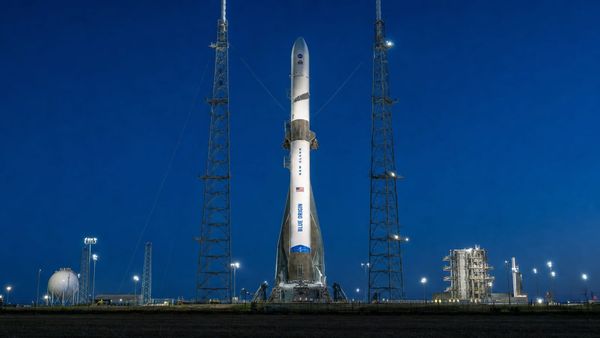
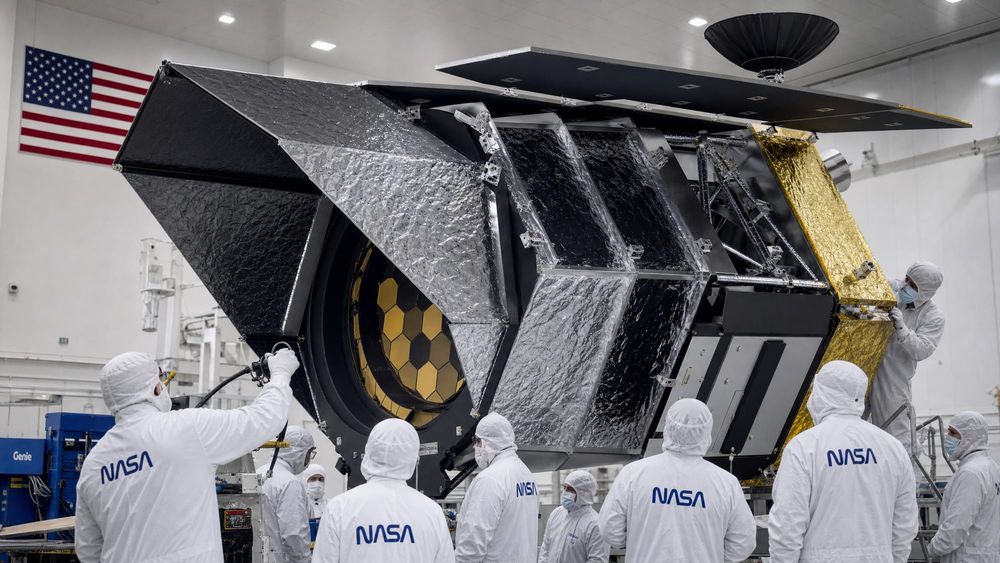
NASA's Nancy Grace Roman Space Telescope — the agency's next flagship space observatory — has been fueled and is on track for launch aboard a SpaceX Falcon Heavy rocket on August 30, 2026. The mission is arriving nine months ahead of its original schedule, a rare feat for a NASA flagship of this scale and ambition. Technicians at Kennedy Space Center recently installed a memory card containing 1,350,144 names submitted by people worldwide, including astronauts from Artemis II and III, as part of a commemorative plaque that will travel with the observatory to its perch at the Sun-Earth Lagrange point 2 (L2), roughly a million miles from Earth.
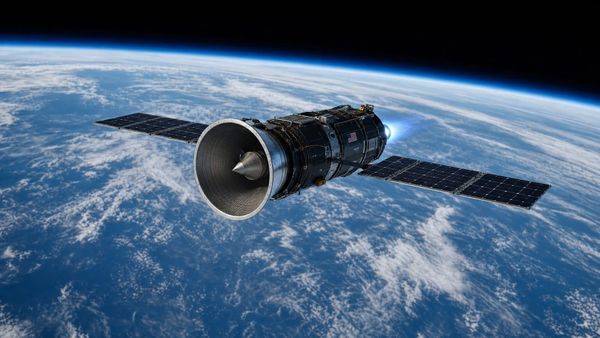
Roman is designed to do what no other telescope can: survey the entire sky at Hubble-level resolution but across fields of view 100 times wider. Its 2.4-meter primary mirror — the same diameter as Hubble's — feeds a Wide Field Instrument and a coronagraph technology demonstrator capable of directly imaging exoplanets by blocking out starlight. The telescope's primary science goals span three of astronomy's most pressing frontiers: measuring the expansion history of the universe to constrain the nature of dark energy, conducting the most comprehensive census of exoplanets ever attempted via gravitational microlensing, and surveying the large-scale structure of the cosmos to test general relativity on cosmological scales. Where JWST looks deep and narrow, Roman will look wide and fast — complementing Webb's infrared depth with statistical power across vast swaths of sky.
The timing is extraordinary. Roman launches into a scientific environment already being reshaped by JWST's discoveries, which have revealed unexpectedly massive galaxies in the early universe, challenged existing models of galaxy formation, and — as WIRED reported this week — are "giving cosmologists new data to explore and theories to build out." Roman will take that revolution and scale it up. Its coronagraph, if successful, will be the first space-based instrument capable of directly imaging exoplanets in reflected starlight — a technology pathfinder for future missions designed to search for biosignatures on Earth-like worlds. Combined with this week's first-ever exomoon detection, the next decade of space-based astronomy looks like a golden age for discovery.
The observatory's ahead-of-schedule arrival reflects lessons learned from JWST's painful delays and cost overruns. Roman's development has been notably smoother, with NASA crediting improved project management, stable funding, and a deliberate effort to avoid scope creep. Launch on Falcon Heavy — one of SpaceX's most proven vehicles — adds another layer of confidence.
THE DOUGH
Roman is built around contracts to Ball Aerospace (spacecraft bus), L3Harris Technologies (Wide Field Instrument), Teledyne (infrared detectors), and Jet Propulsion Laboratory (coronagraph). The mission's success would validate the investment thesis behind next-generation space observatories and strengthen the pipeline for future flagships recommended by the Astro2020 Decadal Survey, including the Habitable Worlds Observatory. Ground segment and data processing contracts create additional downstream opportunities for companies supporting science operations.
We are not financial analysts or investment advisors. Nothing in this newsletter constitutes investment advice. All economic analysis is speculative and for informational purposes only. Do your own research.
THE POSSIBILITIES
Roman's coronagraph is a technology demonstrator, not a full science instrument — but if it works, it will prove that space-based direct imaging of exoplanets is feasible. That single result could accelerate the timeline for the Habitable Worlds Observatory by a decade, pulling forward what would otherwise be a 2040s-era mission into the early 2030s design phase.
THE HURDLES
Flagship space telescopes are one-shot systems — there's no servicing mission if something goes wrong during deployment at L2. Roman's coronagraph pushes technology boundaries that haven't been tested in the space environment, and any underperformance could dampen enthusiasm for the direct imaging approach. The telescope also depends on stable continued funding for its planned five-year primary mission and potential extended operations.
WHAT TO WATCH
- August 30 launch on Falcon Heavy and deployment of the spacecraft en route to L2
- Commissioning timeline and first-light imagery, expected several months after launch
- Coronagraph performance — any successful direct imaging of an exoplanet would be historic
- How Roman's wide-field survey data complements or challenges JWST findings on early galaxies
- Congressional funding signals for follow-on flagship missions like the Habitable Worlds Observatory