
THE STORY
K2 Space, the satellite manufacturer founded by former SpaceX engineers Karan and Neel Kunjur, has closed a $500 million Series D funding round that values the company at $6.8 billion — more than doubling its valuation in just seven months. The round was backed by Iconiq Capital and brings K2's total financing north of $1 billion since its founding in 2022. CEO Karan Kunjur told Bloomberg the company has now surpassed $1 billion in signed contracts across commercial and defense customers, including the U.S. Space Force, and plans to use the new capital to scale production toward as many as 100 large spacecraft per year.
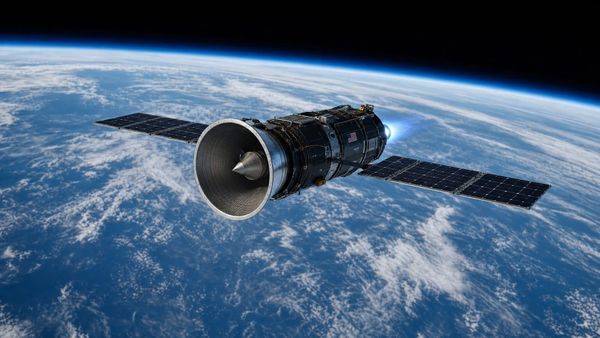
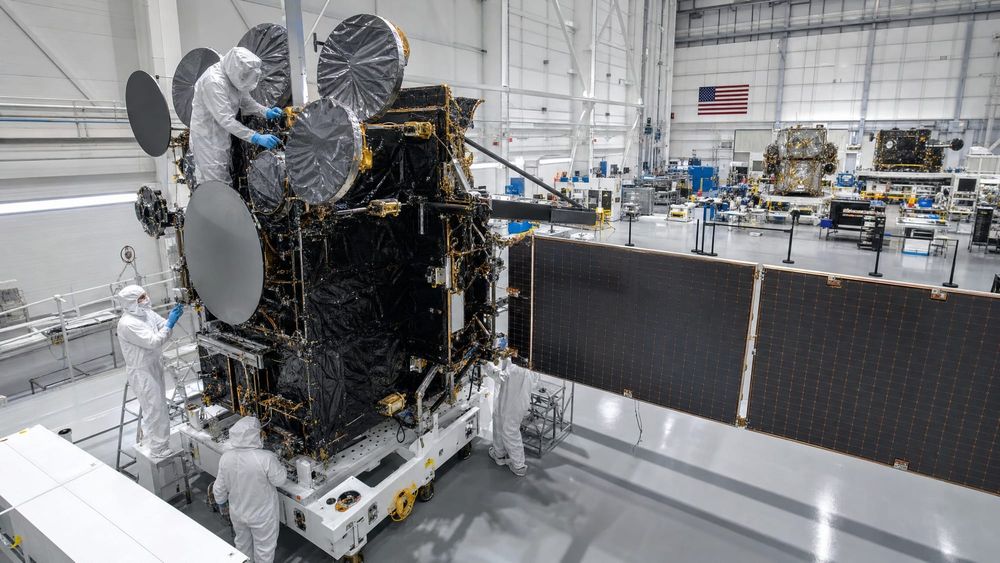
K2's approach breaks from the conventional satellite industry in a critical way: rather than building bespoke, one-off spacecraft optimized for specific missions, the company manufactures standardized, high-power satellite buses that can be adapted for a range of applications — from data-heavy military communications to commercial broadband to in-orbit computing. The company's Raven bus, for example, is designed for geosynchronous orbit and features power levels and processing capabilities that far exceed what's available from traditional smallsat manufacturers. This week, K2 also won a $22.9 million Space Force contract to host optical laser communication terminals on two of its satellites, further cementing its role as a bridge between commercial satellite manufacturing and national security space.
The velocity of K2's growth reflects a broader structural shift in the satellite industry. Government customers who once relied exclusively on defense primes like Lockheed Martin, Northrop Grumman, and Boeing for exquisite national security satellites are increasingly turning to commercial manufacturers who can deliver capable spacecraft faster and at a fraction of the cost. K2 is positioning itself at the nexus of this transition — commercial enough to move fast, but capable enough to meet military specifications. The $6.8 billion valuation makes K2 one of the most valuable private space companies in the world, trailing only SpaceX and a handful of others.
THE DOUGH
K2's rapid ascent signals strong investor confidence in the proliferated satellite architecture that the Department of Defense is embracing across programs like the Space Development Agency's transport and tracking layers. The company's contract backlog provides revenue visibility that's rare for space startups, and its standardized manufacturing model could achieve margins closer to automotive production than traditional aerospace. Competitors including York Space Systems, Terran Orbital, and Airbus Defence and Space face intensifying pressure to match K2's cost and delivery timelines.
We are not financial analysts or investment advisors. Nothing in this newsletter constitutes investment advice. All economic analysis is speculative and for informational purposes only. Do your own research.
THE POSSIBILITIES
K2's long-term play may not be satellites at all — it's satellite-as-a-platform. If the company can deliver high-power, standardized buses at scale, it becomes the obvious host for orbital data centers, space-based solar power demonstrators, and other compute-heavy applications that need massive power budgets. The satellite is just the envelope; the real value is what you put inside it.
THE HURDLES
Scaling from dozens of satellites to 100 per year requires manufacturing infrastructure, supply chain management, and quality control at a level few space companies have achieved. K2 also faces the challenge of maintaining both commercial agility and defense-grade security — a dual-use balancing act that has tripped up larger companies. And the recent 60%+ plunge in space stocks could dampen appetite for a future IPO.
WHAT TO WATCH
- K2's production ramp and first deliveries of Raven-class satellites to Space Force customers
- Results from the laser communication demonstration on K2-hosted terminals
- Whether K2 announces orbital data center hosting partnerships with cloud providers
- IPO timing signals, given the company's scale and the current space stock environment