
THE STORY
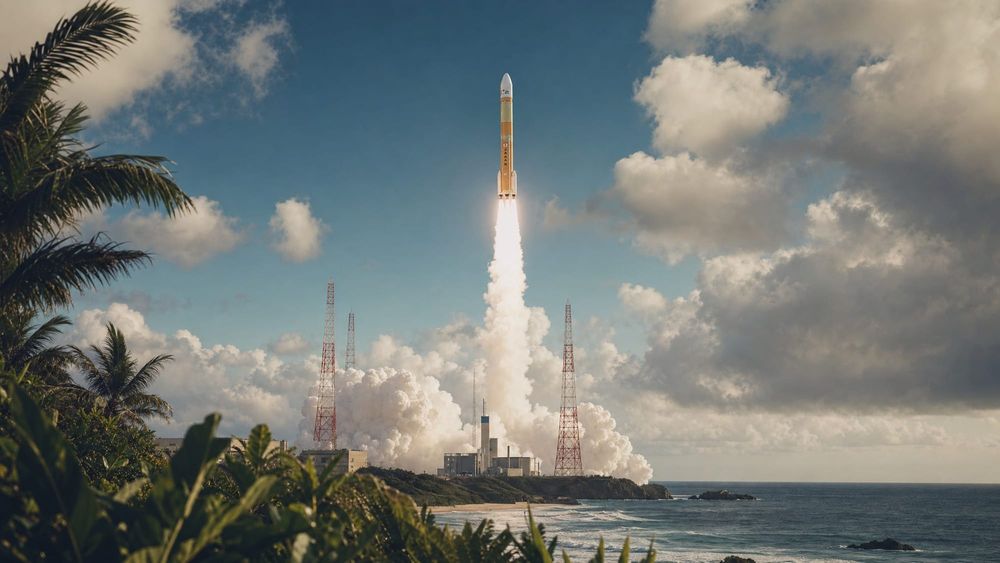
Japan's H3 rocket successfully returned to flight on June 11, placing six smallsats in orbit on its first mission since a launch failure in December that destroyed its payload. The flight marked the debut of H3's lightest configuration — a stripped-down variant designed to offer lower-cost access to orbit for smaller payloads — and demonstrated that the Japan Aerospace Exploration Agency (JAXA) and prime contractor Mitsubishi Heavy Industries have resolved the issues that grounded the vehicle.
H3 is Japan's flagship launch vehicle, designed to replace the venerable H-IIA that has served as the nation's primary orbital workhorse for over two decades. The rocket's troubled development — including a catastrophic failure on its maiden flight in 2023 that triggered self-destruct — has tested Japan's patience, but the vehicle represents a critical strategic capability. With launch costs targeted significantly below H-IIA and a modular design that can scale from small payloads to heavy government satellites, H3 is central to Japan's ambitions to maintain sovereign access to space and compete commercially in an increasingly crowded launch market.
The successful return to flight arrives at a pivotal moment for Japan's space program. JAXA is deepening its role in the Artemis program, Japanese companies are supplying components to international satellite programs, and the country's defense establishment is expanding its space domain awareness capabilities. A reliable H3 gives Japan the launch independence it needs to support all three vectors without depending on foreign rockets. The six smallsats deployed on this mission will contribute to Earth observation and technology demonstration, but the real payload was confidence — proving that H3 can fly reliably and consistently.
THE DOUGH
A reliable H3 restores Japan's position as a competitive commercial launch provider and secures government institutional launches for JAXA, the Japan Self-Defense Forces, and intelligence agencies. Mitsubishi Heavy Industries benefits directly, while the broader Japanese space supply chain — including companies like IHI Aerospace (solid motors) and NEC (avionics) — gains order book stability. Japan's re-entry into the commercial launch market creates another competitive option for international satellite operators.
We are not financial analysts or investment advisors. Nothing in this newsletter constitutes investment advice. All economic analysis is speculative and for informational purposes only. Do your own research.
THE POSSIBILITIES
A consistent H3 flight rate could position Japan as a preferred launch provider for allies seeking alternatives to U.S. or European rockets, particularly in the Indo-Pacific — a region where reliable sovereign launch access carries significant strategic value.
THE HURDLES
H3 must now demonstrate cadence, not just capability. A single successful flight does not erase the program's history of delays and failures, and commercial customers will want to see multiple consecutive successes before committing payloads. Competition from SpaceX's Falcon 9 on price remains fierce.
WHAT TO WATCH
- H3's next flight schedule and payload manifest
- Commercial customer bookings for H3 launches
- Japan's defense satellite launch plans on H3