THE STORY
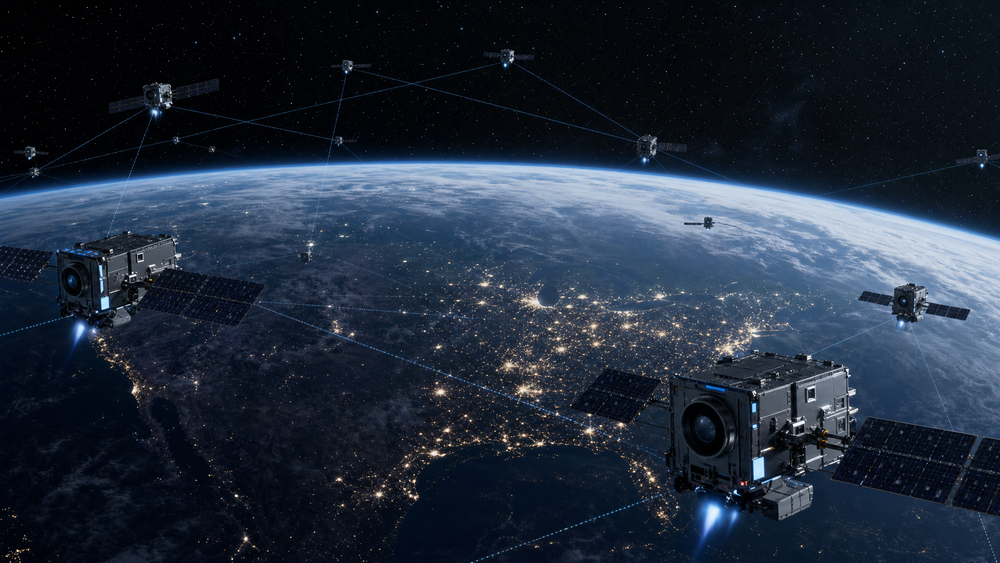
The Congressional Budget Office has released its first formal cost estimate for President Trump's "Golden Dome" missile defense system, pegging it at approximately $1.2 trillion over 20 years — an order of magnitude higher than the $185 billion figure proposed by program chief Gen. Michael Guetlein in March. Space-based interceptors account for the majority of the estimated cost. Guetlein pushed back forcefully, arguing that the CBO "is not estimating what we're building" and that the program's actual architecture will be far more affordable through commercial procurement and proliferated designs. The debate highlights fundamental disagreements about whether next-generation missile defense should rely on exquisite, expensive space-based interceptors or cheaper, commercially derived satellite platforms.
Regardless of which cost estimate proves closer to reality, Golden Dome represents the largest potential space procurement program in history — dwarfing even Artemis and the National Reconnaissance Office's proliferated architecture combined.
THE DOUGH
Even a fraction of $1.2 trillion would reshape the defense-space industrial base. Companies positioned for Golden Dome contracts — Northrop Grumman, Lockheed Martin, L3Harris, SpaceX, and Rocket Lab — could see sustained revenue growth for decades. The program's emphasis on commercial procurement and proliferated architecture benefits smaller companies with efficient manufacturing, not just traditional primes. Space sensor companies, propulsion makers, and ground-system integrators would all see demand surge. The debate between the CBO and Guetlein's estimates will itself become a lobbying battleground on Capitol Hill, with defense contractors advocating for the larger figure and fiscal hawks pushing for the smaller one.
We are not financial analysts or investment advisors. Nothing in this newsletter constitutes investment advice. All economic analysis is speculative and for informational purposes only. Do your own research.
THE POSSIBILITIES
The real significance of the CBO estimate isn't the dollar figure — it's the implicit admission that space-based missile defense requires building what amounts to a second space economy. Thousands of satellites, hundreds of launches per year, ground infrastructure across multiple continents — Golden Dome's supply chain would create industrial capacity that inevitably spills over into commercial space.
THE HURDLES
Congress has not authorized Golden Dome at any price point. The $1.2 trillion CBO estimate may actually make the program harder to fund, as lawmakers face competing priorities including the Iran war and domestic spending. Technical feasibility of space-based interceptors remains unproven at scale, and arms control implications could invite international opposition.
WHAT TO WATCH
- Congressional appropriations for Golden Dome in FY2027 defense budget
- Gen. Guetlein's detailed architecture briefings and alternative cost models
- Industry team formations and contract awards for Golden Dome subsystems
- Overlap between Golden Dome requirements and Andromeda (space surveillance) architecture