
THE STORY
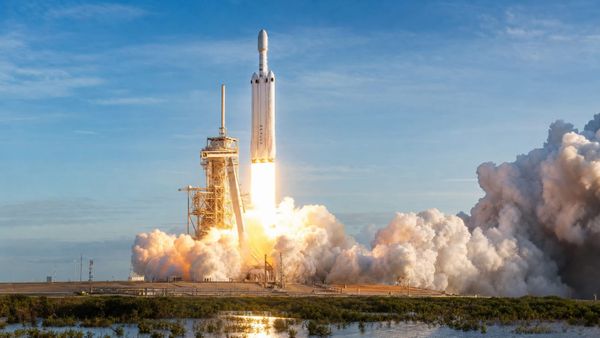
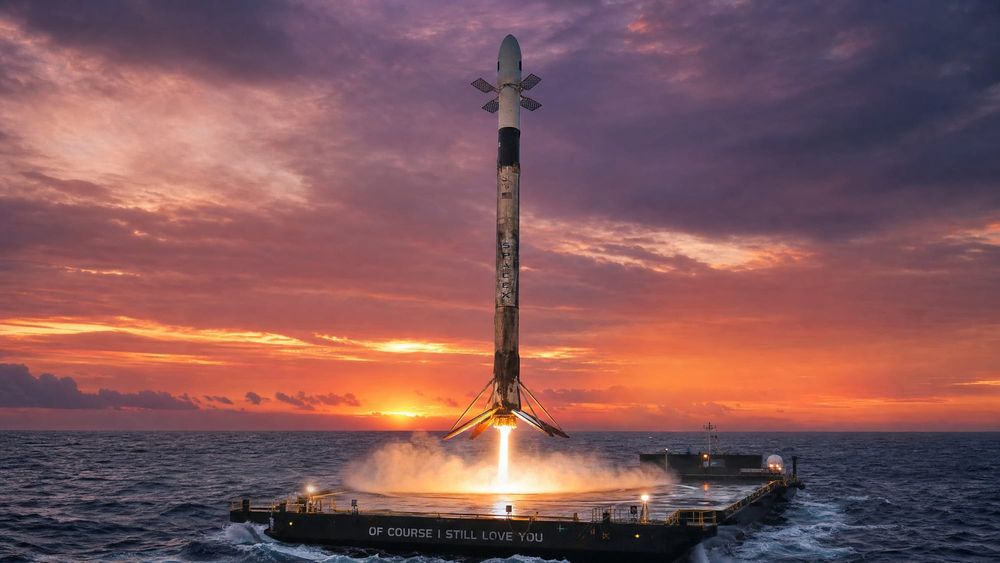
SpaceX's Falcon 9 rocket passed two major milestones this week before receiving what amounts to a retirement notice from its own creator. On Monday, August 25, a Falcon 9 first stage designated B1082 completed its 37th flight — a new record for rocket reuse — while launching a batch of Starlink satellites from Cape Canaveral Space Force Station. The mission also marked SpaceX's 100th Falcon 9 launch of 2026, putting the company on pace to exceed 150 orbital flights before year's end. Then, in a statement that reframes the entire launch market, SpaceX confirmed that all future Starlink missions from Florida will transition to Starship, and Elon Musk said the company will retire Falcon 9 entirely once Starship can fly reliably every week.
The 37th flight of a single booster is an engineering achievement that would have been inconceivable a decade ago. When SpaceX first landed a Falcon 9 first stage in December 2015, critics questioned whether reuse would ever be economically viable. Today, SpaceX routinely flies boosters more than 20 times each, with turnaround times between flights measured in weeks rather than months. The oldest active boosters in the fleet have accumulated operational histories spanning years and dozens of missions, with each flight further validating the durability of the Merlin engine, octaweb structure, and grid fin guidance systems.
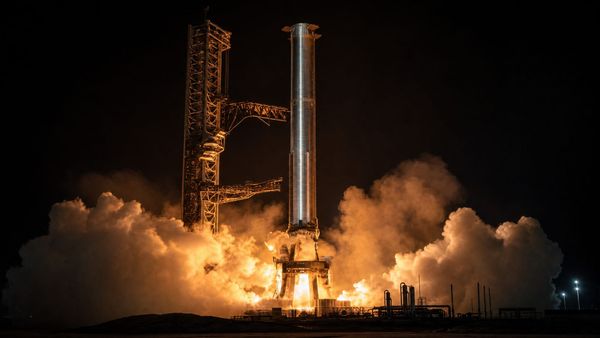
But Falcon 9's very success has created the conditions for its obsolescence. Starship's Super Heavy booster, with 33 Raptor engines generating more than twice Falcon 9's thrust, can carry roughly ten times the payload mass to low Earth orbit. Once Starship achieves reliable orbital operations, continuing to fly Falcon 9 would be like operating a fleet of Boeing 737s when 747s are available at the same cost per flight. The economics simply don't hold. SpaceX's announcement that Florida Starlink missions — which account for a significant portion of Falcon 9's manifest — will move to Starship is the first concrete step in the transition.
The retirement timeline remains uncertain. Starship has not yet completed a fully successful orbital mission, and the transition will be gradual. SpaceX is likely to continue flying Falcon 9 for customers who have already contracted specific vehicles, and Falcon Heavy will remain available for missions requiring its unique three-core configuration. But the signal is clear: the most prolific orbital rocket in history is entering its final chapter. An independent financial analysis published this week validated Falcon 9's booster economics, confirming that reuse has been the key driver of SpaceX's market dominance — a dominance that Starship is designed to extend by another order of magnitude.
THE DOUGH
Falcon 9's retirement would concentrate even more of the launch market around Starship, deepening SpaceX's monopoly position and putting additional pressure on competitors who have yet to achieve reusability. For SpaceX's IPO narrative, the transition story is compelling: Falcon 9 proved the reuse model, Starship scales it by 10x. Investors in competing launch companies — Rocket Lab, ULA, Blue Origin — face the question of whether their vehicles can compete on cost with a fully reusable Starship, even in niche markets. The transition also creates short-term opportunities for satellite operators to lock in favorable Falcon 9 pricing before the vehicle exits service.
We are not financial analysts or investment advisors. Nothing in this newsletter constitutes investment advice. All economic analysis is speculative and for informational purposes only. Do your own research.
THE POSSIBILITIES
The most interesting question isn't when Falcon 9 retires — it's what happens to the hardware. SpaceX has dozens of flight-proven boosters with remaining operational life. Some could be donated to museums, but others might be sold or leased to allied nations seeking independent launch capability. A used Falcon 9 booster, even at end-of-life, represents a proven orbital-class vehicle that many countries would pay handsomely to operate.
THE HURDLES
Starship must first demonstrate the reliability and cadence needed to absorb Falcon 9's manifest — something it has not yet done. Any delay in Starship's operational ramp-up could leave a gap in launch availability, particularly for customers with time-critical payloads. The FAA licensing process for Starship operations from multiple sites adds regulatory complexity that Falcon 9, with its long operational history, does not face.
WHAT TO WATCH
- First Starlink mission launched on Starship from Florida — the concrete transition milestone
- Falcon 9 flight rate decline curve as Starship absorbs manifest share
- Whether SpaceX offers end-of-life Falcon 9 boosters to international customers or institutions
- Starship weekly flight cadence achievement — Musk's stated retirement trigger for Falcon 9
Void Economy is researched, written, and illustrated with AI, reviewed and edited by a real, live, flesh-n-blood human.