
THE STORY
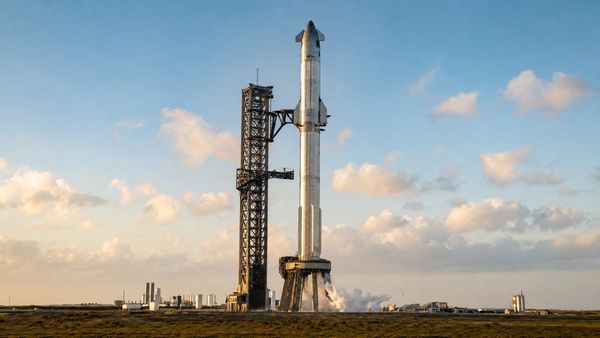
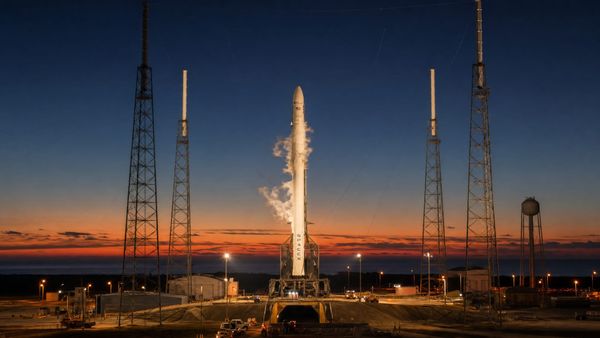
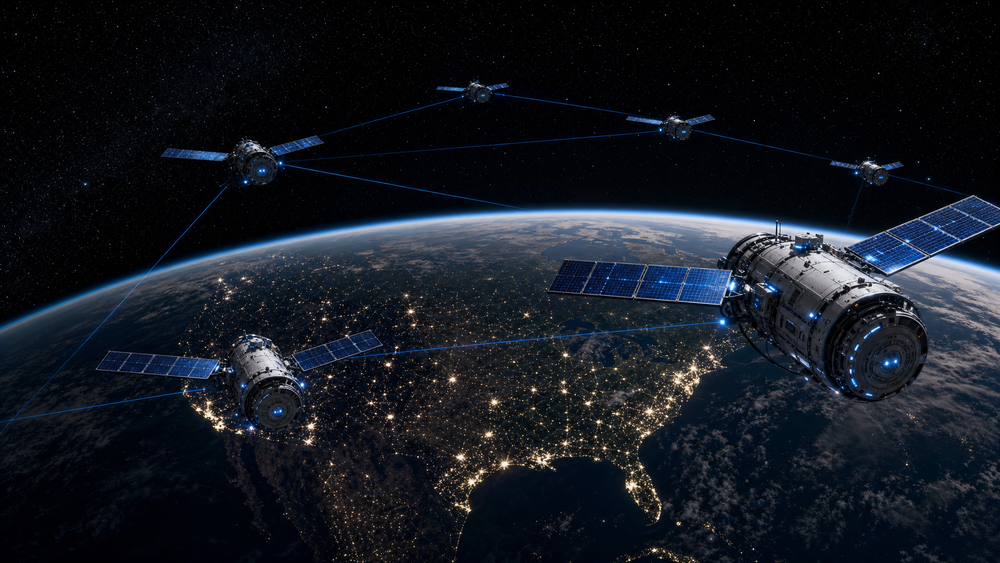
The idea of putting computing infrastructure in space crossed a credibility threshold this week. Cowboy Space — formerly Aetherflux, the startup founded by Robinhood co-founder Baiju Bhatt — raised $275 million at a $2 billion valuation and immediately filed with the FCC for a 20,000-satellite "Stampede" constellation designed to provide data center services from orbit. The company's approach is audacious: build rockets whose upper stages convert into orbital computing platforms once in LEO, eliminating the need for separate satellite buses. Separately, reports emerged that Google and SpaceX are in active talks to launch test products for orbital data centers, with SpaceX potentially providing launch services for Google's space-based compute experiments.
If even a fraction of this materializes, it represents a new category of space infrastructure. Orbital data centers could offer advantages in power (continuous solar exposure), cooling (the vacuum of space), and latency for certain global applications — while sidestepping the terrestrial land, water, and grid constraints that are increasingly limiting ground-based data center expansion.
THE DOUGH
The convergence of AI compute demand and terrestrial infrastructure constraints is creating a market pull that didn't exist two years ago. Cowboy Space's $2 billion valuation signals that investors see orbital compute as a serious category, not a science project. If Google — which is spending tens of billions annually on data center infrastructure — validates the concept, it could redirect a meaningful fraction of hyperscaler capital expenditure toward space-based solutions. Launch providers, satellite bus manufacturers, radiation-hardened chip makers, and space power companies would all see demand surge. The companies positioned at this intersection — SpaceX, Rocket Lab, and emerging players like Cowboy Space — could capture a new revenue stream entirely orthogonal to their current businesses.
We are not financial analysts or investment advisors. Nothing in this newsletter constitutes investment advice. All economic analysis is speculative and for informational purposes only. Do your own research.
THE POSSIBILITIES
The most provocative implication isn't the compute itself — it's what happens to data sovereignty. A data center in LEO doesn't sit in any country's jurisdiction in the traditional sense. For governments and corporations concerned about data localization laws, orbital compute could become the "flag of convenience" for sensitive workloads — a digital equivalent of registering ships in Panama. This creates a regulatory frontier that no government has even begun to address.
THE HURDLES
The economics remain brutally challenging. Launching hardware to orbit costs orders of magnitude more than building on the ground, and maintaining compute infrastructure without physical access introduces failure modes that terrestrial operators never face. Radiation, thermal cycling, and micrometeorite damage degrade electronics far faster than Earth-based environments. Cowboy Space has yet to demonstrate that its rocket-to-data-center conversion works, and Google's involvement is exploratory at best.
WHAT TO WATCH
- Cowboy Space's rocket development timeline and first test launch
- Google-SpaceX orbital data center partnership details and test payload manifesting
- FCC review of the Stampede 20,000-satellite constellation filing
- Whether other hyperscalers (Microsoft, Amazon) announce orbital compute investigations
- Radiation-hardened AI chip development from companies like Nvidia or custom ASIC makers