
THE STORY
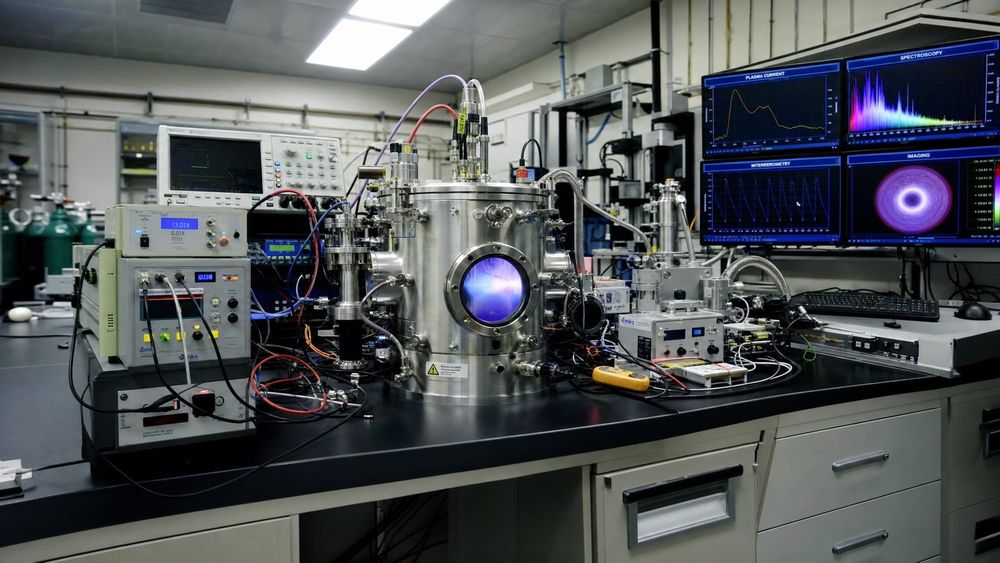
Seattle-based fusion startup Avalanche Energy announced that its compact reactor prototype has heated a plasma to over 10 million degrees Celsius — a critical threshold that brings the device into the regime where fusion reactions can begin to occur. The milestone, reported by TechCrunch, validates the company's unconventional approach to fusion and advances its ambitions to build compact nuclear power sources for spacecraft, deep-space probes, and military applications where solar power is impractical.
Avalanche's reactor uses a novel electrostatic confinement design that is radically smaller than the tokamak or stellarator approaches pursued by most fusion companies. The device is small enough to sit on a desk — a far cry from the building-sized machines at ITER or Commonwealth Fusion Systems — and is designed to generate radioactive isotopes through fusion reactions that then decay to produce steady electrical power. This "fusion battery" concept, which the company is developing under a $5.2 million DARPA "Rads to Watts" contract, could produce compact power sources with energy densities far exceeding current radioisotope thermoelectric generators.
Ten million degrees is roughly the temperature at which deuterium nuclei begin to overcome their mutual electrostatic repulsion and fuse, releasing energy. While Avalanche has not claimed net energy gain — the holy grail of fusion research — demonstrating sustained plasma at this temperature in a tabletop device is a significant engineering achievement that proves the confinement concept works. For space applications, where the goal is isotope production rather than bulk electricity generation, even modest fusion rates could be transformative. A compact, manufacturable fusion battery could enable permanently shadowed lunar crater exploration, deep outer solar system probes, and long-endurance military satellites without massive solar arrays.
THE DOUGH
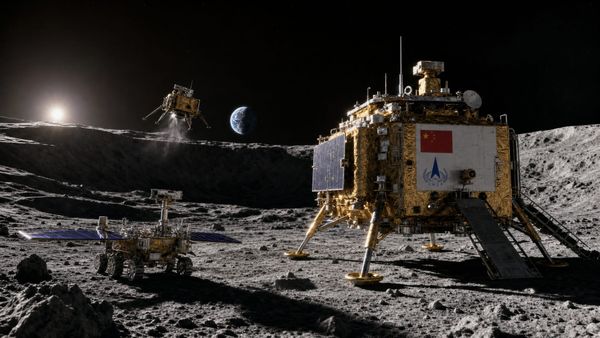
The space nuclear power market is small today but positioned for explosive growth as NASA's Artemis program drives demand for systems that operate during the 14-day lunar night. Avalanche competes alongside Zeno Power, Ultra Safe Nuclear, and BWX Technologies in what could become a multi-billion-dollar market spanning both civilian and defense applications. A successful DARPA prototype demonstration would position Avalanche as a dual-use supplier to NASA and DoD programs.
We are not financial analysts or investment advisors. Nothing in this newsletter constitutes investment advice. All economic analysis is speculative and for informational purposes only. Do your own research.
THE POSSIBILITIES
If Avalanche can produce useful isotopes from a compact fusion device, the implications extend far beyond space. The global medical isotope market — currently dependent on aging nuclear reactors — represents a multi-billion-dollar terrestrial business that compact fusion could disrupt entirely.
THE HURDLES
Sustained net energy gain from fusion remains undemonstrated by any private company. The DARPA contract is for a prototype, not a flight-qualified system, and the regulatory path for launching nuclear materials into space involves extensive environmental review and international coordination.
WHAT TO WATCH
- Avalanche's next plasma milestone and isotope production demonstration
- DARPA Rads to Watts program down-selection decisions
- NASA fission surface power system contracts for Artemis lunar base