
THE STORY
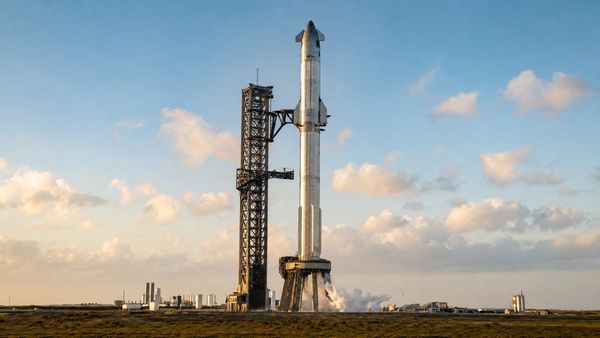
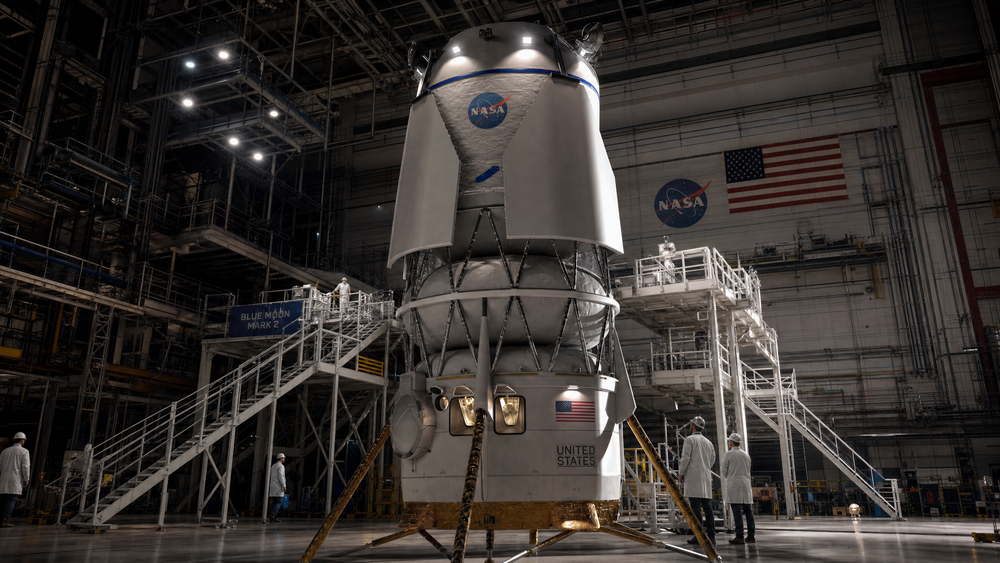
NASA has revealed critical new details about Artemis III, the crewed mission now targeted for late 2027 that will test rendezvous and docking capabilities in low Earth orbit between the Orion spacecraft and commercial lunar landers from both Blue Origin and SpaceX. In a significant architecture decision, NASA confirmed that the Space Launch System will fly Artemis III without the Interim Cryogenic Propulsion Stage upper stage — a departure from previous Artemis missions that fundamentally changes the mission profile. Meanwhile, at Johnson Space Center, a full-scale mockup of Blue Origin's Blue Moon Mark 2 lunar lander has been assembled and is ready for Artemis astronauts to begin hands-on training. NASA is still defining the concept of operations for the mission, with the ultimate goal of validating the systems needed for a crewed lunar landing on a subsequent flight in 2028.
By flying without the upper stage, NASA is simplifying the SLS configuration for a mission that doesn't need to reach the Moon — Artemis III stays in Earth orbit. This creates a new mission template: use SLS to deliver Orion to LEO, then practice the complex docking maneuvers with commercial landers that will be essential for boots-on-the-Moon flights. The Blue Moon mockup readiness signals that hardware is finally catching up to planning.
THE DOUGH
Artemis III is the bridge between Artemis II's successful lunar flyby and an actual surface landing. Its definition locks in spending across NASA's commercial lander program — billions flowing to Blue Origin (Blue Moon Mark 2) and SpaceX (Starship HLS). Boeing benefits from SLS core stage production, while Lockheed Martin continues Orion work. The simplified SLS configuration for Artemis III could also reduce per-mission costs, potentially freeing budget for additional flights or accelerated development of lunar surface systems. Companies building rendezvous sensors, docking mechanisms, and crew transfer systems stand to see growing demand as NASA refines requirements.
We are not financial analysts or investment advisors. Nothing in this newsletter constitutes investment advice. All economic analysis is speculative and for informational purposes only. Do your own research.
THE POSSIBILITIES
The decision to fly SLS without an upper stage suggests NASA is designing Artemis III as a pure systems-integration test — treating LEO as a rehearsal space for lunar operations. If this works, it creates a repeatable template for testing new lander variants, habitation modules, or even commercial space station docking procedures before committing them to deep-space missions. Artemis may be developing a "try it in LEO first" philosophy that could accelerate the entire lunar program.
THE HURDLES
Both SpaceX's Starship HLS and Blue Origin's Blue Moon need to be orbit-ready by late 2027 — a timeline neither company has publicly guaranteed. NASA is still defining the full concept of operations, meaning requirements could shift and further delay the mission. The SLS core stage for Artemis III is still in integration at Michoud, and any manufacturing delays could push the launch window.
WHAT TO WATCH
- NASA's finalized Artemis III mission architecture and crew selection
- SpaceX Starship V3 flight results and orbital refueling demonstration timeline
- Blue Origin Blue Moon Mark 2 propulsion testing milestones
- SLS core stage integration completion at the Vehicle Assembly Building
- Whether NASA inserts additional test missions before a crewed lunar landing attempt