
THE STORY
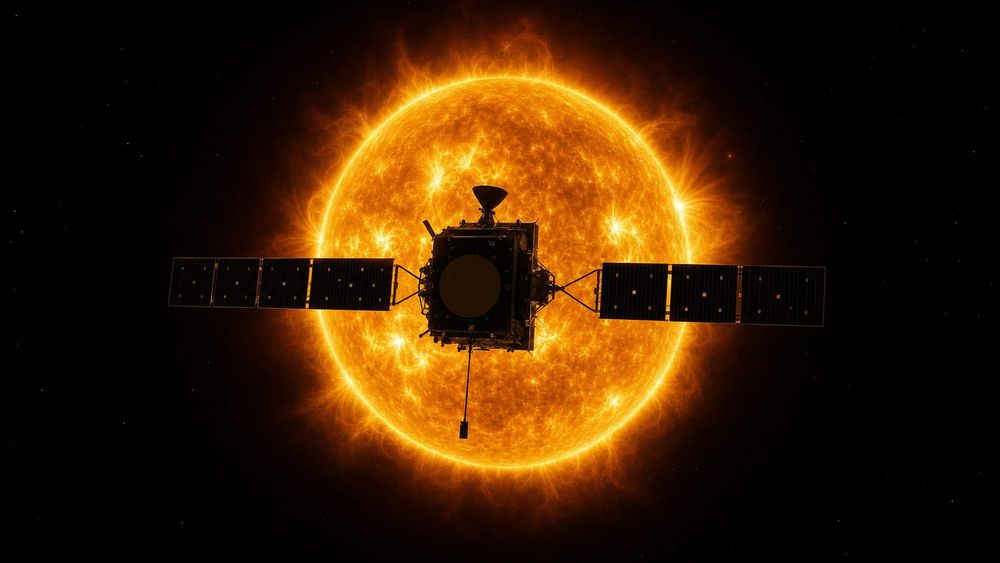
NOAA's Space Weather Observations at L1 to Advance Readiness-1 (SOLAR-1) observatory has officially entered operational service at the Sun-Earth Lagrange Point 1, approximately one million miles from Earth — a gravitational sweet spot where the spacecraft can continuously monitor the Sun without interruption. It is the first satellite the United States has ever dedicated exclusively to space weather observation, and its activation marks a major milestone for national resilience against solar storms that can disrupt power grids, satellite communications, GPS navigation, and aviation.
SOLAR-1 occupies a position sunward of Earth where it can detect coronal mass ejections, solar flares, and high-energy particle events 15 to 60 minutes before they arrive at Earth — providing critical early warning for operators of electrical grids, satellite constellations, and crewed spacecraft. Previous space weather monitoring relied on instruments piggybacking on other missions, most notably the aging DSCOVR satellite that has operated well beyond its design life. SOLAR-1 replaces this ad hoc approach with a purpose-built observatory carrying next-generation sensors optimized for the specific measurements that space weather forecasters need.
The timing of SOLAR-1's activation is fortuitous. Solar Cycle 25 has been significantly more active than predicted, producing powerful geomagnetic storms that generated auroras visible as far south as the southern United States. As the space economy grows — with thousands of satellites in orbit and crewed missions extending to cislunar space — the economic consequences of a severe solar storm have multiplied dramatically. SOLAR-1 provides the operational foundation for protecting an increasingly space-dependent civilization.
THE DOUGH
Space weather services represent a growing market as satellite operators, airlines, power utilities, and military users invest in monitoring and mitigation. Companies providing space weather data and forecasting services benefit from SOLAR-1's improved data quality. The growing Starlink constellation and other mega-constellations face solar storm risks that make accurate forecasting a business-critical service.
We are not financial analysts or investment advisors. Nothing in this newsletter constitutes investment advice. All economic analysis is speculative and for informational purposes only. Do your own research.
THE POSSIBILITIES
SOLAR-1 could catalyze a space weather prediction revolution analogous to what weather satellites did for terrestrial forecasting — transforming a field that currently operates with hours of warning into one that can provide days of actionable lead time for critical infrastructure operators.
THE HURDLES
A single observatory at L1 provides limited viewing angles and no redundancy. Budget pressures at NOAA have historically delayed follow-on missions, and the political environment for federal science spending remains uncertain.
WHAT TO WATCH
- SOLAR-1's first operational space weather alerts and forecast accuracy
- NOAA plans for follow-on L1 observatories or additional vantage points
- Impact of Solar Cycle 25 activity on satellite operations and infrastructure