
THE STORY
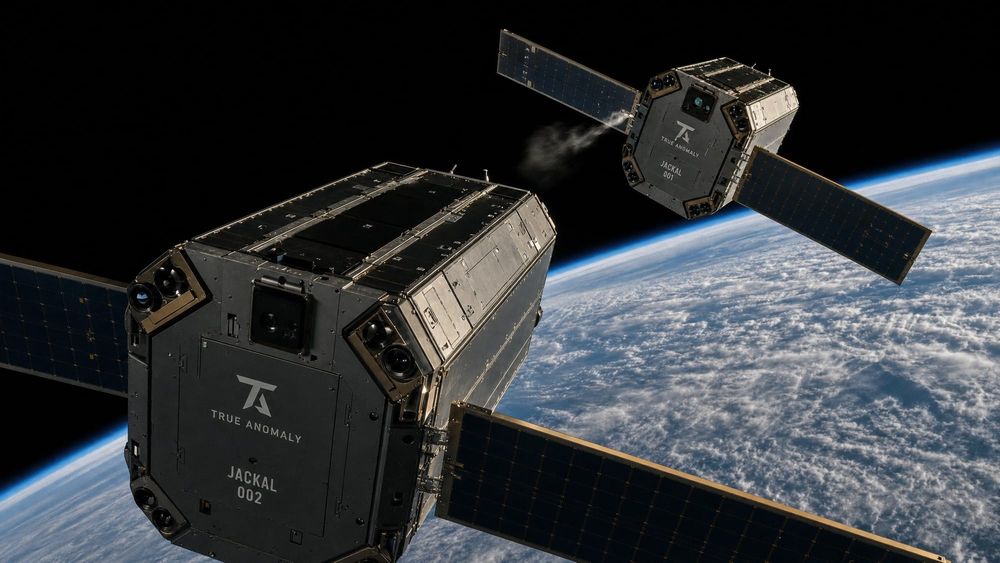
True Anomaly, a Colorado-based space defense startup, announced it has become the first company to execute an in-space pursuit of an actively evading target, as part of the U.S. Space Force's VICTUS HAZE mission. The demonstration involved True Anomaly's spacecraft autonomously detecting, tracking, and maneuvering to close with a target satellite that was deliberately attempting to avoid interception — a capability that crosses a significant threshold from passive space domain awareness to active orbital pursuit and has profound implications for the future of space defense.
VICTUS HAZE is a Space Force mission designed to test responsive space operations, including the ability to rapidly characterize and respond to threats in orbit. True Anomaly's spacecraft used onboard sensors and autonomous guidance algorithms to continuously adjust its trajectory in real time as the target maneuvered to evade. The entire pursuit phase was conducted without ground-controller intervention — a critical requirement for any operational space defense system, where signal delays between ground stations and spacecraft make real-time human command impractical during dynamic orbital maneuvers. The autonomous nature of the chase distinguishes this from cooperative rendezvous operations like ISS docking, where both spacecraft are actively cooperating.
This demonstration is significant because space domain awareness has traditionally been a passive discipline — tracking objects and cataloging their behavior using ground-based radars, telescopes, and space-based sensors. The ability to actively pursue and close with a non-cooperative, maneuvering target in orbit is a fundamentally different kind of capability, one that defense planners have discussed for decades but that no commercial company had publicly demonstrated until now. True Anomaly's success validates that commercially built spacecraft can perform proximity operations that were once the exclusive domain of classified national security programs — and it does so at a fraction of the traditional cost, using modern commercial spacecraft technology rather than purpose-built, exquisite defense platforms.
THE DOUGH
True Anomaly sits at the intersection of space domain awareness and active space defense — a market the Pentagon is funding aggressively under its "space superiority" mission area. The Space Force's growing investment in responsive space operations, on-orbit characterization, and counter-space capabilities creates a substantial and expanding addressable market. Defense primes Lockheed Martin and Northrop Grumman are competitors, but True Anomaly's startup agility gives it speed advantages in prototyping, iteration, and cost. The VICTUS HAZE success positions the company for follow-on contracts and potentially larger production orders.
We are not financial analysts or investment advisors. Nothing in this newsletter constitutes investment advice. All economic analysis is speculative and for informational purposes only. Do your own research.
THE POSSIBILITIES
Autonomous orbital pursuit isn't just a defense capability. The same core technology — autonomous approach to non-cooperative objects — underpins commercial satellite servicing, active debris removal, and on-orbit inspection. True Anomaly may have built the defense proof-of-concept for what becomes a multi-billion-dollar commercial industry in orbital logistics.
THE HURDLES
Demonstrating the ability to chase another satellite raises significant diplomatic concerns. The Outer Space Treaty is ambiguous on conventional orbital pursuit capabilities, and public demonstrations could escalate space security tensions with rival powers. The technology also needs to scale from a single demonstration to an operational constellation of pursuit-capable spacecraft integrated with military command-and-control networks.
WHAT TO WATCH
- Space Force follow-on contracts for True Anomaly's proximity operations capabilities
- International diplomatic reactions — particularly from China and Russia — to demonstrated pursuit capability
- Commercial spin-off applications for satellite servicing and debris removal
- Competing demonstrations from defense primes or other startups
Void Economy is researched, written, and illustrated with AI, reviewed and edited by a real, live, flesh-n-blood human.