
THE STORY
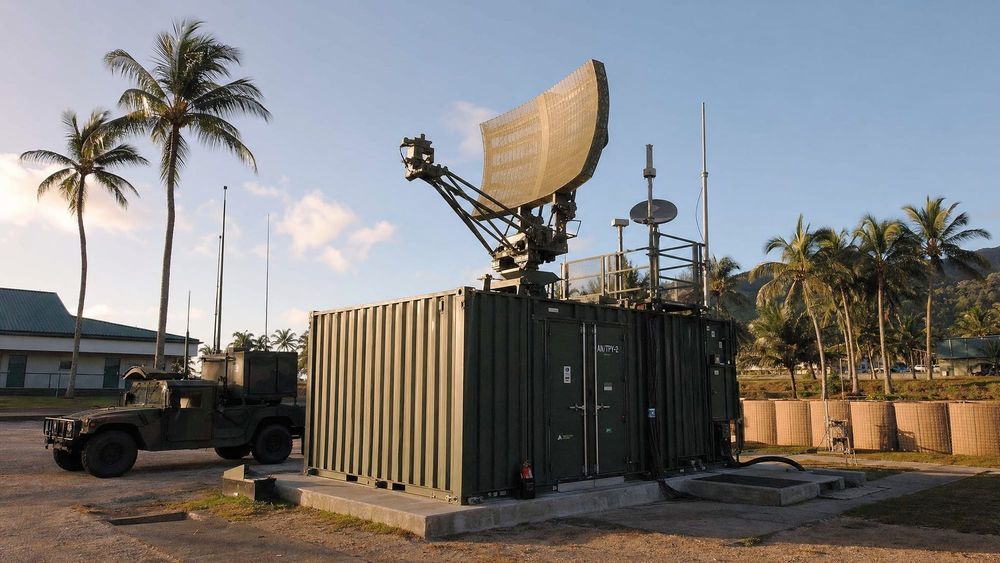
LeoLabs has deployed its first mobile space domain awareness tracking radar, housed in a standard shipping container, to an undisclosed location in the Indo-Pacific region. The system, called Scout-S, is designed to maintain continuous tracking of maneuvering spacecraft in orbit and represents a significant expansion of the commercial space surveillance infrastructure that militaries and intelligence agencies increasingly depend on for situational awareness in an increasingly congested and contested orbital environment.
Traditional space-tracking radars are massive, fixed installations that cost hundreds of millions of dollars and take years to build. Scout-S inverts that model entirely — it can be transported by truck, ship, or cargo aircraft, set up in hours, and relocated as operational requirements change. For military customers, this means space surveillance capability can be deployed forward to support operations without permanent basing agreements. For commercial operators, it provides gap-filling coverage in regions where fixed radar infrastructure doesn't exist.
The Indo-Pacific deployment is strategically significant. The region hosts some of the world's busiest orbital corridors and is the focus of intensifying space competition between the United States and China. LeoLabs' ability to provide independent, commercial tracking data in the region gives allied nations space domain awareness capabilities without requiring them to build or procure their own radar systems — a model that parallels how commercial satellite imagery companies like Maxar and Planet now provide intelligence-grade data to government customers.
THE DOUGH
LeoLabs competes with ExoAnalytic Solutions, Slingshot Aerospace, and traditional defense contractors in the rapidly growing space domain awareness market. Mobile radar systems offer a lower-cost, faster-deployment alternative to fixed installations, potentially expanding the addressable market to smaller nations and military commands. The Indo-Pacific deployment could serve as a proof point for additional sales to allied nations in the region.
We are not financial analysts or investment advisors. Nothing in this newsletter constitutes investment advice. All economic analysis is speculative and for informational purposes only. Do your own research.
THE POSSIBILITIES
Mobile space-tracking radars could become the "cell towers" of space surveillance — a distributed, relocatable network that provides continuous coverage without the vulnerability of a few fixed sites that adversaries could target.
THE HURDLES
A shipping-container radar has physical limitations in aperture size and sensitivity compared to purpose-built fixed installations. LeoLabs must also navigate the complex geopolitics of deploying surveillance infrastructure in the Indo-Pacific without alienating potential host nations.
WHAT TO WATCH
- Additional Scout-S deployment locations and customer announcements
- LeoLabs' "Delta" military tool adoption by allied forces
- Competing mobile SDA systems from defense primes