THE STORY
The James Webb Space Telescope has discovered a supermassive black hole that appears to have formed before the galaxy surrounding it — a finding that could upend one of the fundamental assumptions of modern astrophysics. The observation, made of an ancient object classified among the so-called "Little Red Dots" detected in the early universe, reveals a black hole so massive relative to its host that it accounts for more than two-thirds of the total mass. In conventional galaxy formation models, that ratio should be impossible.
The prevailing understanding of cosmic evolution holds that galaxies form first: clouds of gas and dark matter collapse, stars ignite, the most massive stars burn through their fuel and collapse into black holes, and those black holes merge and grow over billions of years. Supermassive black holes, under this framework, are products of their galaxies — descendants, not ancestors. But the JWST observation suggests the opposite sequence may also occur: in at least some cases, the black hole came first, and the galaxy assembled around it afterward. Researchers describe this as a "naked" supermassive black hole — an entity that exists largely without the galactic structure astronomers expected to find wrapped around it.
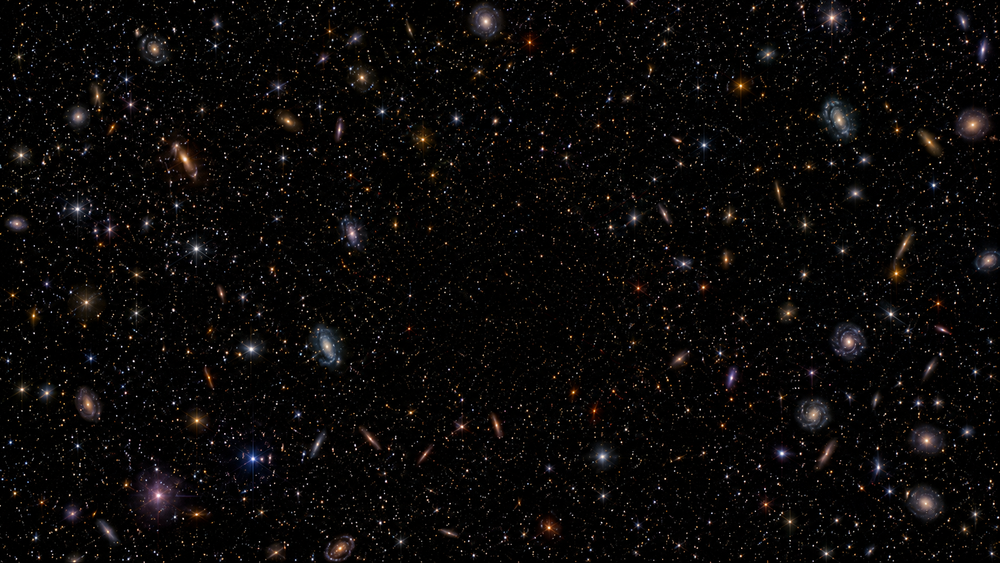
Little Red Dots are a class of compact, reddish objects that JWST has been detecting in growing numbers at extreme cosmic distances, corresponding to epochs when the universe was less than a billion years old. Their unusual spectral signatures — combining characteristics of both active galactic nuclei and young stellar populations — have puzzled astronomers since Webb's first deep-field observations. This latest analysis pins down the mass budget of one such object with unprecedented precision, decomposing the contributions of the black hole and the surrounding stellar material with a clarity that earlier instruments could not achieve.
The discovery doesn't invalidate the conventional model — most nearby supermassive black holes clearly grew within pre-existing galaxies. Instead, it suggests that multiple formation pathways operated in the early universe, some of which produced black holes of extraordinary mass before host galaxies had time to fully assemble. This has profound implications for understanding how cosmic structure emerged in the first few hundred million years after the Big Bang. If massive black holes can form independently — perhaps through the direct collapse of primordial gas clouds — and then seed galaxy formation around them, the entire timeline of cosmic evolution may need revision. Webb's ability to resolve these ancient objects with sufficient spectral detail is precisely the kind of breakthrough the telescope was built to deliver, and the Little Red Dot population likely has many more surprises to reveal.
THE DOUGH
While this is pure science with no immediate commercial application, JWST's continued delivery of paradigm-shifting discoveries reinforces the case for sustained investment in space-based astronomy and strengthens NASA's pitch for the Habitable Worlds Observatory — the planned successor to Webb. Northrop Grumman, as JWST's prime contractor, benefits from the telescope's sustained relevance and scientific output. The discovery also builds the broader science case for future missions like ESA's LISA gravitational wave observatory, which could detect the formation signatures of primordial black holes.
We are not financial analysts or investment advisors. Nothing in this newsletter constitutes investment advice. All economic analysis is speculative and for informational purposes only. Do your own research.
THE POSSIBILITIES
If black holes can form before galaxies, it implies the existence of formation mechanisms that could produce gravitational wave signatures detectable by future space-based observatories. This single finding could reshape the science case for an entire generation of planned missions — and redefine what astronomers consider the "seeds" of cosmic structure.
THE HURDLES
The sample size remains tiny — one well-characterized Little Red Dot is a data point, not a confirmed pattern. Establishing this as a distinct formation pathway rather than an observational artifact requires Webb to analyze dozens more objects with comparable spectral precision, a process that competes for limited telescope time against hundreds of other approved programs.
WHAT TO WATCH
- Follow-up JWST observations of additional Little Red Dot objects in upcoming observation cycles
- Whether ground-based spectroscopic surveys identify more candidates for Webb to characterize
- Theoretical papers exploring direct-collapse black hole formation mechanisms prompted by this discovery
- NASA's progress on the Habitable Worlds Observatory concept development