THE STORY
In the span of two days, SpaceX secured a combined $6.45 billion in U.S. Space Force contracts that effectively position the company as the backbone of America's next-generation military space architecture. On May 27, Space Systems Command awarded SpaceX $2.29 billion for the Space Data Network Backbone — a proliferated low-Earth orbit communications constellation designed to provide resilient, jam-resistant data links across the military's space assets. Two days later, the Space Force announced a $4.16 billion contract for the initial Space-Based Advanced Missile Tracking and Intercept constellation, the sensor layer for President Trump's "Golden Dome" missile defense shield. Combined with SpaceX's existing government business — the company's IPO filing revealed that government contracts already generated approximately one-fifth of its 2025 revenue — these awards dramatically expand the Pentagon's dependence on a single commercial provider.
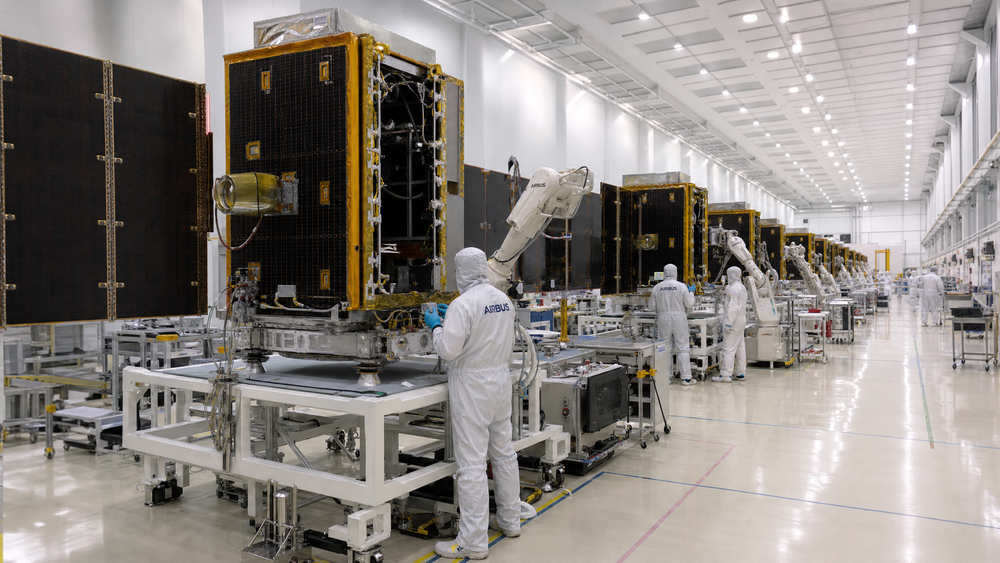
The Space Data Network will function as a military mesh network in orbit, linking satellites, ground stations, and weapons systems with high-bandwidth, low-latency connections designed to survive jamming and anti-satellite attacks. SpaceX will leverage its Starshield platform — the military variant of Starlink — and its high-volume satellite manufacturing capability to build and deploy the constellation at a pace traditional defense contractors cannot match. The SB-AMTI satellites will carry sensors to detect and track aircraft, cruise missiles, hypersonic glide vehicles, and other airborne threats, feeding targeting data into the broader Golden Dome architecture. "We aren't trading speed for scale; we are demanding both," the program manager said.
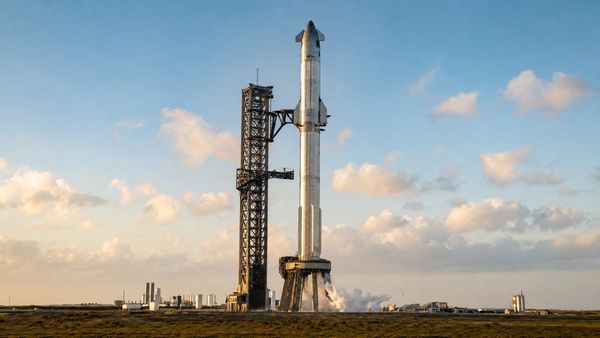
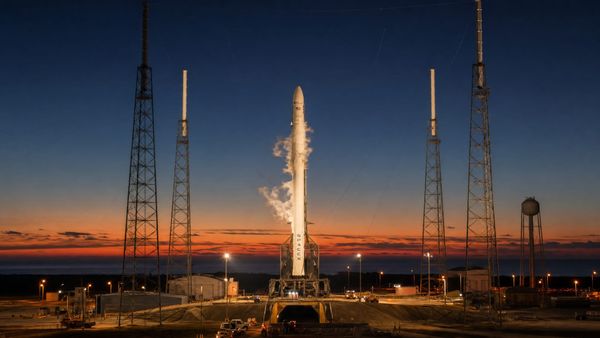
SpaceX's dominance in this domain is becoming structural. The company controls the launch vehicles (Falcon 9 and Starship), the satellite manufacturing capability (derived from Starlink's production lines), and the communications architecture (Starshield). No other company can offer all three simultaneously. The Pentagon is effectively building its most critical space systems on a commercial platform owned by one entity — and that entity is about to go public. This concentration creates both efficiency and vulnerability. SpaceX can iterate faster than any defense prime, deploying upgrades with software pushes rather than hardware redesigns. But the military's space backbone would be subject to the strategic decisions of one CEO, one board, and one set of shareholders. The Space Force has acknowledged this tension: its broader Andromeda program for geosynchronous surveillance was deliberately split across 14 vendors. But for the proliferated LEO layer — the connective tissue of modern military space — SpaceX is increasingly the only game in town.
THE DOUGH
These contracts position SpaceX's government revenue stream as a major pillar of its upcoming IPO narrative, providing multi-year visibility that commercial launch alone cannot guarantee. Defense-adjacent space companies like L3Harris, Northrop Grumman, and Raytheon may see subcontracting opportunities within the Golden Dome architecture. SpaceX's competitors in the proliferated LEO segment — including York Space Systems and Rocket Lab — face the challenge of winning smaller roles in an architecture designed around SpaceX's platform, while the awards broadly validate the commercial satellite model for critical defense applications.
We are not financial analysts or investment advisors. Nothing in this newsletter constitutes investment advice. All economic analysis is speculative and for informational purposes only. Do your own research.
THE POSSIBILITIES
The real significance isn't the dollar figure — it's the integration. By controlling both the communications backbone and the sensor layer, SpaceX is becoming a vertically integrated military space utility. If the company adds its Starshield-based command-and-control layer, it would own the sensor-to-shooter kill chain from orbit to ground terminal — a level of defense infrastructure control unprecedented for any private company.
THE HURDLES
Concentrating this much critical defense infrastructure in one provider creates a single point of failure, both technically and geopolitically. Congressional scrutiny of SpaceX's growing defense portfolio is likely to intensify, especially as Elon Musk's political activities draw bipartisan attention. Reports also emerged this week that the Pentagon is already sparring with SpaceX over a fivefold Starlink price hike for military drone operations during the Iran war — a preview of the pricing-power tensions inherent in monopoly provision.
WHAT TO WATCH
- SpaceX's IPO prospectus and how it characterizes government revenue concentration risk
- Golden Dome program architecture announcements and integration timelines with existing missile defense
- Whether the Space Force awards competing SDN contracts to other providers for redundancy
- Congressional hearings on defense contractor concentration in the space domain
- Pentagon-SpaceX pricing negotiations for Starlink and Starshield services