
THE STORY
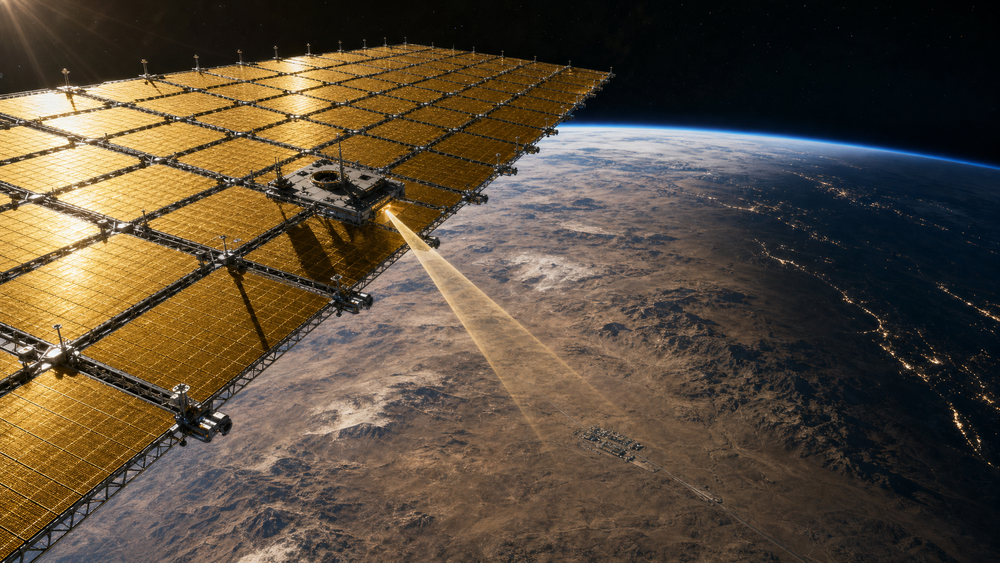
Overview Energy has won a contract from the U.S. Air Force to study the feasibility of beaming solar power collected in space down to military installations on Earth. The concept — space-based solar power (SBSP) — involves placing large solar arrays in orbit where they can collect sunlight 24 hours a day, converting the energy to microwaves or lasers and transmitting it to ground receivers. The Air Force's interest is driven by a specific military vulnerability: forward operating bases and isolated installations depend on vulnerable fuel supply chains that can be targeted by adversaries. Overview Energy claims its system could provide continuous power without fuel deliveries, eliminating a critical strategic weakness.
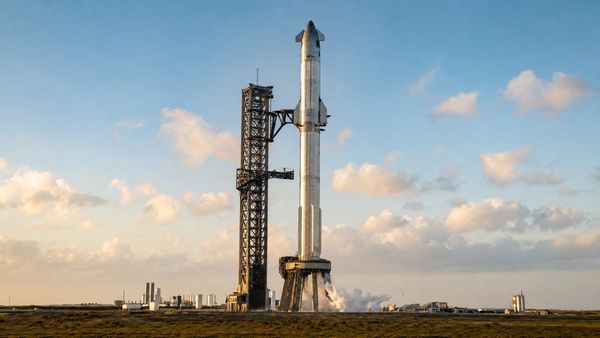
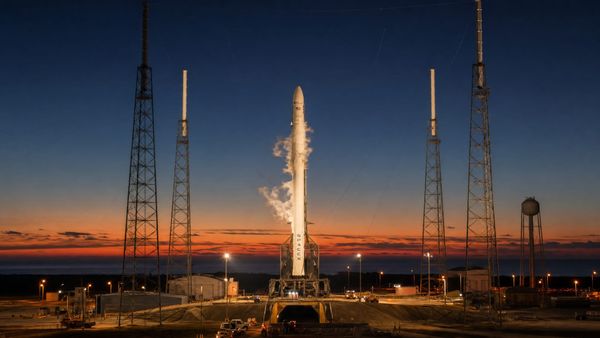
Space-based solar power has been studied intermittently since the 1960s, but recent reductions in launch costs — driven primarily by SpaceX's reusable rockets — have reopened the economic case. The Air Force contract revives a concept that was studied by the Pentagon two decades ago but shelved as impractical.
THE DOUGH
The SBSP market is speculative but could be transformative if demonstrated. The military application provides a funding pathway that doesn't depend on competing with terrestrial energy prices — it's about resilience and logistics, not cost per kilowatt-hour. If the Air Force study produces favorable results, it could lead to prototype funding that benefits launch providers, in-space assembly companies, and power conversion technology developers.
We are not financial analysts or investment advisors. Nothing in this newsletter constitutes investment advice. All economic analysis is speculative and for informational purposes only. Do your own research.
THE POSSIBILITIES
The military case is the Trojan horse. If space-based solar power proves viable for forward bases, the technology could eventually scale to civilian energy markets — providing baseload renewable power anywhere on Earth regardless of weather, latitude, or time of day. That's the holy grail of clean energy.
THE HURDLES
Space-based solar power requires enormous orbital structures, precise energy beaming, and ground receivers — none of which exist at the required scale. The physics work, but the engineering and economics remain unproven. Safety concerns about high-energy beams from orbit also need to be addressed before any operational deployment.
WHAT TO WATCH
- Air Force study results and any follow-on prototype contracts
- Competing SBSP efforts from ESA and China's space agency
- Launch cost trends that improve SBSP economics