
THE STORY
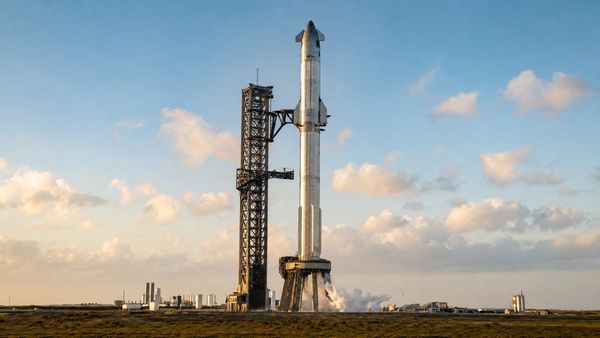
SpaceX is targeting windows opening as early as May 12 for Flight 12, the first orbital test flight of the upgraded Version 3 Starship and Super Heavy vehicles. Notices for the upcoming launch attempt have been published, signaling accelerating preparations at Starbase in Boca Chica, Texas. The Version 3 Starship represents a major upgrade over previous iterations, incorporating design changes critical for both the Human Landing System (HLS) variant needed for Artemis III and the orbital refueling architecture essential for deep-space missions. SpaceX must complete several milestones with the new vehicle and the upgraded Pad 2 infrastructure — including deluge system testing and load-testing the Ship Quick Disconnect arm — before attempting flight. Meanwhile, Flight 12 will feature a revised trajectory compared to previous flights, suggesting SpaceX is testing new mission profiles.
Version 3 is the variant of Starship that unlocks everything in SpaceX's roadmap — from the lunar lander to orbital fuel depots to eventual Mars transit vehicles. A successful first orbital flight would validate the most powerful and most rapidly reusable launch vehicle ever built, and would represent a critical milestone ahead of the company's expected IPO at a potential valuation of $1.75 to $2 trillion.
THE DOUGH
SpaceX's impending IPO — potentially the largest technology listing in history — makes every Starship milestone a market-moving event. BryceTech's 2025 data confirmed SpaceX accounted for 50 percent of all global orbital launches, and Version 3 success would cement the company's position as the indispensable infrastructure provider for the entire space economy. NASA's Artemis III timeline depends directly on Starship HLS readiness — Administrator Isaacman told Congress this week that SpaceX and Blue Origin say their landers could be ready for an Earth-orbit demonstration in late 2027. Companies across the satellite, station, and lunar services ecosystem — from Intuitive Machines to Axiom to the entire Starlink subscriber base — depend on Starship's cost-per-kilogram economics. A successful V3 flight would remove a major risk factor from SpaceX's IPO narrative.
We are not financial analysts or investment advisors. Nothing in this newsletter constitutes investment advice. All economic analysis is speculative and for informational purposes only. Do your own research.
THE POSSIBILITIES
The revised trajectory for Flight 12 may hint at something bigger than a standard orbital test. SpaceX has been methodically building toward orbital refueling demonstrations, and a new flight profile could be laying groundwork for the fuel transfer operations that Artemis III requires. If SpaceX can demonstrate both V3 orbital capability and refueling readiness in rapid succession, it would collapse the timeline for lunar landing missions and fundamentally change what commercial customers can plan for on Starship.
THE HURDLES
Version 3 has never flown. The upgraded Raptor engines, new thermal protection systems, and structural changes all introduce risk that ground testing can only partially retire. SpaceX also faces regulatory cadence issues with the FAA — each launch license requires environmental and safety review — and any anomaly could push timelines by months. The company posted a nearly $5 billion loss in 2025 largely attributed to xAI investments, which could complicate IPO narratives if Starship encounters significant delays.
WHAT TO WATCH
- Whether SpaceX conducts a static fire of the V3 Super Heavy booster before attempting Flight 12
- FAA launch license timing and any environmental review complications
- The specific Flight 12 trajectory and whether it includes any refueling-related test objectives
- SpaceX IPO roadshow dates and how V3 progress factors into valuation discussions
- NASA's official Artemis III architecture announcement and whether it depends on V3 capability