
THE STORY
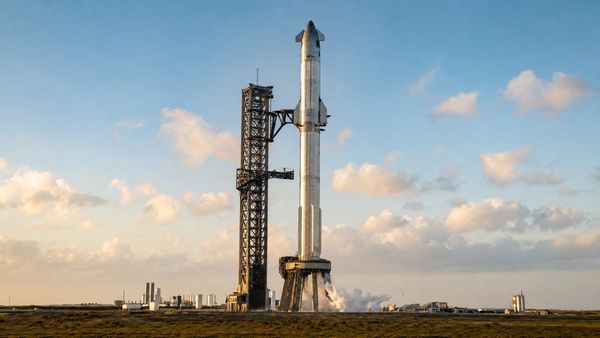
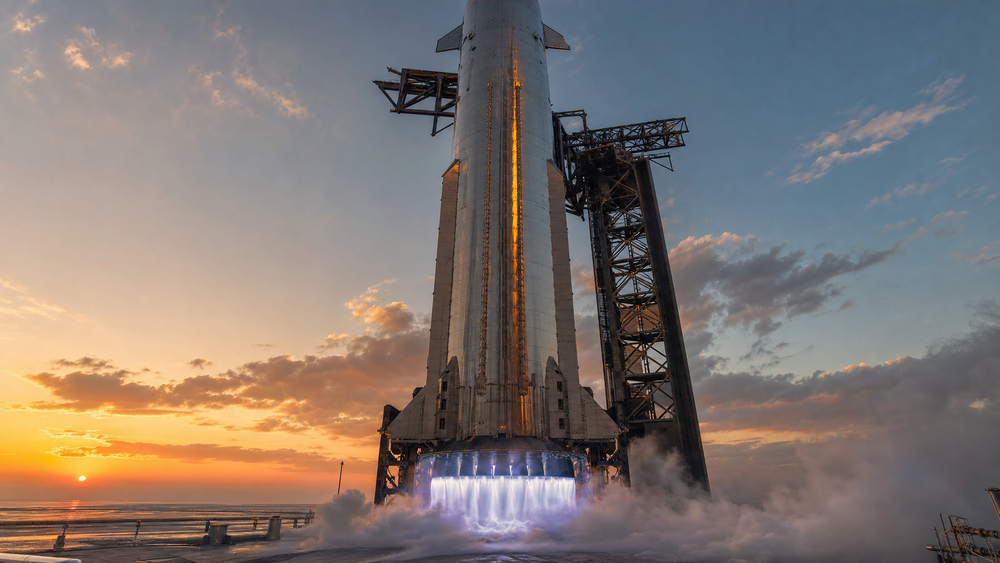
SpaceX's Booster 19 — the first Block 3 Super Heavy — completed a successful full-duration, full-thrust 33-engine static fire on May 7, 2026, at Starbase in Texas. The test represents the most critical pre-flight milestone for what will become the most powerful rocket ever to fly. Ship 39, the upper-stage partner for Flight 12, has also been rolled to the launch site, and the full stack is now awaiting a Wet Dress Rehearsal before an orbital flight attempt. SpaceX continues converting Pad 1 for Block 3 operations while Pad 2 remains the primary launch facility. Separately, SpaceX filed plans for a "Terafab" chip fabrication facility in Texas with a projected initial investment of at least $55 billion, signaling a move into semiconductor manufacturing for AI infrastructure. The company is also accelerating its strategic transition away from Falcon 9 toward full Starship operations, with Vandenberg becoming its busiest Falcon 9 launch site as Starbase pivots to Starship.
Block 3 is the version of Starship designed to enable everything from the Artemis Human Landing System to orbital refueling depots and Mars transit. A successful 33-engine static fire proves the vehicle's propulsion system is flight-ready and validates Pad 2's infrastructure for dual-pad operations. Getting Block 3 to orbit would represent the single largest step-change in launch capability since the Saturn V.
THE DOUGH
SpaceX's upcoming IPO — potentially valued between $1.75 and $2 trillion — hinges partly on demonstrating Starship's operational viability. Block 3's progress directly supports the company's case for launch dominance, Starlink economics, and its role as infrastructure provider for the space economy. The Terafab chip plant, if built, would position SpaceX as a vertically integrated AI-and-space conglomerate, with implications for Nvidia, TSMC, and every company in the AI supply chain. Companies building satellites, lunar systems, and commercial space stations — from Rocket Lab to Astrobotic to Voyager — are all downstream beneficiaries of Starship's cost-per-kilogram revolution.
We are not financial analysts or investment advisors. Nothing in this newsletter constitutes investment advice. All economic analysis is speculative and for informational purposes only. Do your own research.
THE POSSIBILITIES
The Terafab filing is arguably more disruptive than the static fire. If SpaceX can manufacture AI chips, operate the world's largest satellite constellation, and launch more mass to orbit than every other company combined, it becomes a vertically integrated infrastructure monopoly spanning ground, orbit, and compute. That's not a rocket company — it's a platform play for the entire 21st-century economy.
THE HURDLES
Block 3 has never flown, and a 33-engine orbital attempt remains enormously complex. FAA licensing timelines are unpredictable, and SpaceX faces a new lawsuit from Starbase-area residents claiming launch operations damage their homes. The Terafab proposal is years from producing chips, and semiconductor fabrication is a domain where SpaceX has zero track record.
WHAT TO WATCH
- Wet Dress Rehearsal timing and results for the Flight 12 full stack
- FAA launch license approval timeline for Block 3's first orbital attempt
- SpaceX IPO roadshow dates and whether Starship progress influences final valuation
- Terafab permitting progress and partnership announcements (Intel? Samsung?)
- Falcon 9 retirement timeline signals as Starship cadence increases