THE STORY
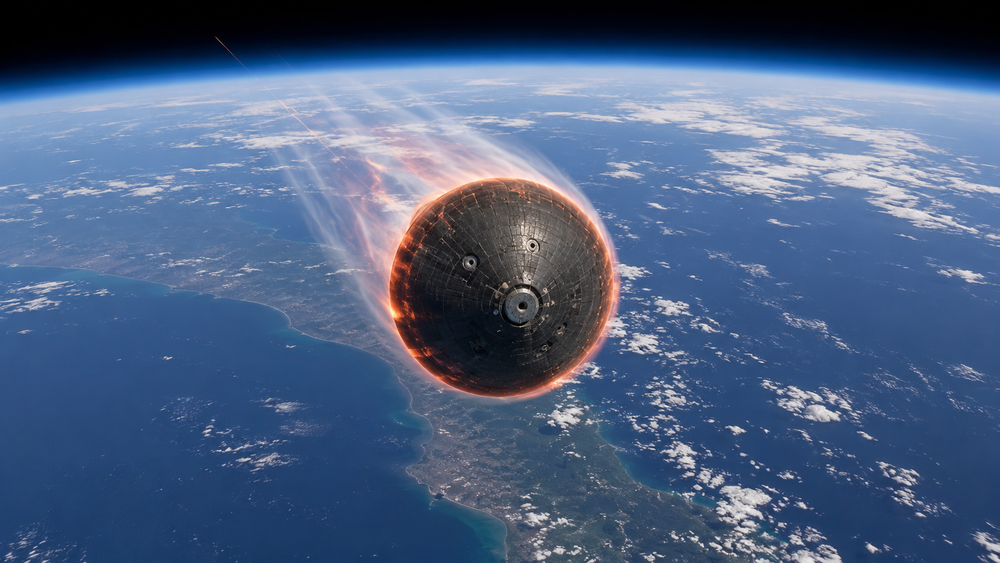
Federal Aviation Administration documents have revealed new details about a SpaceX project called Starfall — a family of reentry vehicles designed to return cargo from orbit to Earth, potentially enabling the first generation of commercial in-space manufacturing. The filings, which outline development and testing plans, describe vehicles built specifically for the controlled deorbiting and recovery of manufactured goods, research payloads, and other materials produced in the microgravity environment of low Earth orbit. While SpaceX has not publicly commented on the program's specifications, the existence of formal FAA filings signals a move well beyond conceptual studies.
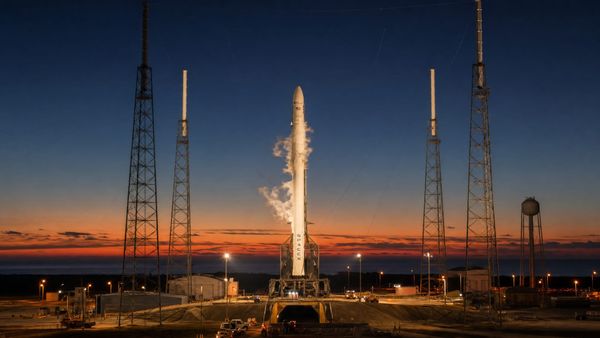
Starfall represents a critical missing piece in the economics of space-based production. Over the past decade, launch costs have plummeted — Falcon 9 drove per-kilogram prices to a fraction of their historical levels, and Starship promises further order-of-magnitude reductions. But there has been no comparably cheap, reliable, purpose-built system for bringing finished products back down. SpaceX's Dragon capsule can return cargo from the International Space Station, but it is crew-rated and expensive relative to the mass it recovers. Other companies have proposed small reentry capsules — Varda Space Industries has flown its W-Series capsule for pharmaceutical manufacturing — but none have achieved high-cadence operations. Starfall appears designed to fill this gap at scale, optimized purely for cargo recovery without the mass and cost overhead of life-support systems.
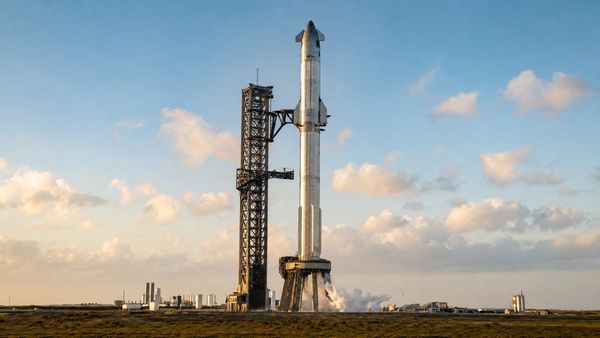
The project dovetails with ambitions SpaceX outlined in its recent S-1 filing, which described plans for orbital data centers and in-space compute infrastructure leveraging Starship's massive payload capacity. But orbital computing is only the highest-profile application. In-space manufacturing encompasses pharmaceutical production in microgravity, where certain protein crystals form more perfectly; semiconductor fabrication free from ground-based vibration; ZBLAN fiber optic cable manufacturing, which produces vastly superior signal quality in weightlessness; and advanced materials processing. All of these require a reliable, low-cost way to return finished goods to terrestrial markets.
If Starfall can deliver routine reentry at a fraction of Dragon's per-kilogram cost, it closes the loop on a commercial value chain that currently exists only in theory: launch raw materials on Starship, manufacture in orbit, return finished goods on Starfall. That closed loop is what transforms in-space manufacturing from a research curiosity into a genuine industry. The FAA filings also raise the question of cadence — whether SpaceX envisions Starfall operating on a schedule comparable to Starlink satellite deployments, which would imply dozens or hundreds of vehicles per year. At that scale, the reentry market itself becomes a platform business, not just a logistics service.
THE DOUGH
Starfall could unlock a space manufacturing market that industry analyses have projected could reach tens of billions of dollars by the 2030s, spanning pharmaceuticals, fiber optics, and advanced materials. Companies already working on in-space manufacturing — including Varda Space Industries, Space Forge, and Redwire — would benefit from a reliable, low-cost return vehicle, even one operated by a potential competitor. The development also enhances SpaceX's IPO narrative by demonstrating that Starship's business case extends well beyond launch services into an integrated space logistics platform.
We are not financial analysts or investment advisors. Nothing in this newsletter constitutes investment advice. All economic analysis is speculative and for informational purposes only. Do your own research.
THE POSSIBILITIES
The deeper play isn't just cargo return — it's infrastructure control. If SpaceX owns the launch vehicle, the orbital platform, and the reentry vehicle, it becomes the landlord, logistics provider, and shipping service for every company that wants to manufacture in space. That vertical integration could give SpaceX pricing power over an entire industry before competitors even reach orbit.
THE HURDLES
In-space manufacturing remains commercially unproven at scale — no company has yet demonstrated a product manufactured in orbit that commands a price premium sufficient to cover launch and recovery costs at volume. The regulatory pathway for routinely deorbiting vehicles carrying manufactured goods, some potentially hazardous, has not been fully established, and the FAA filings provide no details on Starfall's thermal protection approach, mass capacity, or target cost per kilogram.
WHAT TO WATCH
- SpaceX's Starfall test flight schedule and vehicle specifications as FAA filings are updated
- Varda Space Industries' pharmaceutical manufacturing capsule progress as a market reference point
- Starship's per-kilogram cost trajectory, which directly governs in-space manufacturing economics
- Any SpaceX partnerships with manufacturing companies for orbital production pilot programs
- FAA regulatory framework development for high-cadence commercial reentry vehicle operations