
THE STORY
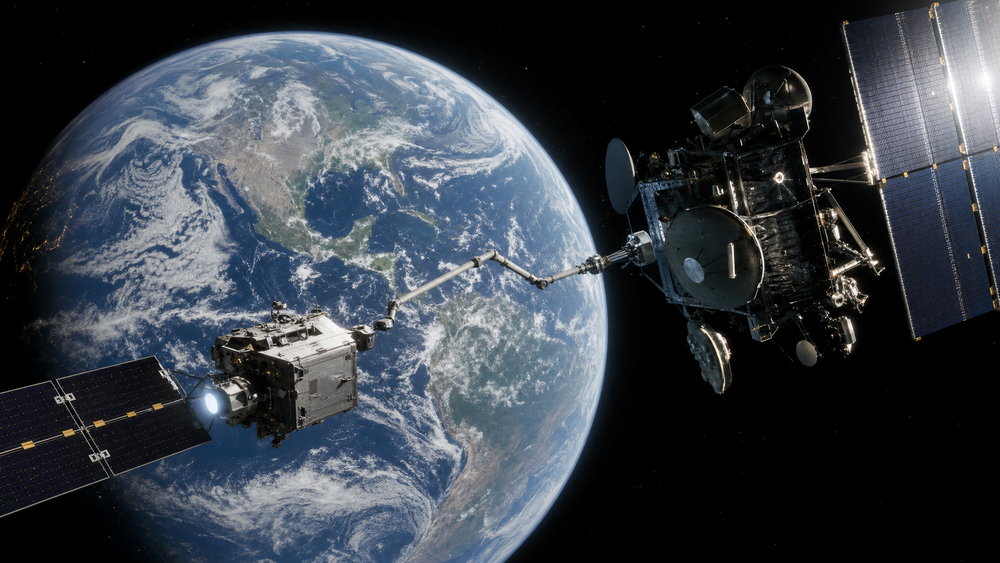
The U.S. Space Force's Space Systems Command announced plans for the USSF-23 mission, which will launch vehicles to demonstrate refueling and satellite servicing in geostationary orbit, targeting 2027 for the demonstrations. Separately, Northrop Grumman confirmed its next-generation Mission Robotic Vehicle (MRV) is readying for a summer launch under DARPA's Robotic Servicing of Geosynchronous Satellites program, designed to extend the life of aging GEO satellites through refueling and repair. The Space Force also launched an In-Domain Orbital Logistics Challenge through its SpaceWERX innovation arm to find and advance commercial technologies for sustaining satellites in orbit. NASA, meanwhile, confirmed that its Katalyst robotic servicing spacecraft — built by Northrop Grumman and launching on a Pegasus XL rocket — will attempt to boost the orbit of the aging Neil Gehrels Swift Observatory.
These converging programs signal that in-orbit servicing, assembly, and manufacturing (ISAM) is transitioning from theoretical capability to operational reality. The ability to refuel, repair, and reposition satellites in GEO would transform the economics of military and commercial space operations.
THE DOUGH
The in-orbit servicing market is projected to grow substantially as operators realize the cost of extending a satellite's life is often a fraction of building and launching a replacement. Northrop Grumman's SpaceLogistics subsidiary has already demonstrated basic life extension with its Mission Extension Vehicles, but refueling and repair represent far more valuable capabilities. Companies like Astroscale, which just announced a strategic partnership with SKY Perfect JSAT, and Redwire, tapped for DARPA's Otter mission, are positioning for contracts in this emerging market.
We are not financial analysts or investment advisors. Nothing in this newsletter constitutes investment advice. All economic analysis is speculative and for informational purposes only. Do your own research.
THE POSSIBILITIES
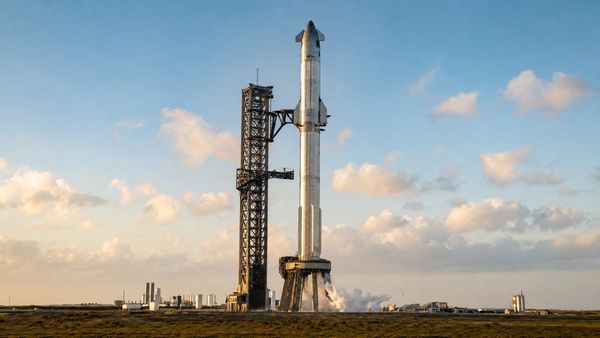
If in-orbit refueling works reliably in GEO, the implications cascade far beyond satellite servicing. The same technologies are directly applicable to lunar mission architectures — Artemis depends on orbital refueling of Starship HLS — and eventually to deep-space propellant depots that could enable missions to Mars and beyond.
THE HURDLES
Autonomous rendezvous and docking with uncooperative targets in GEO is one of the most technically demanding operations in spaceflight. Transferring cryogenic propellants in microgravity has never been demonstrated at operational scale, and any failure during a servicing mission could create debris in the valuable and congested geostationary belt.
WHAT TO WATCH
- Northrop Grumman MRV launch date and initial on-orbit operations
- NASA's Katalyst mission to boost Swift Observatory's orbit
- USSF-23 mission architecture details and selected commercial partners
- SpaceWERX Orbital Logistics Challenge winners