
THE STORY
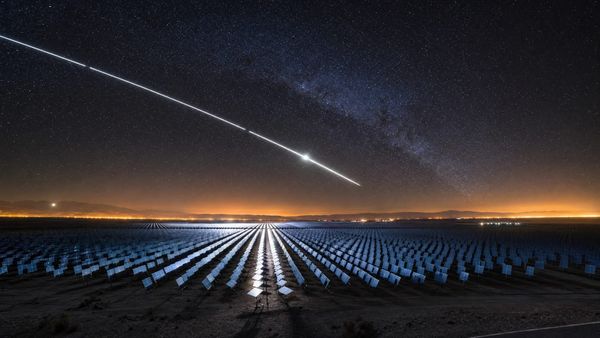
Overview Energy, a startup developing space-based solar power systems, announced an agreement to provide up to 1 gigawatt of power capacity for Meta's data centers. The deal makes Meta the first major technology company to formally contract for orbital solar energy, a concept that has been studied since the 1960s but never commercially deployed. Overview Energy's architecture involves deploying large solar collection arrays in orbit that convert sunlight to energy and beam it to ground-based receiving stations using microwave or laser transmission. The advantage over terrestrial solar is fundamental: orbital arrays receive sunlight 24 hours a day without atmospheric interference, weather disruption, or nighttime gaps, yielding roughly five to eight times more energy per square meter than ground-based panels. The announcement comes as AI data center electricity demand is surging — Big Tech companies collectively committed $630-$650 billion in capital expenditure for 2026, largely for AI infrastructure — and terrestrial power grids are straining to keep up.
If Overview Energy can deliver on its technology, space-based solar power would provide baseload, carbon-free electricity independent of geography, weather, or grid infrastructure — a capability no terrestrial renewable can match.
THE DOUGH
Meta's deal is a demand signal that could catalyze the entire space solar power sector. The AI infrastructure buildout has created an energy bottleneck that threatens to slow data center expansion: natural gas power plant construction costs have nearly doubled in two years, and lead times have stretched by 23 percent. Companies that can offer reliable, scalable power — whether from space solar, terrestrial nuclear, or advanced geothermal — are competing for what could become a trillion-dollar energy market over the next decade. Overview Energy is early-stage and unproven at scale, but the Meta contract provides revenue visibility and validation that could attract significant follow-on investment. Adjacent companies in launch services, in-orbit assembly, and power beaming technology would benefit from a successful demonstration.
We are not financial analysts or investment advisors. Nothing in this newsletter constitutes investment advice. All economic analysis is speculative and for informational purposes only. Do your own research.
THE POSSIBILITIES
The real significance isn't the 1 GW — it's the customer. Meta choosing space-based solar over more conventional alternatives signals that at least one hyperscaler believes terrestrial power options cannot scale fast enough to meet AI demand. If Overview Energy's first demonstration works, it creates a template for every other power-hungry data center operator to follow, potentially making space-based solar the default choice for new AI infrastructure in regions where grid capacity is exhausted.
THE HURDLES
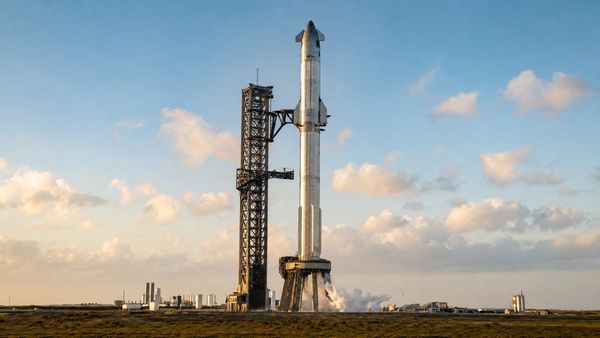
Space-based solar power has never been demonstrated at any meaningful scale. The engineering challenges are staggering: deploying kilometer-scale solar arrays in orbit, maintaining precise beam pointing to ground receivers, and achieving transmission efficiency high enough to compete economically with terrestrial alternatives. Launch costs, even with Starship economics, make the capital expenditure enormous. Overview Energy's technology is unproven, and the timeline from contract announcement to delivered watts is measured in years, not months.
WHAT TO WATCH
- Overview Energy's first orbital demonstration timeline and technology readiness level
- Whether other hyperscalers (Amazon, Google, Microsoft) sign similar space solar agreements
- Comparison of space solar economics versus small modular nuclear reactors for data center power
- Launch cost trajectories for the massive payloads required for orbital solar arrays
- Regulatory frameworks for wireless power transmission from orbit to ground