
THE STORY
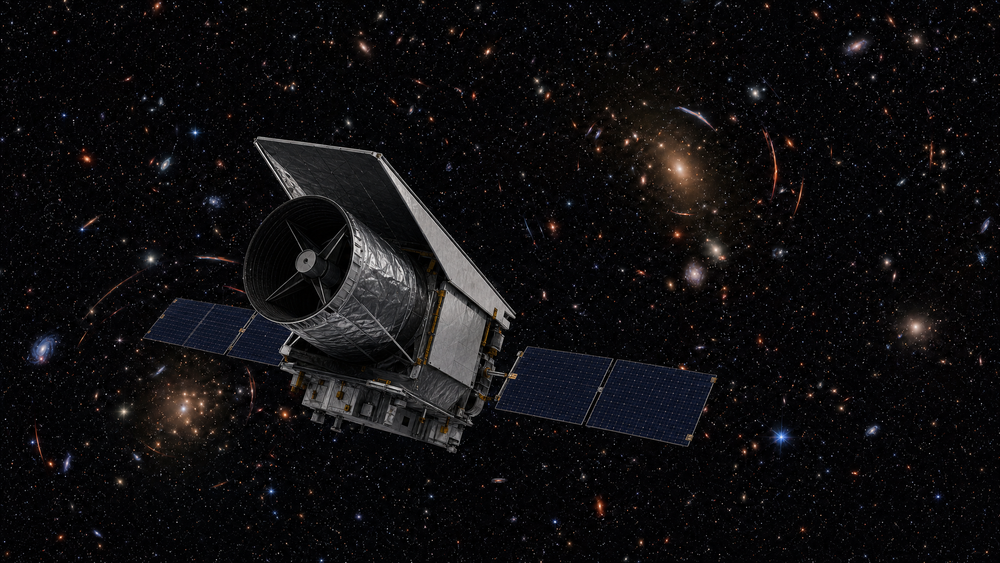
NASA's Nancy Grace Roman Space Telescope is on track for a September 2026 launch, and the agency has begun publicizing the observatory's extraordinary capabilities to a broader audience. Roman will survey the sky approximately 1,000 times faster than the Hubble Space Telescope, mapping dark matter and dark energy across vast swaths of the universe. The telescope's wide-field infrared instrument will capture images covering areas of sky 100 times larger than Hubble's field of view in a single exposure, enabling systematic surveys that would take Hubble centuries to complete. Roman is designed to answer fundamental questions about the expansion rate of the universe, the nature of dark energy, and the demographics of exoplanets throughout the Milky Way.
Roman represents a generational leap in survey astronomy — the ability to map the large-scale structure of the universe systematically rather than studying it one small patch at a time. It will work alongside the James Webb Space Telescope, with Roman providing the wide-field context and JWST offering the deep, targeted follow-up observations.
THE DOUGH
Roman is a NASA flagship mission with a total cost exceeding $4 billion, built by a team led by NASA's Goddard Space Flight Center with contributions from Ball Aerospace, L3Harris, and Teledyne Technologies. The telescope's coronagraph instrument — designed to directly image exoplanets by blocking starlight — could drive future demand for even more capable space-based planet-hunting missions. Companies involved in infrared detector technology and precision optics stand to benefit from the technology heritage Roman creates.
We are not financial analysts or investment advisors. Nothing in this newsletter constitutes investment advice. All economic analysis is speculative and for informational purposes only. Do your own research.
THE POSSIBILITIES
Roman's dark energy survey could fundamentally alter our understanding of cosmology — including the possibility that dark energy isn't constant but changes over time. If Roman's data confirms this, it would be one of the most significant scientific discoveries of the century, potentially requiring a complete revision of the standard model of cosmology.
THE HURDLES
Roman's coronagraph is a technology demonstration, not a guaranteed science instrument — if it underperforms, the exoplanet direct-imaging program loses its most promising near-term platform. The telescope also needs to survive launch and a complex deployment sequence at L2, the same orbital location as JWST.
WHAT TO WATCH
- Final pre-launch testing milestones and confirmed September launch date
- Launch vehicle selection and integration timeline
- First light and initial calibration results
- Coronagraph technology demonstration performance