
THE STORY
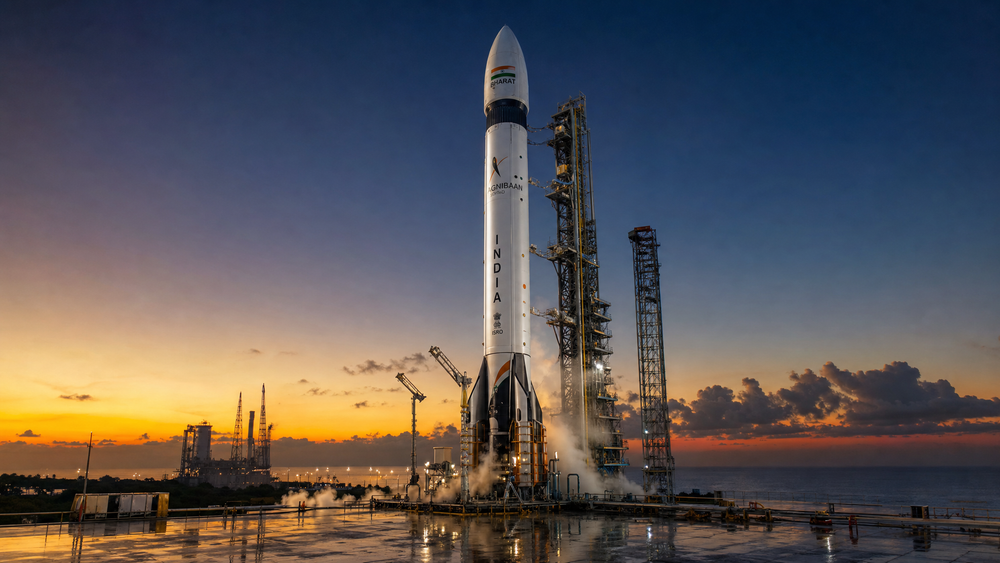
Skyroot Aerospace, an Indian launch startup, has raised $60 million in a funding round backed by GIC (Singapore's sovereign wealth fund) and Sherpalo Ventures, lifting its valuation to $1.1 billion and making it India's first space-technology unicorn. The company is preparing for the country's first private orbital launch attempt with its Vikram-1 rocket. Skyroot has more than doubled its valuation since 2023, reflecting growing investor confidence in India's rapidly expanding commercial space sector. The Indian government has been progressively liberalizing space policy, creating openings for private launch providers in a market historically dominated by ISRO.
India joining the commercial launch market with a private unicorn signals that the global launch industry is no longer a two-player game between the U.S. and China. A successful Vikram-1 orbital flight would validate India as a third pole in commercial launch.
THE DOUGH
India's space economy is projected to reach $44 billion by 2033, and Skyroot is positioned as the leading private launch provider. The company competes for a share of the global small satellite launch market alongside Rocket Lab, Firefly, and others. BlackRock's participation in the funding signals institutional-grade confidence. For the broader Indian tech ecosystem, Skyroot's unicorn status could catalyze more venture investment into deep-tech and space startups in the region.
We are not financial analysts or investment advisors. Nothing in this newsletter constitutes investment advice. All economic analysis is speculative and for informational purposes only. Do your own research.
THE POSSIBILITIES
India's space sector benefits from a structural cost advantage — engineering talent at a fraction of Silicon Valley prices — combined with a government eager to build sovereign launch capability. If Skyroot and its peers can deliver reliable launches at Indian cost structures, they could capture a meaningful share of the small-satellite market that's currently concentrated among U.S. and New Zealand providers.
THE HURDLES
Skyroot has not yet achieved orbit. First orbital launch attempts have a historically high failure rate, and any setback could delay subsequent missions and erode investor confidence. India's launch infrastructure and regulatory framework for private companies, while improving, remains less mature than the U.S. system.
WHAT TO WATCH
- Vikram-1 first orbital launch attempt date and outcome
- Indian government policy updates on commercial launch licensing
- Competitive dynamics with Agnikul Cosmos and other Indian launch startups