
THE STORY
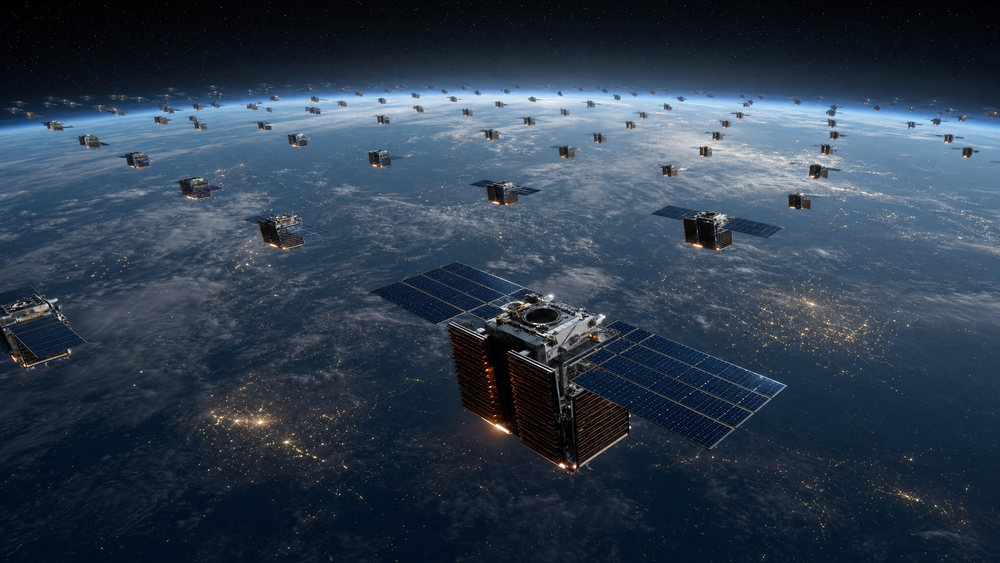
Cowboy Space Corporation — formerly Aetherflux — closed a $275 million Series B led by Index Ventures and filed plans three days later for a 20,000-satellite "Stampede" constellation designed to provide orbital computing capacity. It is the largest single capital commitment in the history of orbital compute. The filing forces the orbital data center thesis — which SpaceX also highlighted in its IPO prospectus — out of the concept phase and into the realm of companies with funded development plans and regulatory filings. Cowboy's bet is that launching computing infrastructure into orbit can solve the power, cooling, and land-use constraints that are bottlenecking terrestrial AI data center expansion.
A 20,000-satellite compute constellation would dwarf even Starlink in scale and represents a fundamentally different use of orbital infrastructure — not communication, but raw processing power positioned in the vacuum of space where cooling is free and solar power is continuous.
THE DOUGH
The orbital data center market is attracting serious capital from multiple directions simultaneously. SpaceX's IPO filing pitches it as a core future revenue stream; Cowboy is raising hundreds of millions specifically for it; and companies like Redwire are publishing whitepapers on the power and thermal architectures needed to make it work. If orbital compute proves technically and economically viable, it could create a market worth hundreds of billions of dollars and fundamentally reshape the demand curve for launch services.
We are not financial analysts or investment advisors. Nothing in this newsletter constitutes investment advice. All economic analysis is speculative and for informational purposes only. Do your own research.
THE POSSIBILITIES
The most interesting question about orbital data centers isn't whether they'll work — it's who controls the spectrum and orbital slots they'll need. A 20,000-satellite constellation filing at the FCC and ITU is as much a land grab for regulatory real estate as it is a technology play.
THE HURDLES
No one has demonstrated sustained high-performance computing in orbit. The latency, bandwidth, and reliability requirements for meaningful cloud computing are orders of magnitude more demanding than satellite communications. And 20,000 satellites would significantly worsen the orbital debris problem that's already forcing existing satellites to perform avoidance maneuvers.
WHAT TO WATCH
- Cowboy's first orbital compute demonstration mission
- FCC and ITU filings for the Stampede constellation
- SpaceX's own orbital data center demonstration timeline
- Power generation and thermal management technology demonstrations