
THE STORY
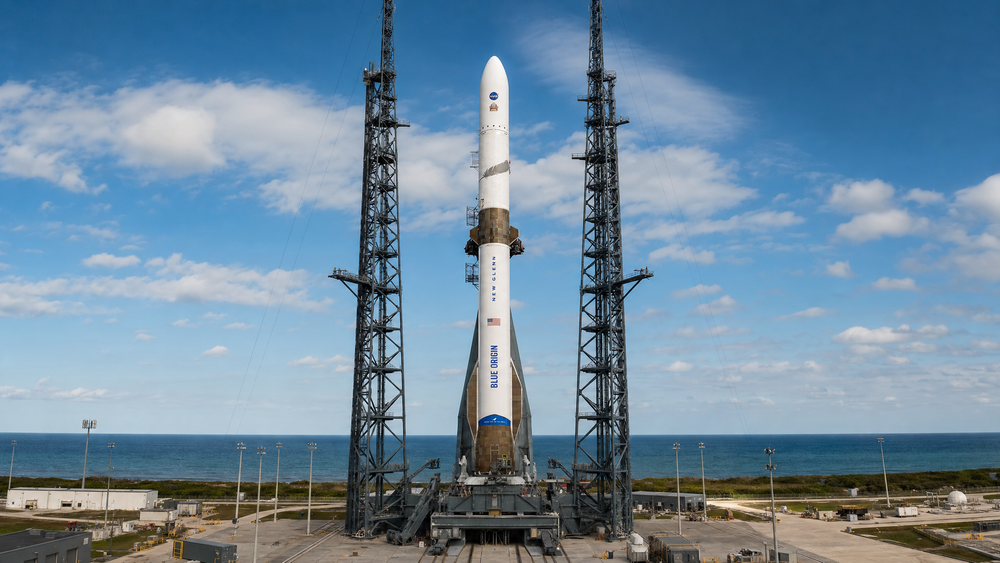
Blue Origin announced it has completed the investigation into the failure on the third flight of its New Glenn rocket, clearing the vehicle to resume launches. The April mishap resulted in the loss of an AST SpaceMobile satellite, though Blue Origin offered limited details about the specific engine failure that caused it. The investigation's completion is a critical milestone for Blue Origin, which needs to establish New Glenn as a reliable commercial and national security launch vehicle to compete with SpaceX's Falcon 9 and the emerging generation of medium-to-heavy lift rockets. New Glenn's first flight in January 2025 successfully reached orbit but failed to land its booster; the second flight achieved both orbit and booster landing. The company is simultaneously planning a $600 million expansion of its Rocket Park campus at Cape Canaveral, Florida.
Return-to-flight clearance means Blue Origin can begin working through its customer manifest, which includes launches for Amazon's Project Kuiper, NASA missions, and national security payloads. For the broader launch market, a healthy New Glenn provides the first real commercial heavy-lift alternative to Falcon 9/Heavy.
THE DOUGH
Blue Origin's $600 million Florida expansion signals long-term confidence in New Glenn's production cadence. The company's ability to serve as a second provider for national security launches is strategically important to the U.S. Space Force, which has expressed concern about over-reliance on SpaceX. AST SpaceMobile, which lost its satellite in the April failure, will need to assess whether to re-manifest with Blue Origin or seek alternative launch providers. Amazon's Project Kuiper — backed by more than $10 billion in investment — depends on New Glenn for a significant portion of its constellation deployment.
We are not financial analysts or investment advisors. Nothing in this newsletter constitutes investment advice. All economic analysis is speculative and for informational purposes only. Do your own research.
THE POSSIBILITIES
The real test for New Glenn isn't whether it can fly again — it's whether it can fly often enough to matter. SpaceX launched 59 Falcon 9 missions in the first five months of 2026 alone. Blue Origin needs to demonstrate not just reliability but cadence, and the difference between those two things is what separates a launch company from a launch industry.
THE HURDLES
Blue Origin's opacity about the specific failure mode — describing only an "engine failure" — may satisfy regulators but does little to reassure commercial customers who need to understand risk profiles before committing payloads. The company also faces the challenge of ramping production of BE-4 engines, which power both New Glenn and ULA's Vulcan Centaur.
WHAT TO WATCH
- Date of New Glenn's return-to-flight mission and payload manifest
- Whether AST SpaceMobile re-manifests with Blue Origin or switches providers
- Progress on the $600 million Cape Canaveral expansion
- BE-4 engine production rate and delivery schedule for ULA's Vulcan
- Blue Origin's progress on its Artemis V lunar lander