

THE STORY
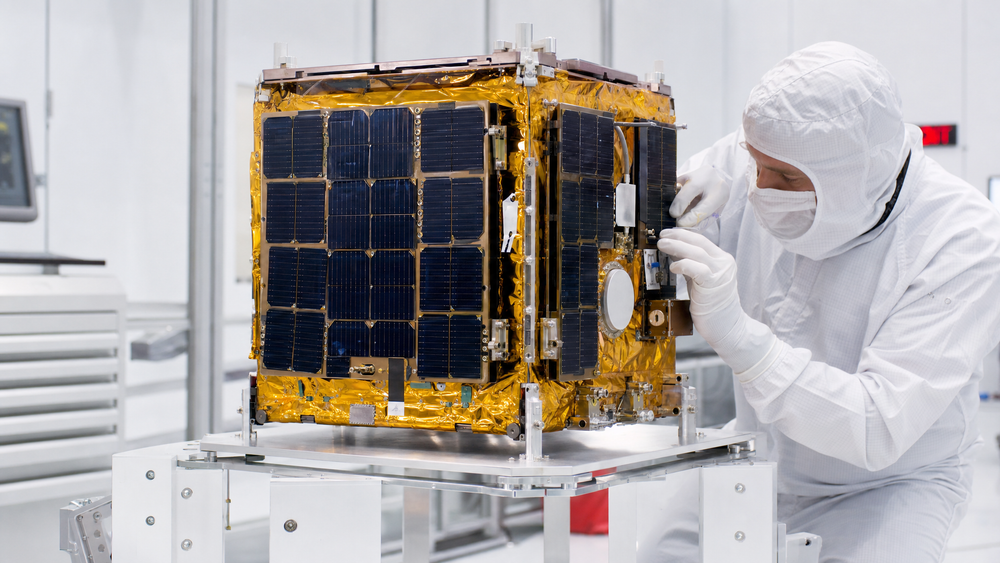
Astranis, a San Francisco-based satellite manufacturer, has raised $300 million in a Series E funding round co-led by Snowpoint Ventures and Franklin Templeton, valuing the company at $2.8 billion. The company also secured up to $155 million in a credit facility, bringing total new capital to more than $450 million. Astranis builds small geostationary satellites — each about the size of a refrigerator — designed to provide broadband connectivity to underserved regions. The funding will accelerate satellite production as the company works to fulfill a growing backlog of orders from telecom operators and governments worldwide.
While most of the satellite broadband industry has focused on massive LEO constellations (Starlink, Kuiper), Astranis is betting that purpose-built small GEO satellites can serve specific markets more efficiently — delivering dedicated capacity to individual countries or regions without the complexity of a global mega-constellation.
THE DOUGH
The satellite broadband market is projected to exceed $40 billion by 2030, and Astranis occupies a unique niche between LEO mega-constellations and traditional large GEO operators. The company's approach of building affordable, dedicated-capacity GEO satellites appeals to sovereign customers and regional telcos who want their own infrastructure rather than buying capacity from Starlink. Franklin Templeton's participation signals growing institutional interest in space infrastructure as an asset class.
We are not financial analysts or investment advisors. Nothing in this newsletter constitutes investment advice. All economic analysis is speculative and for informational purposes only. Do your own research.
THE POSSIBILITIES
Small GEO satellites could become the "private cloud" of space connectivity — giving countries and operators dedicated, sovereign capacity at a fraction of the cost of traditional large GEO birds. In a world where the Iran war has highlighted the vulnerability of terrestrial communications infrastructure, that sovereign capacity becomes a national security asset.
THE HURDLES
Astranis has faced in-orbit challenges with earlier satellites, including power system issues that limited performance. Manufacturing scale-up is notoriously difficult in the space industry, and the company must prove it can deliver reliable satellites at the cadence its backlog demands. Competition from both LEO operators and traditional GEO incumbents remains fierce.
WHAT TO WATCH
- Next Astranis satellite launch and on-orbit performance
- Manufacturing throughput at the company's San Francisco facility
- New customer contracts, particularly from sovereign and defense customers