
THE STORY
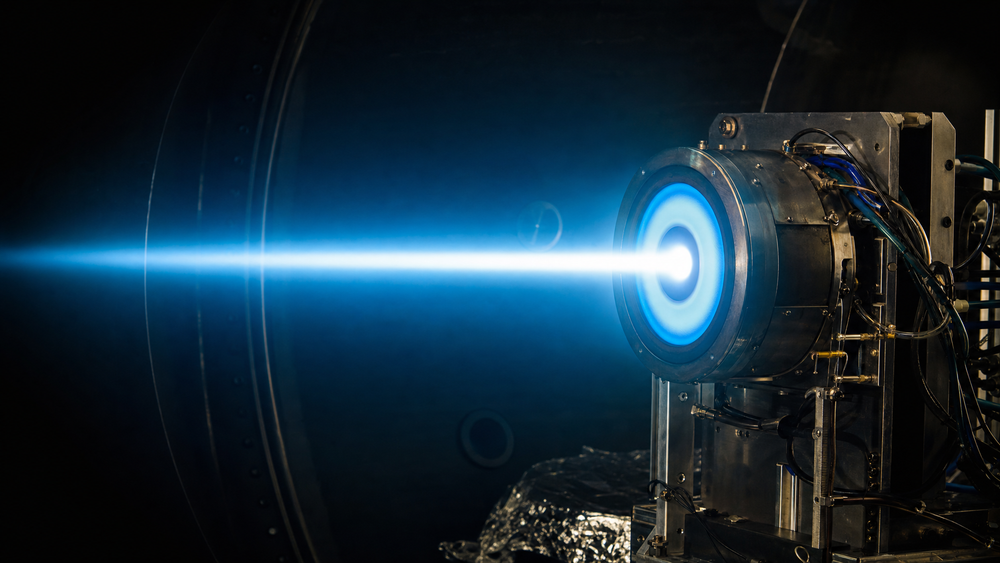
A prototype ion engine using lithium metal vapor as propellant has aced its first tests at NASA's Jet Propulsion Laboratory, achieving 25 times more power than the ion engine currently propelling the Psyche mission to an asteroid. The engine is part of NASA's effort to develop propulsion systems capable of supporting crewed missions to Mars, where chemical rockets alone would require prohibitively large fuel loads. Lithium vapor offers a significant advantage: it's abundant, lightweight, and can be ionized efficiently, producing far more thrust per unit of propellant than traditional xenon-based ion engines.
If scaled successfully, lithium-vapor ion propulsion could dramatically reduce transit times to Mars and enable a new class of deep-space missions that were previously considered impractical. The technology bridges the gap between today's slow-but-efficient ion drives and the high-thrust chemical engines that burn out too quickly for interplanetary cruising.
THE DOUGH
Advanced propulsion sits at the intersection of NASA's human exploration budget and the Defense Department's growing interest in cislunar and deep-space mobility. Companies developing electric propulsion — including Aerojet Rocketdyne (now part of L3Harris), Busek, and Ad Astra Rocket Company — are positioned to benefit from increased funding. The broader in-space propulsion market is projected to grow significantly as satellite servicing, orbital transfer, and deep-space missions proliferate.
We are not financial analysts or investment advisors. Nothing in this newsletter constitutes investment advice. All economic analysis is speculative and for informational purposes only. Do your own research.
THE POSSIBILITIES
Lithium-vapor propulsion could become the standard for cargo pre-positioning on Mars — sending habitats, supplies, and return-fuel ahead of astronaut crews on slow but efficient trajectories. That logistics architecture is the unglamorous backbone without which crewed Mars missions remain fantasy.
THE HURDLES
The prototype is at a very early stage. Scaling from laboratory demonstration to a flight-qualified engine capable of powering a crewed spacecraft is measured in years, potentially a decade or more. Lithium is also reactive, requiring careful handling and containment systems that add engineering complexity.
WHAT TO WATCH
- JPL follow-on testing at higher power levels
- NASA funding allocation for advanced propulsion in upcoming budgets
- Whether DARPA's propulsion programs incorporate lithium-vapor technology