
THE STORY
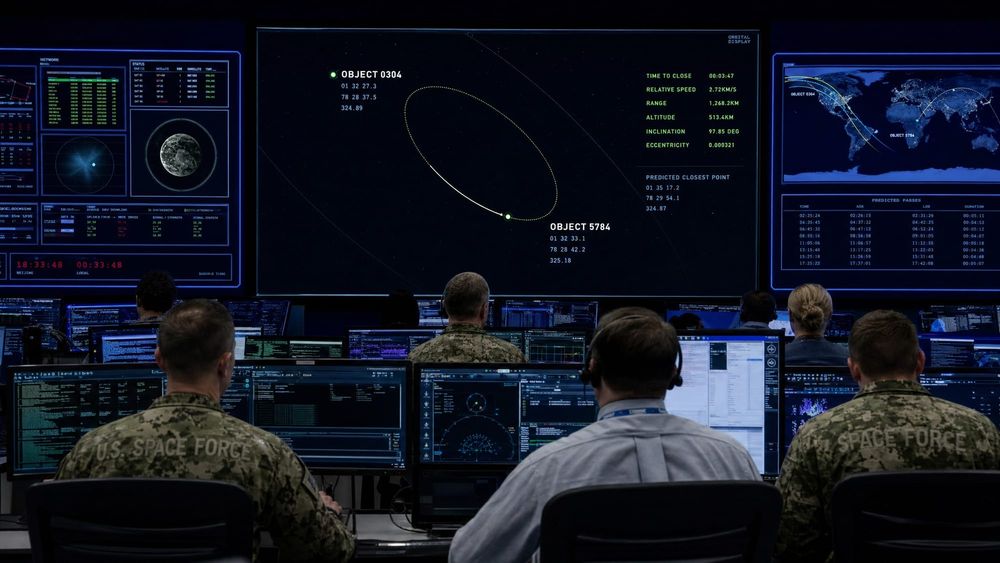
On July 1, 2026, the U.S. Space Force and space defense contractor True Anomaly announced the successful completion of the first tactical intercept of the VICTUS HAZE mission — a groundbreaking exercise in which one privately operated spacecraft approached, inspected, and imaged another private spacecraft in orbit on short-notice military orders. True Anomaly's Jackal vehicle maneuvered to intercept and photograph a Rocket Lab-built spacecraft, delivering the imagery to Space Systems Command within 61 hours of receiving the tasking order — beating the 72-hour deadline by 11 hours. This is the first time the Space Force has demonstrated a rapid-response, tactically directed rendezvous and proximity operation (RPO) using commercial spacecraft.
The VICTUS HAZE mission profile is designed to simulate a scenario where a hostile actor places a threatening object near a U.S. or allied satellite, and the Space Force needs to quickly dispatch an inspector satellite to characterize the threat. Think of it as orbital reconnaissance — a satellite flyby to determine what an unknown object is, what it's doing, and whether it poses a danger. This capability has been the province of classified government programs for decades, most notably the Space Force's own GSSAP (Geosynchronous Space Situational Awareness Program) satellites built by Northrop Grumman, which operate as "neighborhood watch" in the geostationary belt. VICTUS HAZE takes that concept and proves it can be done commercially, on-demand, in low Earth orbit — where the majority of the world's satellites now reside.
True Anomaly, founded in 2022 by a former Air Force officer, is positioning itself as the core of a new commercial space defense layer. Its Jackal spacecraft are designed specifically for rendezvous and proximity operations, equipped with sensors and imaging systems optimized for characterizing objects in orbit. The fact that the target was a Rocket Lab spacecraft is also notable — it means two of the most important emerging space companies are now operationally intertwined with Space Force missions. The 61-hour timeline from order to delivery is militarily significant: in a conflict scenario, the ability to rapidly characterize an adversary's space assets could determine whether a commander escalates, de-escalates, or takes defensive action.
THE DOUGH
VICTUS HAZE sits within the broader $1.8 billion Andromeda program and a rapidly expanding space domain awareness market. True Anomaly's successful demonstration positions it for follow-on production contracts and could accelerate the shift from exquisite, single-vendor national security satellites to proliferated commercial architectures. Defense-focused investors should note that companies like True Anomaly, LeoLabs, and Slingshot Aerospace are building the commercial surveillance and analytics layer that the Space Force is increasingly relying on. The firm fixed-price structure of these contracts rewards companies with efficient manufacturing and fast iteration cycles.
We are not financial analysts or investment advisors. Nothing in this newsletter constitutes investment advice. All economic analysis is speculative and for informational purposes only. Do your own research.
THE POSSIBILITIES
The most consequential implication isn't the hardware — it's the operational concept. If the Space Force can direct commercial spacecraft to inspect potential threats on 72-hour timelines, it fundamentally changes the deterrence calculus in space. Adversaries must now assume that any suspicious maneuver near U.S. assets will be rapidly characterized and attributed. That's a significant shift from a world where space situational awareness was limited and slow.
THE HURDLES
Demonstrating RPO in a controlled exercise is very different from doing it against a non-cooperative, potentially maneuvering adversary. The diplomatic implications of inspecting another nation's satellites — even in peacetime — are enormous and largely uncharted. And scaling from a single demonstration to a persistent, responsive capability requires a fleet of Jackal-class vehicles pre-positioned in orbit, which demands sustained procurement funding that hasn't yet been committed.
WHAT TO WATCH
- Space Force follow-on contracts for True Anomaly production Jackal vehicles
- International reactions — particularly from China and Russia — to demonstrated U.S. commercial RPO capability
- Whether the Space Development Agency incorporates VICTUS HAZE-like tasking into its proliferated architecture
- Rocket Lab's expanding role as both a launch provider and target/participant in military space exercises
- Golden Dome program requirements and potential overlap with VICTUS HAZE architecture