
THE STORY
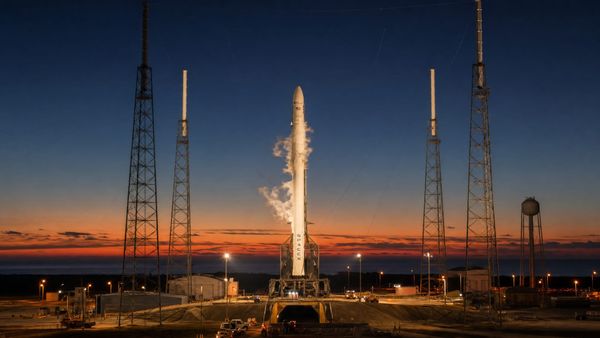
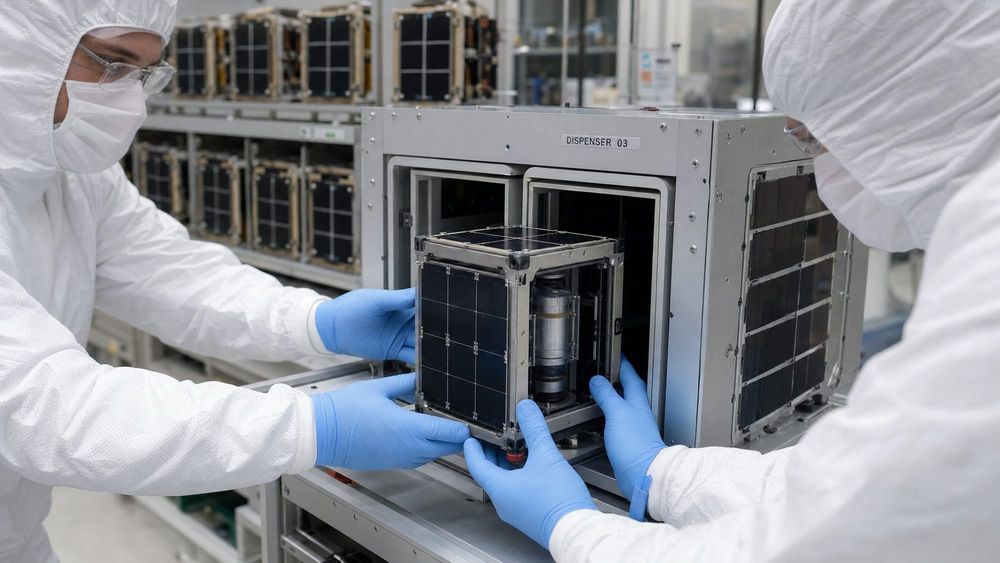
Aboard SpaceX's Transporter-17 rideshare mission, which launched 81 payloads from Vandenberg Space Force Base on July 7, a small satellite made quiet history: City Labs' BOHR mission became the first commercially designed and operated spacecraft to harness nuclear energy in orbit. The Miami-based company's satellite carries a tritium-powered betavoltaic nuclear battery — a device that converts the energy from radioactive decay of tritium directly into electricity without any moving parts, combustion, or thermal cycles. Unlike traditional solar panels, a nuclear battery produces power continuously, regardless of whether the spacecraft is in sunlight or shadow, and can operate for decades without refueling.
Betavoltaic technology has existed in laboratory settings for years, but City Labs' achievement in packaging it into a flight-qualified, commercially licensed satellite represents a significant engineering milestone. Tritium, a hydrogen isotope with a half-life of about 12.3 years, emits low-energy beta particles that are captured by semiconductor materials to generate a small but steady electrical current. The power output is modest — suitable for sensors, communications beacons, and low-power electronics rather than high-draw instruments — but the key advantage is reliability and longevity in environments where solar power is impractical. Think permanently shadowed lunar craters, deep-space probes beyond Jupiter, military satellites that need to minimize their visual and thermal signature, or IoT sensors on asteroids and planetary surfaces.
The BOHR mission (named after physicist Niels Bohr) serves as a pathfinder to validate the nuclear battery's performance in the actual space environment — measuring power output, thermal behavior, radiation tolerance, and long-term degradation under orbital conditions. City Labs designed the battery to be modular and scalable, meaning future versions could be stacked to provide higher power for more demanding payloads. The mission comes as NASA's Artemis program drives growing demand for power systems that can survive the 14-day lunar night, and as the Pentagon increasingly requires long-endurance, low-signature power for military space assets. If the BOHR mission validates as expected, City Labs will have demonstrated a commercially viable alternative to the plutonium-238-based radioisotope thermoelectric generators (RTGs) that NASA has relied on for decades — devices that are extraordinarily expensive and constrained by a tiny global supply of Pu-238. A cheaper, manufacturable nuclear power source could unlock entirely new classes of space missions.
THE DOUGH
The space nuclear power market is nascent but growing rapidly, fueled by NASA's lunar surface power programs and DoD interest in resilient space assets. City Labs competes alongside companies like Zeno Power (recycled nuclear waste RTGs), Ultra Safe Nuclear (micro-reactors for space), and Avalanche Energy (fusion-derived batteries under DARPA contract). Success on the BOHR mission would position City Labs as a dual-use supplier to both civil and military space programs — a business model that commands premium valuations. The broader tritium supply chain, currently dominated by CANDU reactor byproducts in Canada, could also see increased investment interest.
We are not financial analysts or investment advisors. Nothing in this newsletter constitutes investment advice. All economic analysis is speculative and for informational purposes only. Do your own research.
THE POSSIBILITIES
The most interesting implication isn't the satellite — it's the regulatory precedent. By successfully launching a commercially licensed nuclear-powered satellite, City Labs has navigated the thicket of FAA, NRC, and international regulations governing nuclear materials in space. That regulatory pathway, once established and proven safe, becomes dramatically easier for subsequent missions to follow — potentially opening the floodgates for nuclear-powered commercial spacecraft across the industry.
THE HURDLES
Betavoltaic batteries produce microwatts to milliwatts of power — orders of magnitude less than solar panels or fission reactors. Scaling to power levels useful for crewed missions or high-performance instruments requires either dramatic improvements in conversion efficiency or fundamentally different nuclear approaches like fission surface power. The BOHR mission is a proof of concept, not a production system.
WHAT TO WATCH
- BOHR mission on-orbit performance data over the first 6–12 months
- City Labs follow-on contracts with NASA or DoD for lunar or deep-space applications
- Competing nuclear power approaches from Zeno Power, Avalanche Energy, and Ultra Safe Nuclear
- NASA's fission surface power system selection for Artemis base camps
- Any evolution in FAA/NRC nuclear launch safety regulations based on BOHR precedent