
THE STORY
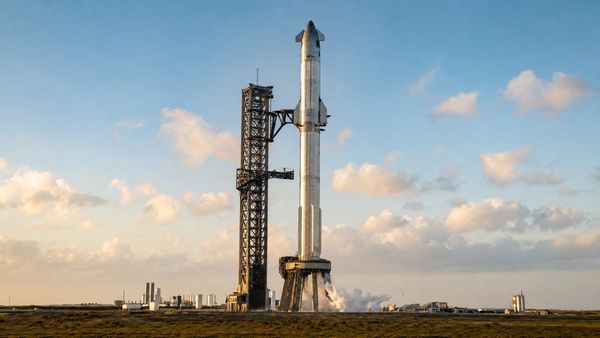
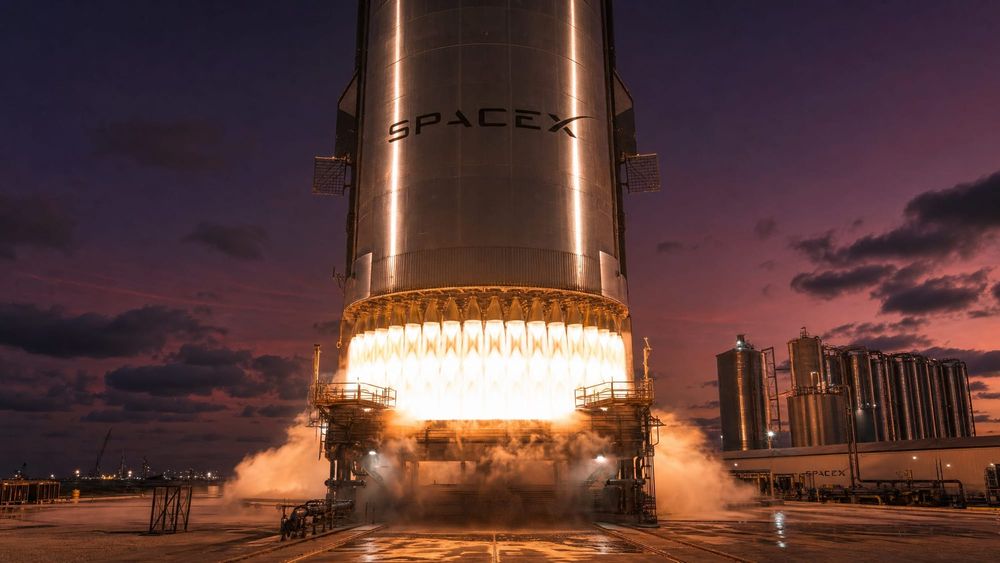
SpaceX is preparing for the 13th integrated flight test of its Starship system, targeting launch as early as Thursday, July 16, with a 90-minute window opening at 5:45 p.m. CT from Starbase in South Texas. The announcement came roughly seven weeks after Flight 12 on May 22, underscoring SpaceX's accelerating cadence on the most powerful rocket ever built. Meanwhile, the company completed a record-duration 33-engine static fire of Booster 20 — the next Super Heavy booster in the queue — signaling that SpaceX is already building the pipeline for flights beyond the immediate horizon.
The Booster 20 static fire is particularly notable because of its duration. While SpaceX hasn't published exact figures, NASASpaceFlight.com reported it as the longest static fire conducted on a Super Heavy booster to date. Extended-duration static fires stress-test the propellant feed systems, turbopump performance, engine thermal management, and structural integrity of the vehicle in ways that short burns cannot replicate. For a vehicle with 33 Raptor engines firing simultaneously — generating roughly 16.7 million pounds of thrust — sustaining that inferno for an extended period validates that the plumbing, avionics, and structure can handle the sustained loads of a full-duration ascent burn. SpaceX is simultaneously pushing hard on Pad 2 development, including deluge system testing and arm load tests, aiming for dual-pad capability at Starbase for the first time.
Flight 13 will build on the achievements of recent missions, which have progressively demonstrated ship reentry, booster catch attempts, and orbital insertion accuracy. Each flight test feeds data back into the Starship Human Landing System (HLS) variant needed for Artemis III, orbital refueling demonstrations, and eventually the fully reusable configuration that would drop cost-to-orbit by an order of magnitude or more. The seven-week turnaround from Flight 12 also demonstrates that SpaceX's manufacturing and integration pipeline at Starbase is maturing — the company is no longer spending months between flights debugging anomalies, but instead iterating rapidly in a test-fly-fix cadence that mirrors its successful Falcon 9 development philosophy, just at a far larger scale. For the broader space economy, every successful Starship flight compresses the timeline to the payload economics that make orbital manufacturing, lunar logistics, and Mars missions financially viable.
THE DOUGH
SpaceX's accelerating Starship cadence directly supports the company's valuation narrative ahead of its public listing, with BryceTech data confirming SpaceX accounted for 50% of all global orbital launches in 2025. Every successful flight de-risks the Starlink Gen-3 constellation, the HLS lunar lander contract, and the emerging market for ultra-heavy-lift commercial payloads. Companies building space stations, lunar landers, and large satellite constellations — including Vast, Axiom, and Amazon's Kuiper — all depend on Starship's per-kilogram economics becoming reality. SpaceX's publicly traded shares give investors direct exposure to these milestones for the first time.
We are not financial analysts or investment advisors. Nothing in this newsletter constitutes investment advice. All economic analysis is speculative and for informational purposes only. Do your own research.
THE POSSIBILITIES
The real significance of the accelerating flight cadence isn't any single mission — it's the emergence of Starship as a routine operational vehicle. If SpaceX can sustain roughly monthly integrated flight tests through the rest of 2026, it would accumulate enough flight heritage to begin commercial payload operations far sooner than most analysts project. That transforms Starship from a development program into revenue-generating infrastructure.
THE HURDLES
FAA licensing remains a potential bottleneck — each flight test requires regulatory clearance, and any anomaly could pause the program for months. The Ship upper stage still needs to demonstrate full orbital reentry and landing, and the propellant transfer demonstrations critical for HLS have not yet been attempted. Booster catch operations also carry inherent risk to pad infrastructure.
WHAT TO WATCH
- Flight 13 mission profile — whether it includes new objectives beyond previous flights
- FAA license timing and any conditions or restrictions
- Booster catch attempt status for Flight 13
- Pad 2 operational readiness timeline
- Progress on propellant transfer demonstrations needed for Artemis HLS missions