

THE STORY
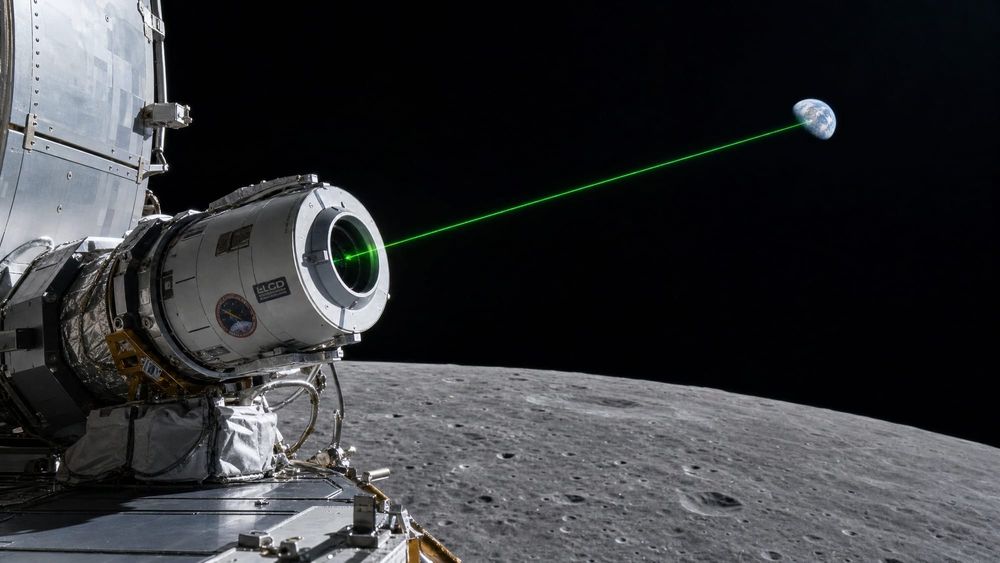
NASA has awarded SpaceX a contract to deliver laser communications capabilities for its Artemis III mission using Starlink's optical inter-satellite link technology. Under the agreement announced on Thursday, the upcoming crewed lunar mission will use Starlink mini laser terminals to downlink imagery and video from cislunar space directly to mission control in Houston — a capability that represents a fundamental shift in how deep-space missions communicate with Earth. Instead of relying solely on NASA's aging Deep Space Network of ground stations, Artemis III will leverage SpaceX's commercial constellation as a high-bandwidth relay.
Starlink's inter-satellite laser links were originally developed for the constellation's own mesh networking — allowing satellites to route internet traffic across the network without bouncing signals down to ground stations. The technology operates at data rates far exceeding traditional radio-frequency communications, and SpaceX has been steadily deploying laser-equipped satellites since 2021. Adapting this hardware for cislunar use required miniaturization and modifications to handle the much longer link distances involved — the Moon is roughly 384,000 kilometers from Earth, compared to the few-thousand-kilometer distances between Starlink satellites in low Earth orbit. The "mini" terminals described in the agreement suggest SpaceX has achieved a significant reduction in the size, weight, and power requirements of the optical transceivers.
This contract builds on the laser communications demonstration performed during the Artemis II mission earlier this year, which validated high-bandwidth data transfer from cislunar space. But where Artemis II used a dedicated NASA laser communications terminal, Artemis III will integrate commercially derived Starlink hardware — a telling indicator of how NASA under Administrator Jared Isaacman is accelerating the agency's embrace of commercial infrastructure. The practical benefit is substantial: real-time HD video of astronauts on the lunar surface, streamed through a commercial relay network, would be a transformative moment for public engagement with the Artemis program. For mission operations, high-bandwidth downlinks enable richer telemetry, faster science data return, and more responsive ground support during surface EVAs. The selection also positions Starlink as infrastructure for a future cislunar economy — if the constellation can relay data from the Moon, it can relay data from lunar orbit stations, Gateway, and commercial landers.
THE DOUGH
This contract extends SpaceX's already dominant position in NASA's Artemis architecture. The company builds the Human Landing System (Starship HLS), launches crew aboard Crew Dragon, and will now provide communications infrastructure. Competitors in the optical communications space — including Mynaric, CACI International (which acquired SA Photonics), and Honeywell's optical terminals — face a market where SpaceX is both a customer and a vertically integrated competitor. For investors, the deal underscores Starlink's expanding role beyond consumer broadband into government and deep-space infrastructure services, potentially commanding premium pricing.
We are not financial analysts or investment advisors. Nothing in this newsletter constitutes investment advice. All economic analysis is speculative and for informational purposes only. Do your own research.
THE POSSIBILITIES
The real play here isn't Artemis III — it's establishing Starlink as the default data backbone for everything beyond low Earth orbit. If NASA validates Starlink laser comms at the Moon, every future commercial lunar lander, orbiter, and surface asset becomes a potential customer. SpaceX could build a cislunar relay layer that makes the Deep Space Network partially redundant for near-Moon operations.
THE HURDLES
Laser communications require precise pointing between transmitter and receiver, and any optical terminal on or near the Moon must contend with thermal extremes, lunar dust contamination, and the challenges of maintaining link stability during dynamic mission phases. NASA's schedule for Artemis III also remains fluid, with the crewed landing currently targeting 2028.
WHAT TO WATCH
- SpaceX Starlink mini laser terminal specifications and flight qualification timeline
- Artemis III mission architecture finalization and crew selection
- Whether NASA extends Starlink comms contracts to Gateway and future Artemis missions
- Competing laser comms providers winning alternative NASA or commercial lunar contracts
- Starship HLS development progress toward the uncrewed lunar demonstration in 2027


