
THE STORY
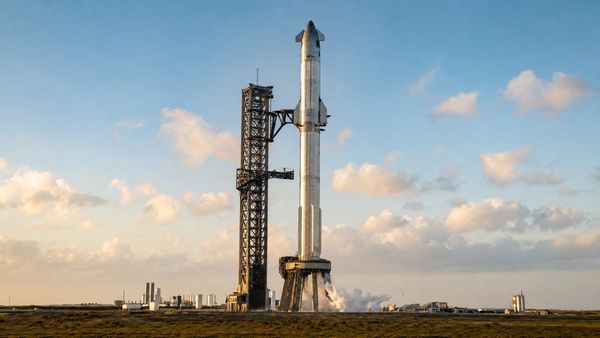
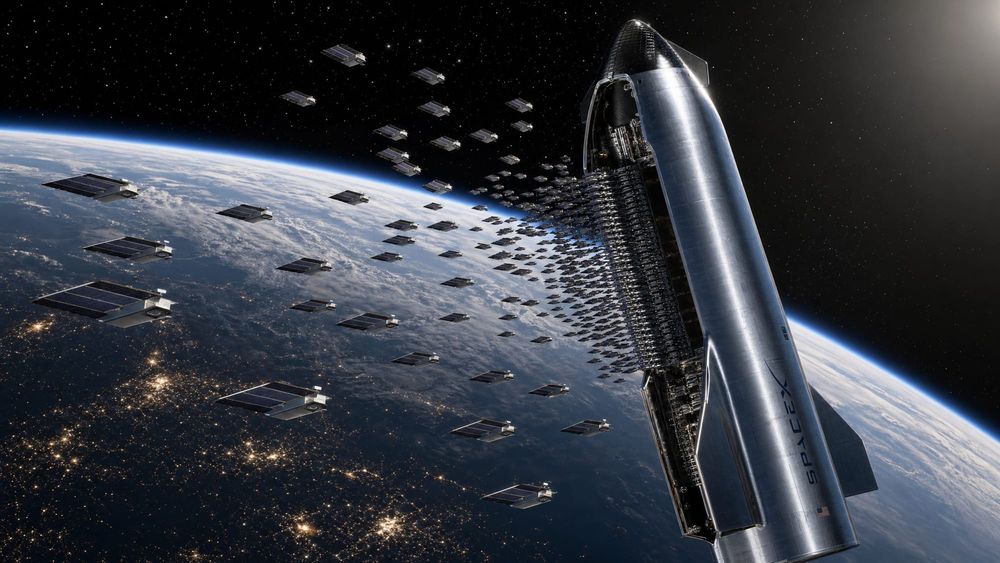
SpaceX has filed an application with the Federal Communications Commission requesting authority to deploy up to 100,000 third-generation Starlink satellites, a constellation that would dwarf anything ever attempted in space. The Gen-3 filing specifies operations in W-band and D-band frequencies — spectrum bands that have never been used at scale for commercial broadband — and promises "multi-gigabit" connectivity to users on the ground. Each Gen-3 satellite is expected to weigh approximately 2,000 kilograms (about 4,400 pounds), making them roughly four times heavier than the current Gen-2 Mini satellites and requiring Starship's massive payload capacity to deploy efficiently.
The numbers here are staggering and worth pausing on. There are currently about 15,000 active satellites in orbit around Earth total, across all operators and all nations. SpaceX is proposing to deploy nearly seven times that number in a single constellation. Even if the full 100,000-satellite authorization is a long-term ceiling rather than an immediate deployment target, the filing signals SpaceX's intent to build the most comprehensive telecommunications infrastructure in human history — one that would blanket every square meter of Earth's surface with high-bandwidth, low-latency connectivity. The move to W-band (75–110 GHz) and D-band (110–170 GHz) is particularly significant because these higher-frequency bands can carry vastly more data than the Ku- and Ka-band frequencies used by current Starlink satellites, enabling the fiber-like speeds that would let Starlink compete head-to-head with terrestrial broadband providers even in dense urban markets.
The filing comes as SpaceX is already ahead of last year's record-setting deployment pace, having launched 1,589 Starlink satellites in the first half of 2026 compared to 1,489 at the same point in 2025. The FCC filing also coincides with the recent FCC ruling that could deliver "seven-fold more capacity" to LEO broadband systems by modernizing spectrum-sharing rules — a regulatory tailwind that would compound the capacity gains from Gen-3's higher-frequency bands. Environmental and scientific groups have already called for the FCC to pause processing orbital data center and mega-constellation applications, arguing that the rush to fill low Earth orbit lacks adequate environmental review. The tension between SpaceX's expansion ambitions and growing orbital sustainability concerns is only going to intensify.
THE DOUGH
A 100,000-satellite constellation would require thousands of Starship launches over a decade or more, creating a self-reinforcing demand loop for SpaceX's own launch vehicle. Starlink is already SpaceX's primary revenue engine, and Gen-3's multi-gigabit capability could dramatically expand its addressable market into enterprise, aviation, maritime, and eventually urban residential segments. Ground equipment manufacturers, antenna makers like Intellian, and the broader satellite ground-segment supply chain would see massive demand growth. The filing also puts competitive pressure on Amazon's Kuiper, OneWeb, and emerging Chinese constellations that cannot match Starship's deployment economics.
We are not financial analysts or investment advisors. Nothing in this newsletter constitutes investment advice. All economic analysis is speculative and for informational purposes only. Do your own research.
THE POSSIBILITIES
At 100,000 satellites, SpaceX would control more orbital infrastructure than every other operator on Earth combined — by a wide margin. That kind of dominance raises questions not just about market competition but about whether a single commercial entity should wield that much control over global communications infrastructure. The geopolitical implications of one American company providing internet access to every nation on Earth are profound and largely unexamined.
THE HURDLES
W-band and D-band technologies are largely unproven at commercial scale — rain fade, atmospheric absorption, and the challenge of building affordable user terminals at these frequencies are all unsolved engineering problems. The FCC approval process will be lengthy and contentious, with opposition from GEO operators, astronomers, and environmental groups. International spectrum coordination through the ITU adds another layer of complexity, and orbital debris concerns at this constellation scale are unprecedented.
WHAT TO WATCH
- FCC processing timeline and any public comment proceedings on the Gen-3 application
- SpaceX's W-band and D-band technology demonstrations and prototype terminal testing
- Environmental and astronomical community responses to the 100,000-satellite proposal
- Starship launch cadence required to support Gen-3 deployment timeline
- Amazon Kuiper and Chinese constellation operators' competitive responses