
THE STORY
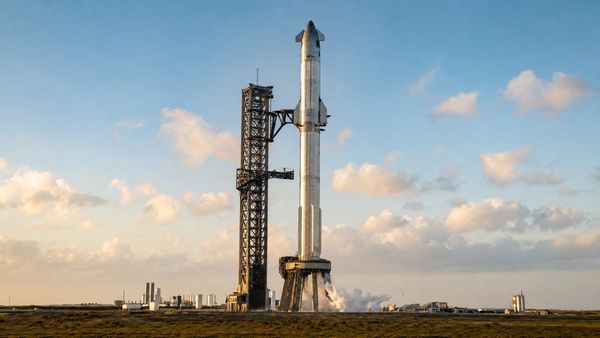
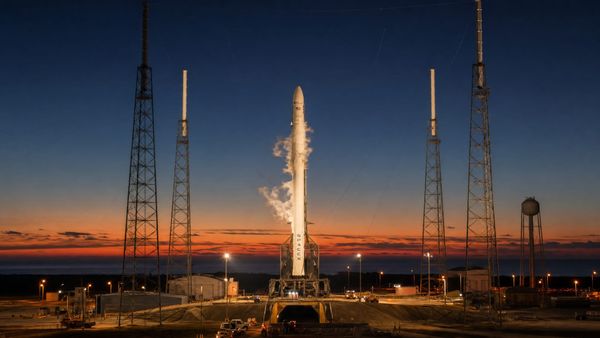
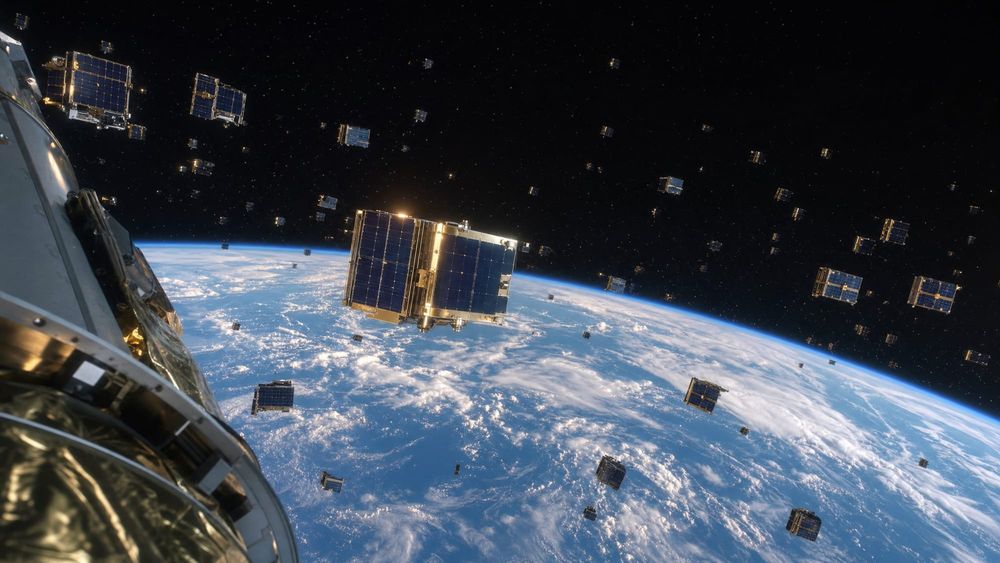
SpaceX has christened its planned AI megaconstellation "Starmind," continuing the company's stellar naming convention alongside Starlink and Starship. The constellation aims to place AI compute nodes in orbit, with CEO Elon Musk having previously discussed deploying up to one million satellites for orbital data processing. Starmind represents SpaceX's most ambitious bet yet: that the future of artificial intelligence infrastructure isn't just terrestrial data centers but a network of compute satellites orbiting Earth. The concept leverages SpaceX's unmatched launch cadence and Starlink's existing orbital infrastructure to create something no other company could plausibly attempt — a space-based AI processing layer that could supplement or eventually rival ground-based data centers for certain workloads. Whether the physics and economics actually close remains one of the most debated questions in both the space and AI industries.
SoftBank CEO Masayoshi Son publicly dismissed the idea earlier this week, saying the AI race will be won by computing resources on Earth, not in orbit. He pointed to the immense challenges of power generation, heat dissipation, and data latency that make orbital compute fundamentally different from terrestrial operations. But SpaceX's proponents argue that space offers essentially unlimited real estate, no permitting battles, no water consumption for cooling, and access to continuous solar power — advantages that could matter enormously as terrestrial data center construction faces growing community opposition and grid capacity constraints.
THE DOUGH
Starmind's market potential depends entirely on whether orbital compute can achieve cost parity with terrestrial alternatives for specific workloads like inference, model training on non-latency-sensitive tasks, or classified government processing. If it can, the addressable market is enormous — measured in hundreds of billions. SpaceX's existing Starlink manufacturing lines, launch infrastructure, and ground station network give it a structural advantage no competitor can replicate quickly.
We are not financial analysts or investment advisors. Nothing in this newsletter constitutes investment advice. All economic analysis is speculative and for informational purposes only. Do your own research.
THE POSSIBILITIES
The most underappreciated angle is sovereignty. Governments that cannot build domestic AI data centers at scale — due to energy constraints, land limitations, or security concerns — might lease orbital compute from SpaceX as a sovereign AI capability. That makes Starmind not just a tech play but a geopolitical instrument.
THE HURDLES
Heat dissipation in the vacuum of space is a physics problem with no easy solution — satellites can only radiate heat, not convect it. Power-hungry AI chips generate enormous thermal loads. No one has demonstrated that GPU-class processing can run reliably in orbit at the densities required for competitive AI workloads.
WHAT TO WATCH
- SpaceX's first Starmind prototype satellite specifications and launch timeline
- Thermal management architecture details — this is the key technical challenge
- Whether government customers sign up for orbital compute before commercial ones
- Competitor responses from Amazon, Microsoft, or sovereign space programs