
THE STORY
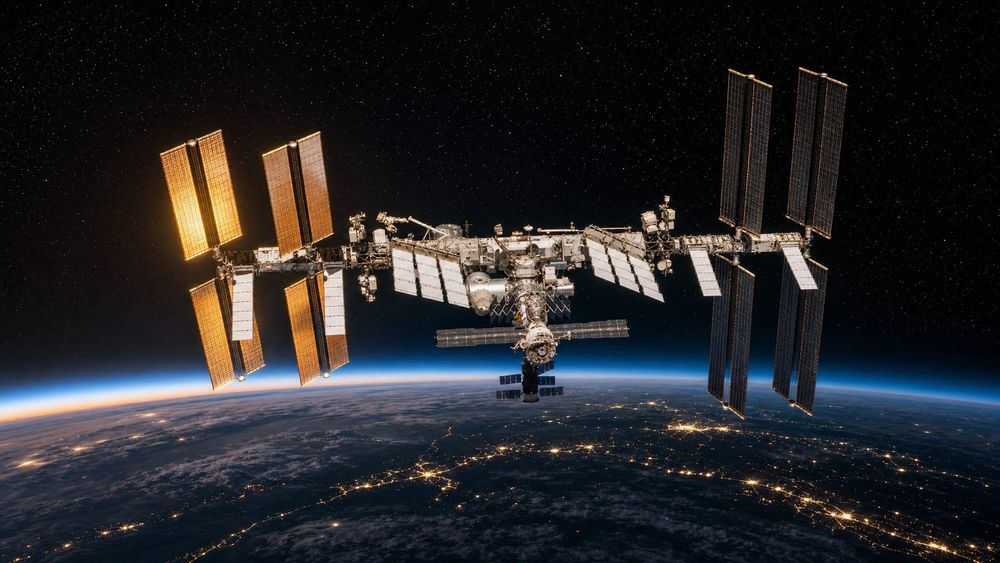
California-based Auxilium Biotechnologies has produced kidney and liver tissue aboard the International Space Station using bioprinting — marking the first time functional organ tissues have been manufactured off Earth. The company's experiment, conducted in the microgravity environment of the ISS, used a specialized bioprinter to layer living human cells into three-dimensional tissue constructs that mimic the architecture of real organs. On Earth, bioprinted tissues tend to collapse under their own weight before they can mature, because gravity pulls the soft, cell-laden hydrogels downward faster than the cells can establish structural connections. In microgravity, those same constructs float in place, allowing cells to organize into the complex, layered structures that characterize functional organ tissue.
The tissues produced include vascularized kidney tubules — the tiny structures responsible for filtering blood — and liver tissue constructs with functional hepatocyte layers. These are not full organs ready for transplant; they are millimeter-scale tissue samples that demonstrate the biological viability of the process. But the achievement is a critical proof of concept. Auxilium's bioprinter operated autonomously aboard the ISS, receiving commands from the ground, which validates the scalability of the approach — future missions wouldn't require an astronaut-surgeon to operate the equipment. The company has stated that the tissues survived the return to Earth and are being analyzed at its California laboratory for cell viability, structural integrity, and functional performance.
The implications extend far beyond the ISS. If space-based bioprinting can reliably produce tissue constructs that are superior to their Earth-made counterparts, it creates a genuine manufacturing use case for orbital platforms — one with a product valuable enough (transplant organs, pharmaceutical testing tissues, personalized medicine models) to justify the cost of launch and return. This is the kind of in-space manufacturing application that commercial space station developers like Axiom Space, Vast, and Orbital Reef have been pointing to as a revenue justification. The pharmaceutical industry alone spends billions annually on drug testing that could be revolutionized by access to functional human tissue models produced in microgravity. Auxilium's demonstration transforms space-based bioprinting from theoretical promise to demonstrated capability, and the race to commercialize it has just begun.
THE DOUGH
The organ transplant waitlist in the United States alone includes over 100,000 people, and the global tissue engineering market is projected to exceed $40 billion by 2030. If microgravity bioprinting proves superior for producing transplantable tissues, the addressable market is enormous — and the companies controlling access to orbital manufacturing platforms would capture significant value. Commercial space station developers (Axiom, Vast, Orbital Reef) gain a compelling revenue case. Launch providers benefit from recurring demand for microgravity manufacturing flights. Pharmaceutical companies could become anchor customers for orbital bioprinting services.
We are not financial analysts or investment advisors. Nothing in this newsletter constitutes investment advice. All economic analysis is speculative and for informational purposes only. Do your own research.
THE POSSIBILITIES
The real breakthrough isn't the tissue itself — it's the autonomous operation. If bioprinters can run without human intervention in orbit, they could operate on unmanned free-flyer platforms that launch, print, and return to Earth on a repeating cycle. That eliminates the need for expensive crewed space stations entirely and could make orbital biomanufacturing economically viable years earlier than the current space station development timelines suggest.
THE HURDLES
Millimeter-scale tissue samples are a long way from transplantable organs. Scaling bioprinted constructs to clinically relevant sizes requires solving vascularization — creating the networks of blood vessels that keep large tissues alive — which remains one of the hardest problems in tissue engineering, even in microgravity. Regulatory pathways for space-manufactured medical products are essentially nonexistent and would need to be created from scratch.
WHAT TO WATCH
- Auxilium's post-flight analysis results comparing space-printed tissues to Earth controls
- Follow-on ISS missions or contracts with commercial space station providers
- FDA engagement on regulatory frameworks for space-manufactured biologics
- Competing bioprinting programs from companies like Redwire and nScrypt
- Commercial space station milestone timelines from Axiom, Vast, and Blue Origin