
THE STORY
Rocket Lab announced on June 29 that it has entered into a definitive agreement to acquire Iridium Communications in an all-stock deal valued at approximately $8 billion. The transaction would merge Rocket Lab's launch services and spacecraft manufacturing capabilities with Iridium's 66-satellite constellation in low Earth orbit, which provides voice and data communications to more than 2.5 million subscribers across maritime, aviation, IoT, government, and defense markets. Rocket Lab CEO Peter Beck called it "one of the most transformative deals in the space industry" and described the acquisition as the "logical next step" in the company's long-stated ambition to become an end-to-end space company.
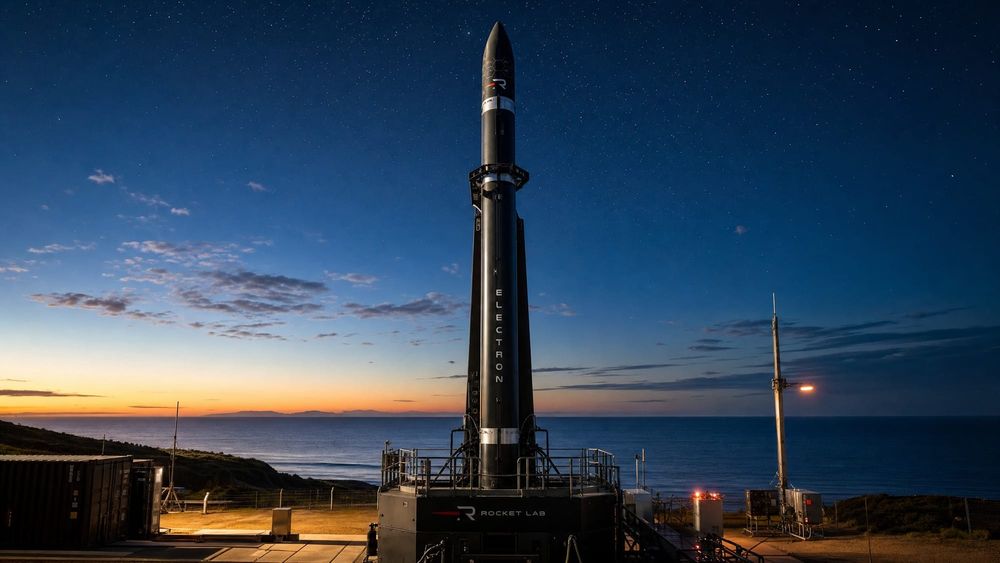
What makes this deal fascinating isn't just its size — it's the strategic geometry. Rocket Lab has spent years assembling the pieces: the Electron small launch vehicle (now with over 60 successful flights), the Neutron medium-lift rocket under development, a spacecraft manufacturing division that builds satellite buses and components, and the Photon satellite platform. What it lacked was the recurring revenue stream and orbital infrastructure that comes from operating a constellation. Iridium provides exactly that — a mature, revenue-generating network with deep penetration in government and defense markets, including a $738 million contract with the U.S. Department of Defense for EMSS (Enhanced Mobile Satellite Services). Iridium's constellation operates in a polar orbit at approximately 780 kilometers altitude, providing true global coverage including the poles — something geostationary systems and even SpaceX's Starlink cannot match at every latitude.
The competitive implications are immediate and stark. SpaceX is now the only other company that operates across the full stack — launch, spacecraft manufacturing, and constellation services — but it has never faced a vertically integrated competitor with a fully operational communications constellation and a proven launch vehicle. Rocket Lab's Electron already launches for customers like NASA (which recently awarded it three dedicated Electron missions), and Neutron is designed to be a reusable medium-lift vehicle targeting the same addressable market as Falcon 9. With Iridium's existing subscriber base and revenue (approximately $800 million annually), Rocket Lab gains both financial firepower and a captive launch customer for Iridium's next-generation constellation — satellites it can design and build in-house. That closed loop of launch, build, and operate is the Holy Grail of space economics.
THE DOUGH
This deal reshapes the investable space landscape. Rocket Lab (RKLB) becomes the second publicly traded vertically integrated space company alongside SpaceX (SPCX), but with a more diversified revenue base — launch, spacecraft, and now recurring subscription revenue from communications services. Iridium's government contracts provide revenue visibility that pure launch companies lack. Defense-focused investors and ETFs covering aerospace and space (ARKX, ITA, UFO) will need to reassess allocations. Amazon's Project Kuiper and AST SpaceMobile also face a more formidable competitor.
We are not financial analysts or investment advisors. Nothing in this newsletter constitutes investment advice. All economic analysis is speculative and for informational purposes only. Do your own research.
THE POSSIBILITIES
The deeper play may be Iridium NEXT's replacement cycle. Iridium's current constellation was fully deployed in 2019 with a design life of roughly 12–15 years, meaning replacement planning begins in the late 2020s. A Rocket Lab that can design, manufacture, and launch those replacement satellites on its own vehicles — potentially Neutron — could capture the entire value chain internally, something no company other than SpaceX has ever attempted at constellation scale.
THE HURDLES
Neutron still hasn't flown, and the economics of the deal depend on Rocket Lab demonstrating it can build and launch next-generation Iridium satellites more cheaply than contracting externally. Regulatory approvals across multiple jurisdictions — including CFIUS review given Iridium's defense contracts — could delay or impose conditions on the transaction. And integrating a 700-person telecom operator with a rocket company is a management challenge of a different order than anything Rocket Lab has attempted.
WHAT TO WATCH
- CFIUS and FCC approval timelines for the Iridium acquisition
- Neutron's first flight date — this becomes existential for the deal thesis
- Whether Rocket Lab begins internal design work on next-gen Iridium satellites before the deal closes
- SpaceX's response — potential Starlink pricing moves or direct-to-device acceleration
- NASA's cadence of Electron launch contract awards as a signal of government confidence