THE STORY
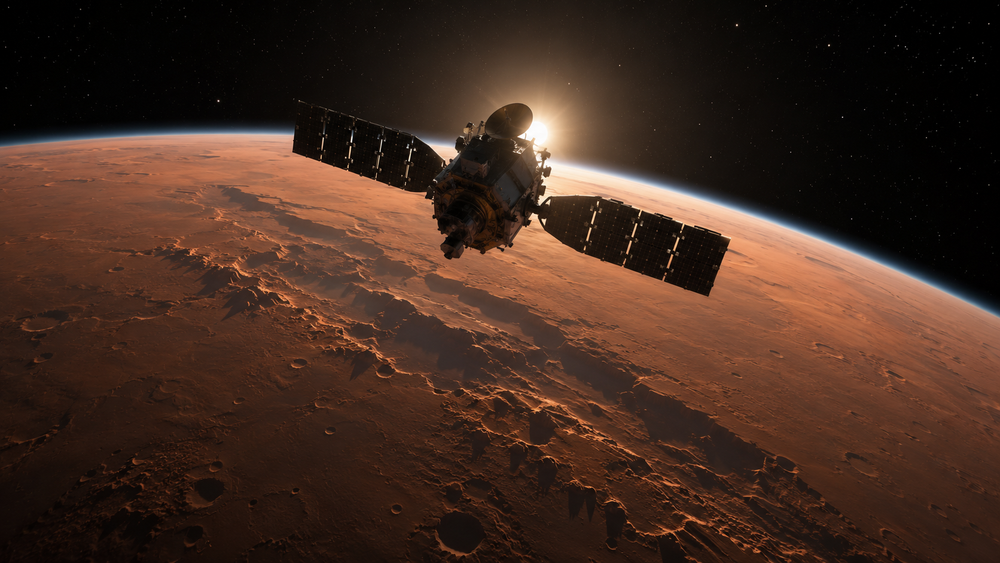
NASA has formally concluded the Mars Atmosphere and Volatile Evolution (MAVEN) mission after more than 11 years in orbit, following a six-month battle to regain communication with the spacecraft after an unexpected loss of signal on December 6, 2025. MAVEN was the first mission dedicated to studying Mars' upper atmosphere and its interaction with the solar wind, and it delivered transformative science: direct observations of how Mars lost its once-thick atmosphere to space, stripped away by solar radiation over billions of years. In its final act, mission scientists used MAVEN's accumulated data to discover a previously unknown atmospheric phenomenon on Mars — details that are being published as the mission closes.
THE DOUGH
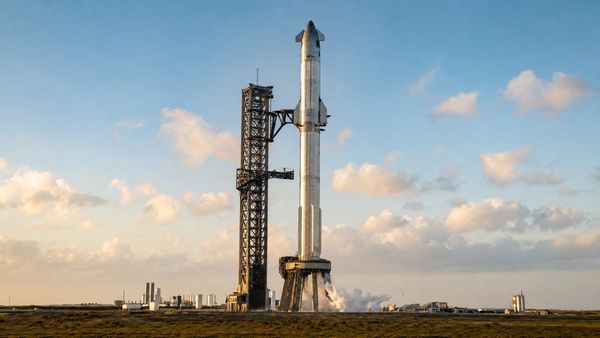
MAVEN's scientific legacy feeds directly into the planning for future Mars missions. Understanding atmospheric loss and solar wind interaction is critical for designing habitation systems and radiation shielding for eventual crewed missions, informing contracts at companies like Lockheed Martin (which built MAVEN) and SpaceX (Starship Mars architecture).
We are not financial analysts or investment advisors. Nothing in this newsletter constitutes investment advice. All economic analysis is speculative and for informational purposes only. Do your own research.
THE POSSIBILITIES
MAVEN's data on atmospheric loss may prove essential if future missions attempt Mars terraforming or atmospheric engineering — understanding how Mars lost its air is the first step toward understanding whether it could ever get it back.
THE HURDLES
MAVEN's orbit will naturally decay, and the spacecraft will eventually crash into Mars within the next 100 years, joining a growing collection of defunct hardware on or around the Red Planet.
WHAT TO WATCH
- Publication of the newly discovered atmospheric phenomenon from MAVEN's final data
- NASA's plans for future Mars atmospheric monitoring, whether via new orbiters or surface instruments
- Lessons learned from MAVEN's communication loss applied to future deep-space missions