
THE STORY
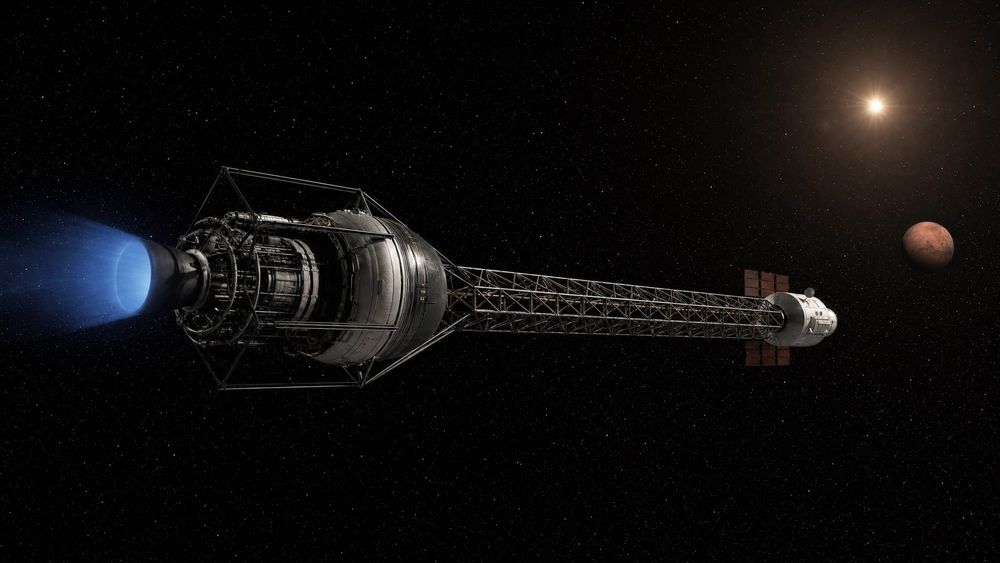
NASA has put a $2 billion price tag on Space Reactor-1 Freedom, described as the agency's first fission-powered interplanetary spacecraft. The mission would use a compact nuclear fission reactor to provide both propulsion and electrical power for a Mars-bound vehicle, dramatically reducing transit times compared to conventional chemical propulsion and solar-electric systems. The announcement positions nuclear propulsion as a near-term investment priority rather than a distant technology concept.
THE DOUGH
The $2 billion figure anchors a growing space nuclear market. BWX Technologies, which builds reactor cores, and Lockheed Martin, which has contracts for nuclear thermal propulsion systems under DARPA's DRACO program, are positioned to benefit. Aerojet Rocketdyne and other propulsion companies with nuclear thermal expertise could see expanded demand as NASA commits to fission-powered spacecraft.
We are not financial analysts or investment advisors. Nothing in this newsletter constitutes investment advice. All economic analysis is speculative and for informational purposes only. Do your own research.
THE POSSIBILITIES
A working fission spacecraft would cut Mars transit from 7–9 months to potentially 3–4 months, fundamentally changing the risk calculus for crewed Mars missions by reducing radiation exposure and consumables requirements.
THE HURDLES
Space nuclear propulsion requires extensive ground testing, environmental review, and launch safety certification. No nuclear thermal engine has flown since the NERVA program was canceled in 1973. The $2 billion estimate is likely an early floor, not a ceiling.
WHAT TO WATCH
- DARPA DRACO nuclear thermal propulsion flight test timeline (targeting late 2020s)
- Reactor core development and ground testing milestones
- Congressional appropriations for space nuclear programs in FY2027 and beyond